
For those who want a change from the Gospel
Trinity 9 – Isaiah 55:1-5 (Related)
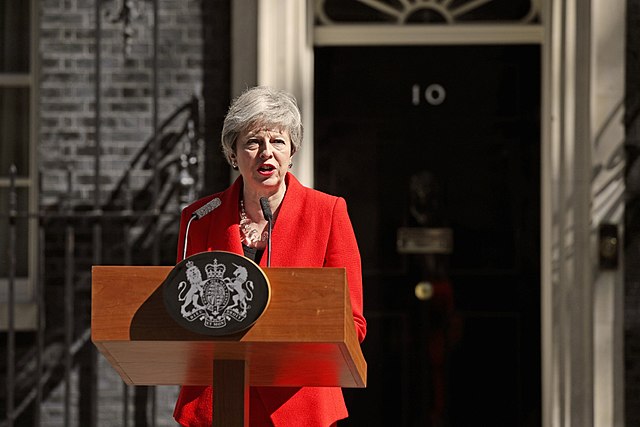
Around five years ago, when we were beginning to experience government by three phrase slogan, Theresa May told us that she and her Tory party were ‘Strong and Stable’. It didn’t take long before those words were thoroughly disproved, as she became the second PM to fall foul of public opinion, a tradition which has continued since. She has had the grace all but to disappear from the public gaze since her moment of disgrace, but I wonder how people picture her now (if we ever do). Perhaps ‘Weak and vacillating’ might be two appropriate adjectives.
It had long been a part of Israelite spirituality that YHWH is both strong and stable, the king of kings and Lord of Hosts. But what do you think about him when he has allowed his beloved chosen people to be all but destroyed, with the remaining Jews in exile in Babylon? When he allowed the land he promised to his people do be desolated, and the Temple he caused to be built as a place for him to dwell torn down stone from stone? Just how strong and stable is he really?
Our passage gives half an answer to this question, and if we read on we get the most important part. The prophet doesn’t argue the toss here, as he does for example in 40:27f. He simply reminds the people who YHWH actually is, and what he is like, but then he goes on to explain why he has appeared to be weak and powerless. There is something the people need to know about God, and something they need to know about themselves. In both cases they should have known already, but the prophet needs to remind them now that they are in a new and different situation.
In fact some things have changed. In earlier chapters of Isaiah water has been withheld from the people (1:30, 3:1), but now it is free for all. Water is no longer used to dilute wine to stretch it out (1:22). And also in 1:22 the people’s silver has turned into scummy dross: now they don’t even need silver because everything God provides can’t be bought. The same is true of food: the austerity they will have experienced as exile (many of them living in slavery conditions) has come to an end, and there is an all-you-can-eat buffet on offer with free entrance.
But the promised restoration doesn’t stop with food and drink. At a much deeper level the relationship they have with God, and the reputation they have because of him will both be restored. The covenant God had with David will become a covenant with the whole people, and once again they will become known among the nations as one whose God is powerful and wise. They will seek the Jews out because of their God, a theme which occurs several times in these chapters and elsewhere. The splendour with which God will endow them will be seen and will attract the pagan nations to him.
Yeah, OK, but if all that is true why haven’t we seen it before now? If our God is that strong and stable, why did we go into exile? Nothing so far has really dealt with that question, and sadly this lectionary snippet doesn’t: we need to read on.
There is a slight clue in v.3, where a phrase is often mistranslated. The Hebrew doesn’t really say ‘I will make an everlasting covenant with you’, but rather ‘Let me make …’ This is the first indication here that it takes two to tango, and that God’s love is not unconditional but requires a response from his people. So the prophet continues in v.6 to tell the people to make sure that they actually seek God, and abandon their wicked thoughts and deeds. Only when they actively turn to him will they feel the benefit.
I once started a new job in a parish, and inherited a curate. She told me fairly early on that the people had only ever heard one sermon in living memory: ‘Jesus loves you, and everything is fine’. In fact I soon discovered that everything wasn’t fine, as I began to uncover some toxic relationships, hidden child abuse, financial mishandling and a lot more. My attempts to tell people that sin mattered, that God’s love is nowhere in scripture unconditional, and that facing the unpleasant things of life really matters cost me my job as I was bullied out of the parish. That church was typical of many which want the nice bits of v.1-5 but are not willing to face the important conditions of v.6-8. Instead of asking whether God is really strong and stable in his loving, perhaps we ought to be asking whether we are strong and stable in our repentance and forsaking of sin.
 revjohnleachblog