OT Lectionary

For those who want a change from the Gospel

Sunday before Lent – 2 Kings 2:1-12
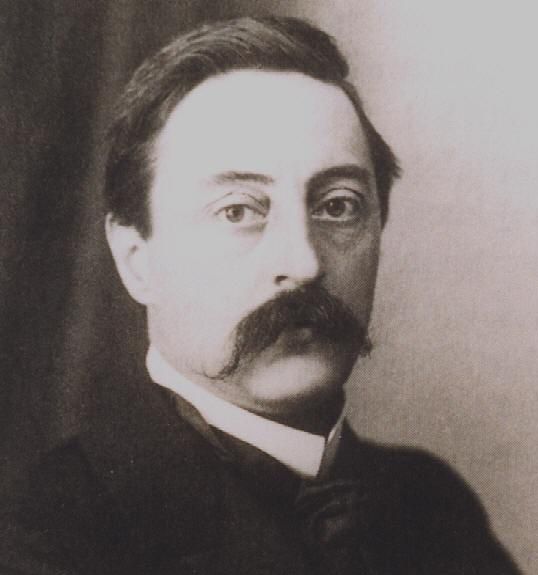
Arnold van Gennep was a French folklorist who lived from 1873 to 1957, and is most famous for his work on ‘Liminality’, describing what have come to be called ‘Rites of Passage’, or little ceremonies we pass through when things change in our lives. He identified three stages, the pre-liminal, the liminal, and the post-liminal (‘limen’ is the Latin word for a doorway or threshold). So a marriage, for example, is a ceremony which moves a couple from being two distinct people to one couple. In the pre-liminal phase couples arrange the wedding, go shopping for stuff for their house, try on dresses and suits and generally think their way into being married. The actual wedding day is the liminal phase, and then post-liminal life is about making it all work out in reality rather than fantasy!

The transition from Elijah to Elisha as being the key prophet in Israel is a story of liminality par excellence. It isn’t just a journey through change: there’s a physical journey too. In fact the journey is a reversal of Joshua’s route into the Promised Land, as they retrace his steps across to the far side of the Jordan, and the next section is going to show us Elisha returning alone to begin his ministry.

As with a wedding, a funeral, childbirth, a move from Cubs to Scouts or any other rite of passage, there are more people involved than just the immediate protagonists. In this story there are three ‘characters’: Elijah, the outgoing incumbent, Elisha his successor, and the ‘company of the prophets’, a kind of theological college full of students for ministry. All of these ‘characters’ plays their part in the narrative. The company sound a bit insecure at the thought of an incoming boss, and don’t seem quite sure what to make of Elijah or the coming transition. Elijah seems to want to shake off Elisha – perhaps he feels that his ministry is being ended prematurely and wants to busy himself and put off the evil day. Or maybe he’s testing Elisha – just how committed are you to this task? Wouldn’t you rather just stay where you are and put your feet up? And Elisha doggedly follows his master, determined not to miss the spectacular departure, and keen to take over the role with the Spirit’s help.

Times of transition are never easy to negotiate, even when the rite of passage is entirely positive and hoped for. There’s insecurity in the air, anxiety about how we will all play our parts in the story, and what the post-liminal phase will hold. There will be sleepless nights with a new baby, desperate grief after the death of a loved one, fears about how we’ll cope at a new school, university or job …

Today represents the pre-liminal part of Lent, which is of course itself the pre-liminal part of Holy Week and Easter. So what will it be like? And especially what will it be like this year? Our church has invited us to a virtual imposition of ashes via YouTube, reminding us of the importance of touch and action in our faith and our worship. What can we ‘give up’ when we have already given up so much for the past year? What might we ‘take up’ when we’re either rushed off our feet with homeschooling and working from home, or we’re furloughed and have already found more time than we know what to do with for prayer and Bible-reading.

But no-one need have worried – this is a story of the action of God, not the action of human beings. The company seem to adjust well to their new boss, even though his style is very different from that of his predecessor. God clears the way for Elijah’s ascension, opening the river in a reversal of Joshua’s entry into the land, and, when challenged in v.14 he proves his presence with Elisha by letting him back in. God’s ministry is going to continue whatever, and no-one need worry about that.

Where would you put yourself in this story? I’m Elijah: recently retired but keen that anything I might have achieved in 40 years of ministry will continue to bear fruit, although I’m sure in some ways I had never expected. Some of us might be contemplating some kind of a new role, and feeling a bit anxious about it. Will we be up to the task? Like Elisha we might be hungry for the anointing which the Spirit brings: God knows that and grants his request. By the way the ‘double portion’ in v.9 doesn’t mean that Elisha wants to be twice as good at it as Elijah was – it simply means he wants to be the heir – the eldest son who gets twice as much as any other heirs, and who will take over the family business.

Or maybe you feel like you’re in the crowd scene, where others play the major parts and you have no option but to get caught up in it and have your life changed by the actions of others. I guess we’re all feeling that quite a bit at the moment as our lives are governed and restricted by a little virus too small to see.

But the message here is that through change and chance God still leads on, doing what he wants to do, appointing and disappointing people who will influence the lives of others, and working towards what we know will be the end of the story, the making of a new heavens and a new earth. Lent reminds us of the insecurity of this life, our addiction to sin, and our need to be changed and blessed by God. But maybe what we need most of all this year is to rest in the loving arms of a God whose purposes can never be thwarted, who is never surprised by what goes on in his world, and who has promised that whatever changes he will lead us through and weave everything together for good.

Old Testament Lectionary

For those who want a change from the Gospel

Second Sunday before Lent – Proverbs 8:1, 22-31

Proverbs is not the easiest book to read, nor to preach from. It can feel a bit like reading the Highway Code or something. It might be designed to keep us and others safe, but that doesn’t mean it’s a great work of literature. Chapter 8 is a hymn to Wisdom, personified as a wise woman, but we can understand it better if we take the time to read chapter 7 first, where Foolishness or Stupidity is also personified, but as an adulterous women or prostitute. A bit of a slag, all in all, we might say. So we are invited to compare and contrast.

It’s worth making the point that Wisdom in the OT is not intelligence. It’s less to do with having ‘PhD’ after your name than it is about knowing how to live well. The English word ‘streetwise’ or the French savoire faire capture the meaning better: it’s about the ability to know instinctively what’s the right thing to do in any situation. Folly, therefore, is its direct opposite.

These two ladies do, at first sight, have things in common. They both call out, trying to win our attention, and trying to get us interested in their wares. They are both, in their different ways, appealing. Folly is portrayed as a prostitute out to seduce senseless young men, who are drawn in by her wiles, but whose destiny therefore is death. By contrast Wisdom, also tries to get people’s attention that they might come to her, not for cheap thrills but for lasting treasure which leads to life. Wisdom is worth more than monetary riches, and will lead people to an inheritance far richer than the merely financial.

But the bulk of our selection today is about the origin of Wisdom. Indeed, she was around before creation began, before oceans or mountains, at God’s side while he brought the earth into being, and constantly praising him for it as each new day brought new things which God declared ‘good’. In fact the passage is one of unending praise. Wisdom does not moan, as other bits of the OT do, about the state of the world these days, about how broken everything is, about how the innocent can suffer and the rich prosper. She is one of those frankly annoying people who are unable to see anyone or anything other than in a positive light, whose lips are constantly full of God’s praises, and who can see his good hand in whatever it is that happens. So is this an invitation to that kind of superspiritual naiveté? Certainly Miss Wisdom has little in common with the prophetic tradition, whose role seems to be mostly about pointing out problems and trying to get people upset enough about them to try to change. In Wisdom’s world everything in the garden is rosy.

I wonder whether these two contrasting chapters are not about the ability to see evil or not, but rather about the standpoint from which we see it. In Miss Folly’s world things certainly are broken, so what the hell? Let’s go to bed. Let’s find what comfort we can for a while. Let’s grab some pleasure while we may, and ignore what’s right or wrong. But Wisdom’s approach is very different. Let’s just do the right thing. Let’s live well, and that will both celebrate and enhance the created goodness of our world. Let’s fear God, because that will make the world a better place. This chapter of the Bible may ignore the harsh realities of life on Earth, but the rest certainly doesn’t, and nor does the rest of Proverbs or other Wisdom literature such as Job and Ecclesiastes, and many of the Psalms. But maybe the best way to approach those problems is from the starting point of an awesome God who created a beautiful universe. To focus for just one chapter on the beauty of it all isn’t a naïve refusal to accept reality: it’s a refreshing and heart-healing reminder of the ultimate truth about who God is and what his world is coming to. As we feel more and more the stress of lockdown, the Mindfulness gurus have all sorts of advice about how we might be renewed and refreshed. Maybe a meditation on the pure unadulterated goodness of God might prove to be a real tonic.

OT Lectionary

For those who want a change from the Gospel

Epiphany 4 – Deuteronomy 18:15-20

Is this passage about an eschatological character or an exercise in succession planning? The Jews of Jesus’ time certainly thought the former. When John the Baptist appeared, looking strangely like they imagined Elijah would have looked, they asked him if he was ‘The Prophet’. Apparently Moses’ words from Deut 18:15 had been understood to predict a coming person, and Jewish exegesis of the text had arrived at the conclusion that The Prophet was going to appear shortly before the coming of the Messiah. The Gospels certainly seem to have been written with this expectation in mind, so that John could fulfil it, at least as the Forerunner even if not The Prophet.

But perhaps Moses’ intentions were different. When a charismatic leader departs, retires or dies, there is often a sense of let-down as the nature of the organisation inevitably changes. So how do we ensure that the changes which need to be made can happen, without losing the good things which have been good and healthy in the past? Part of my work in the past was with Anglican parishes in vacancy, helping them to think through clearly what they were looking for in a new priest. The Anglican church is notoriously bad at succession planning, only in rare cases appointing a curate already in post as the new vicar, and all too often deciding that having had one kind of leader, for the sake of balance they now need someone very different. In my parish ministry I have seen both a complete disappearance of those things I had worked to hard to lead a parish into, and also really healthy continuation of my ministry into places I would not have been able to lead people myself. It’s all very hit and miss.

So one way of reading this text is to think of Moses giving his death-bed speech (which is what Deuteronomy purports to be) to a bunch of people about whom he is anxious that the journey they have started will be completed well. First of all he passes on some of the wisdom he has learnt as their leader, and in particular the contrast with the practices of the nations around them. This passage is preceded by a warning against the occult goings on of their neighbours, who, in their attempts to get guidance, go to such lengths even as child sacrifice. God’s way is very different, and his prophets will behave very differently. If this passage is in fact about the inauguration of the prophetic movement in Israel, then there are some clear lessons to be learnt, both about prophecy and the prophets themselves. If a charismatic leader gets replaced with an institution, which they inevitably do, then Moses wants the people to know how that institution will work well, continue to be directed by the voice of God, and continue the trajectory of the original leader. And in the days of renewed prophetic gifts as the Holy Spirit is poured out through the charismatic movement, there are some helpful guidelines here too.

The nature of the prophetic is very different from occultism. Divination, sorcery and the other behaviour of the nations is all about what humans want to know: prophecy is about what God wants to reveal. He cannot be manipulated or coerced into telling our fortunes. So it follows that the job of the prophet is not like their sorcerers. Moses is very clear that prophets speak only what God gives them to say, nothing more, nothing less. So his words are not to be ignored or cherry-picked.

But even more telling is the character and role of the prophet. If I had promised my congregations that God would raise up for them ‘a vicar like me’, I wonder what would have come into their minds? (Probs best not to ask!) So what would a prophet like Moses look like? Perhaps as humble as he was. Perhaps someone who was only too keen to delegate power and see the Spirit active in all the people, rather than himself alone? Yet maybe also someone not so non-directive as a leader that he would allow democracy to rule, so that the people could return to Egypt just to get their hands on the melons and garlic. Perhaps someone so powerful an intercessor that he could get God himself to change his plans? But also someone maybe so vulnerable that he could weep in despair before God at the sheer evil of the people, someone who needed support both emotionally and also at times physically. If that’s what Moses looked like, presumably prophets like him should be recognisably similar.

Above all, says Moses, in a way which is echoed in the NT, beware of false prophets, essentially those who speak as if from God without actually having heard from him. In an age when right-wing leaders are happy to use the Holy Bible as props in their propaganda machines, we ought to be wise and careful. That surely is what taking the Lord’s name in vain means.

So maybe this passage has more relevance than we thought. Rather than being about someone whom John the Baptist refused to be, maybe it gives some useful hints for the use of the Spirit’s prophetic gifts in the Church today.

Old Testament Lectionary

Epiphany 3 – Genesis 14:17-20

What on earth is this all about? Even a read of the whole chapter (which is always a good idea, as you will have become sick of me saying) only adds to the confusion. What is going on here, and how in any way will it be edifying for me to hear about it? Let me try to shed some light.

On one level this is a political story about two coalitions of kings trying to control the major trade route through the area. For kings, of course, think tribal chieftains: these are not great nations and mighty emperors we’re talking about here. But the group from the South had been ruled for 12 years by the group from the East, and they had had enough, so revolt ensued. The southern lot were roundly defeated by the eastern lot, and their towns were sacked and prisoners taken. But what is significant is that Lot, Abram’s nephew, who had chosen to go and live in Sodom, a proverbially evil place, was also captured, along with his worldly goods. Abram gets to hear about this, and so gathers a small army and sets out on what looks like a suicidal rescue mission. However, God is with him, and Lot and his goods are saved.

As Abram returns he is met by a jubilant King of Sodom, no doubt intent on thanking him for his rescue mission. But he is upstaged by the sudden appearance of Melchizedek, king of Salem (the same word as shalom – peace, and his name means ‘King of Righteousness’). The very different responses of these two contrasting kings is the crux of this story, which is actually about how Abram is going to live out the calling he received from God two chapters earlier. The King of Sodom and King Melchizedek sit on his shoulders like the little angel and demon you see in cartoons: which way will Abram choose to go?

The King of Sodom is business-like: let’s do a deal. I’d quite like to have back the people you rescued, but you can keep all the spoils. This sounds sensible: after all the spoils of war are normally due to the victor, and Abram can certainly live without a bunch of extra Sodomites. But Melchizedek’s approach is very different. He offers Abram bread and wine, here representing the simplest of ordinary food essential to life, and a blessing which is far more about God than it is about Abram. Abram chooses to refuse the riches offered to him by Sodom, not wishing ever to be beholden to a pagan king in the living out of his call from God. Apart from the legitimate expenses of the journey, he will have none of it, preferring the blessing of God and the simple provision he needs.

Melchizedek is mentioned a few more times in the Bible. In Psalm 110 he is mentioned as the originator of the priesthood which Christ came later to fulfil. The letter to the Hebrews explains in chapters 5 and 7 that Melchizedek’s priesthood is the original and best, and that the later priesthood based on the tribe of Levi is not the real thing, thus proving to Jewish Christians that Jesus is better than their previous faith to which they may feel temped to revert.

This strange story highlights a decision which all those who are called by God have to face. What do we have to do to remain faithful to that original call? And what’s in it for us? Interestingly this is a question raised by Peter in Mk 10. There is fortunately, little financial gain to be made from Christian ministry, but the question is about where our hears and sights are fixed, and how beholden we want to allow ourselves to become to what this world has to offer. Abram passes this test with flying colours: how are we doing?

Covid Podcasts

How to Lament Part 2

Psalms of Individual Lament:

3, 4, 5, 7, 9-10, 13, 14, 17, 22, 25, 26, 27, 28, 31, 36, 39, 40:12-17, 41, 42-43, 52, 53, 54, 55, 56, 57, 59, 61, 64, 70, 71, 77, 86, 89*, 120, 139, 141, 142.

Psalms of Corporate Lement:

12, 44, 58, 60, 74, 79, 80, 83, 85, 89, 90, 94, 123, 126, 129

Psalms of Penitence:

6, 32, 38, 51, 102, 130, 143

OT Lectionary

For those who want a change from the Gospel

Epiphany 2 – 1 Samuel 3:1-21

The first half of this chapter is a great Sunday School story: I can remember as a child loving the hymn based on it, James Burns’ Hushed was the evening hymn, set to Arthur Sullivan’s great tune. After that, though, it turns a bit nasty, so we keep that part out of the children’s ears, and safely inside those square brackets. But the chapter as a whole is a watershed for Israel, and a challenge for all who are  positions of leadership today. To understand why, we’ll have to read around the passage a bit (never a bad idea).

Samuel, like so many other key leaders in the Bible, had been a miracle baby, and now as promised he was apprenticed to Eli the priest at the sanctuary in Shiloh. But around the key story we are given a lot more other information about the state of the nation at this time. 3:1 tells us that the word of the Lord and vision from him were rare, and interestingly the next verse tells us that Eli himself was virtually blind. But there was more to it than that. Whilst we have no record of Eli ever bringing prophetic messages from God, nor in fact doing very much at all in terms of his priestly leadership, he does seem to spend a lot of his time sitting around on a throne (4:13), and wringing his hands over the behaviour of his uncontrollable sons Hophni and Phineas. They too are priests, but are totally corrupt, pinching food from those bringing sacrifices, and raping any women they fancied. Eli hears reports from others about their behaviour, but can only rebuke this abuse of power in the mildest of terms. In addition his level of spirituality seems to be very low: he mistakes fervent prayer for drunkenness, in a way similar to some of the bystanders on the Day of Pentecost, and uncannily like some of the mockery levelled at charismatic Christians more recently.

Hannah, Samuel’s mum, had prophesied, in a way very similar to Jesus’ mum 1,000 years later, about God’s penchant for reversing people’s fortunes (2:7), bringing down the proud and powerful whilst exalting the meek. It is the first job of the her son as the fledgling prophet to proclaim that God is about to do just that to Eli’s family.

It is an uncomfortable calling to pronounce judgement, and one which is particularly out of fashion today in a church which has lost much of its prophetic edge and wants to be encouraging of pretty much anyone or anything. Yet we continue to reap the whirlwind from the behaviour of some of our leaders who, like Eli’s sons, use their positions to harm and abuse others. Samuel’s ministry is a hinge-point in the history of Israel, bringing to an end the corrupt period of the Judges and uniting the nation (for a while at least) under the monarchy. This story sets the tone for his future ministry as one who certainly could receive words and visions from the Lord, to great effect.

Over the years I have held several diocesan posts which have been about helping local churches to be healthy and effective. I have learnt two things from this kind of ministry: 1) it’s hard, and 2) effective churches are led by effective leaders. Most leaders have told me it’s hard in their particular patch, because it’s so urban, or because it’s so rural, or because it’s so middle-class … My conclusion is that it’s hard everywhere. But I have come to believe that leadership is key: it is rare to see an effective church with ineffectual or even downright corrupt leadership, and tragically I have seen plenty of both. The Bible encourages us to pray for our leaders, and that is needed today more than ever. But perhaps we also need to hear again some of the prophetic voices who call out bad behaviour and protect the Church from it in a way which Eli so manifestly failed to do.