OT Lectionary 28th September Trinity 15 Ezekiel 18:1-4, 25-32


Don’t you just love politicians? If they get something right they take the credit, but if they get it horribly wrong they just blame the previous government from the other side of the House, who, while they were in power, got the country into such a mess that it is taking ages for us to undo it and right all the wrongs of their administration. School children have a slightly less mature version of this: when caught out in some mischief the response can all too easily be ‘He made me do it, Miss!’


The people of Israel, in exile far from home in Babylon, are playing this game too. You can’t blame us, Ezekiel, for getting ourselves into this mess. It was all those previous generations who ignored God and lived evil and idolatrous lives who went off the rails, while we are now paying the price. That’s the meaning of the common proverb of the time about eating sour grapes.


Ezekiel needs to refute this opinion, and its underlying implication that God just isn’t fair. It’s easy to feel like that at times, but for God’s people the starting point must be that if there’s a dispute God must be right and we must be wrong, otherwise he is not God in any normal sense of the word. ‘Will not the judge of all the earth do right?’ asks Abraham in Genesis 18, obviously expecting the answer ‘Yes!’ But God is not just fair, he is merciful too, and again and again in this passage he holds out hope for forgiveness, if only his people will return to him in repentance.


This passage teaches us much about sin, guilt and forgiveness, much which many of us still need to learn. Firstly, that God remains unconvinced by the blame game. Ever since Adam told God that Eve had given him the fruit to eat, and she blamed it on the snake, the human race has tried to wriggle out of a sense of guilt and shame by putting the responsibility for it elsewhere. But this doesn’t wash with God, and never has. ‘The one who sins is the one who will die’, he explains in v 4.We all have individual responsibility for our actions, and we can never put the blame on someone else.


Secondly, it teaches us that we have choices to make, and that we must bear their consequences. Of course this doesn’t work in the short term, or else the Bible wouldn’t contain those agonising passages about why evil people appear to prosper while the innocent suffer. But in the scope of eternity our choices matter, whether they be choices to sin or to repent.


Thirdly, this text speaks, as we have said, of the mercy of God. Against the commonly–held view that God is only there to have fun smiting people at any excuse, Ezekiel affirms that God takes no delight in the death of anyone but, as the liturgy puts is, he would rather they turned from their wickedness and lived. God is neither a spoilsport nor a monster, and genuinely holds us his creatures in love, although never the indulgent kind in which it doesn’t matter what we get up to.
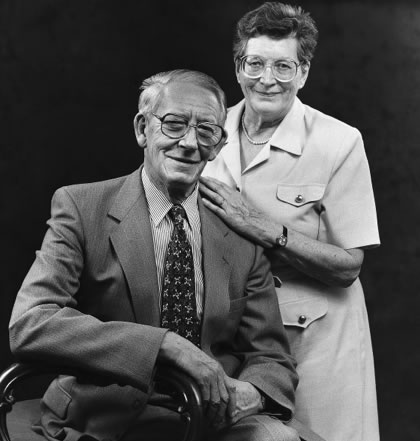
File:Senator Gordon Wilson.jpg

Therefore, the text seems to ask, why on earth don’t we take advantage of that mercy? Why is it so deeply embedded into human nature that we’d rather moan at God and blame others than simply turn round and accept his forgiveness? Why does it seem the hardest thing in the world to put our hands up, admit our wrong, receive forgiveness and restoration? Have you noticed how often on the telly someone who has had something horrible happen to them or their family tells us that they feel ‘bitter’? And how rarely and how notable it is when someone expresses forgiveness to the perpetrators, someone like Gordon Wilson of Enniskillen? Why hang on to sin and bitterness when forgiveness is so much easier and more rewarding. If Christians haven’t learnt that lesson, what hope is there for the rest?


OT Lectionary September 21st St Matthew Proverbs 3:13-18

To be honest I’m not that big on Saints: they have to be handled with extreme caution. The kinds of churches which most go on about them can easily be the kinds of churches where Christian people (or ‘saints’ as the NT calls them) end up feeling deskilled, ordinary and not quite up to the mark, and never likely to end up in a stained glass window. However much preachers tell us we ought to learn from their examples, emulate their holiness, and so on, I never find myself entirely convinced: I usually end up feeling told off instead. However, today is St Matthew the Apostle’s day, so here goes. At least Proverbs might not do us much harm.

It’s easy to see why this passage goes with Matthew: it’s about choosing wisdom rather than wealth, which Matthew went on to do. In the OT wisdom literature ‘Wisdom’ is often personified. The clearest example of this is in Proverbs 8 where ‘she’ is depicted as a wise woman who calls out to people as it were to buy her wares, to embrace wisdom rather than folly, ‘wisdom’ meaning, of course, what the French would call savoir-faire or ‘knowing what to do’. It is not primarily deep philosophy: it is much more about knowing what would be the sensible thing to do in the many decisions with which life presents us.

So in chapter 3 to choose wisdom brings several benefits. Blessedness, profit, value, long life, riches, honour, delight and peace. There is an interesting mix of things which the ‘secular’ world might value and those which would be rather lower on the agenda: profit and riches sound good, but ‘blessedness’ is a bit more vague. The implication, though, is that Matthew, in turning his back on the tax business, and no doubt the corruption, fiddling and profit which went with it, in order to follow Jesus, was choosing the better thing. We’re not told, of course, that Matthew was a villain before his call, but the story of Zaccheus perhaps illustrates Matthew’s call a bit further.

We live in a culture where money is pretty much everything. For some the issue is addiction and greed, for others the corrupt use of wealth, while for some it is the anxiety of knowing where the next bit is going to come from. Few of us have learnt St Paul’s secret of being content with our lot (Phil 4:12), and I can’t help but wonder whether there were times when Matthew looked back and wondered how much easier his life might have been if he had simply told Jesus to push off. Whether Matthew ended up being martyred for his faith is a matter of contention, but there is no doubt that he must have suffered some of the hardships which Jesus promised to those who became his followers.

So what does Matthew make you want to ask of yourself? I sometimes wonder whether a different job might have brought me a bit more fame and fortune than has been my lot as a poor vicar, especially when I see my kinds earning double what I do. On a good day I think wisdom is actually worth more, although I wonder whether poverty and wisdom necessarily go together. But all in all I’m glad I chose to follow Jesus, leave behind my dreams of being a rock star or a top executive. I know that one day it will turn out to have been worth every penny, when I hear my Father say to me ‘Well done, good and faithful servant’.

A Year in Jersey

In this next excerpt from God’s Upgrades … My Adventures my IKEA days were over as I was rescued by the offer of a three month locum in Jersey. Now read on …

We arrived on November 5th, and our first Christmas came upon us very quickly. It was also our silver wedding anniversary on Christmas eve, and although some good friends came over for Christmas we felt very isolated from our friends and family. So we decided instead to have open house. We made loads of cakes, bought plenty of cheap fizz (sadly not the real stuff) and invited everyone from both churches to drop in during the day. This was an instant and immediate success. Not only did it bring people from the two churches together, but it also set the tone for our ministry. We have always tried to use our homes for hospitality. I reserve the right of clergy to use their homes as safe sanctuaries into which the life of the parish is never allowed to intrude, but that has not been our way. We found people coming into the vicarage for the first time ever, and taking the opportunity to have a good nose around. ‘We’d always wondered what it was like inside!’ we were told by many visitors.

The chance to celebrate a major family milestone with us meant that people quickly and easily took us to their hearts. The welcome we received was instant and heartfelt, and showed itself in a variety of practical ways. One parishioner turned up one day with his estate car absolutely brimming with logs for our open fire. Another family, on hearing me remark that my study was lovely but a bit dingy, gave me their account card for the local ironmongers and told me I could spend ‘say around £200 or so’ on some new lighting. One farmer from St Lawrence kept us supplied with fresh veg, along with the occasional joint of some recently slaughtered animal. He used to bring milk for the after-service coffee: it was still warm from the cow, and was about half and half milk and thick cream.

There was a downside, though, to being a rural Rector: I had to bless things. More specifically I had to bless animals. A few times a year, on some obscure festivals which as a townie I had never really encountered before, the St Lawrence congregation would decamp to the Churchwarden’s farm, and I had to say prayers over some huge piece of livestock or other. Now don’t get me wrong: I’ve got nothing against animals. Some of my best meals have contained them. But I much prefer to encounter them well done with pepper sauce than to get into a field with them and pray (although on the odd occasions in the past I had found myself in field of animals I certainly had prayed!) I tried telling Charles that my powers of blessing were so well developed that they could travel enough distance that I could do it from here, but he would have none of it. Blessing was a hands-on business apparently. When I finally left the parish Charles, in his farewell speech, described me as all in all pretty good, but a bit of a wimp with the animals, an epithet of which I was in no way ashamed.

Through The Bible in Just Over a Year – Intro


In my formative 20s I attended a church with a very strong teaching ministry, and one of the series we did took us through every book of the Bible, a week at a time. We were blessed with not one but two sermons, one on the background to each book, and one on its practical application for today (or rather the 70s!). I lapped it up, and owe so much to the teaching I received not just through that series but through all my eight years at that church.

Now that my day job is to work at Diocesan level to promote Christian discipleship I am amazed and frequently appalled at the lack of solid teaching in today’s C of E. I’m not sure how many churches value the teaching ministry, or how many clergy see their primary task as feeding the people of God with both milk and meat as appropriate. I’m struck by how often St Paul, when seeking to correct some error in the life of one of his churches, wrote ‘Don’t you know …?’ Bad or lack of teaching leads to misunderstanding and bad living. So in my small way I have a heart for seeing the teaching ministry restored to the church, so that healthy and mature Christians are produced, Christians able confidently to join in with the mission of God to our communities and nation. Working in the area of discipleship one of my key texts has become Gal 4:19, where Paul tells his ‘dear children’ that he is in ‘the pains of childbirth until Christ is formed in you’. I lament the lack of this kind of passion in many church leaders today, and in this new blog series I want to recreate a kind of overview of the Bible, the primary means through which God reveals himself to us and forms us as disciples. I’m going to take you through the Bible in just over a year.


What you won’t get from this blog, obviously,  is in-depth scholarly stuff, loads of Hebrew and Greek, and the latest in academic thought. There are plenty of other places to find that stuff, and frankly I’m not that good at it. But what I do hope to do is to help us to read each book with some understanding of why it is in the Bible, and what it might say to us today. If I gave you a train timetable and a book of metaphysical poetry you would obviously use them very differently, and the books of the Bible are like that: you have to know what each book is trying to do so that you can read it with understanding.


I’m also aware that whenever we read Scripture we need the help of the Holy Spirit. People who know me well and have read my books often tell me that they ‘could just hear me speaking as they read. It’s so “you”’. In the same way we read the Bible differently when we know the author well. So there’s a circularity: we get to know God through reading Scripture, and we read Scripture better when we know God better. I hope this blog series might help on both counts.


So – next week – Genesis, the book of beginnings.


OT Lectionary Sunday 13th September Trinity 13 Genesis 50:15-21


Two words can sum up the thrust of today’s OT passage: grace and mercy. Joseph’s brothers, those who left him half-dead and then sold him into slavery, are worried because now that Dad has died the respect which Joseph has had for him might run out and he might wreak an awful revenge on them from his position of power. So, whether out of fear for their lives or genuine repentance (it’s hard to tell which from the text – maybe it was a mixture of both) they grovel before him asking that he will forgive them. Joseph’s response shows both grace and mercy, but something else besides which we will come to in a minute.

And old children’s song helpfully tells us that

‘Grace is when God gives us/the things we don’t deserve’

and

‘Mercy is when God does not/give us what we deserve’

Joseph shows both to his brothers, putting away their sins against him, and promising to provide for them into the future. It would be interesting to speculate just what his tears in v 17 were about. Gratitude that they had finally apologised to him? Horror that they should think him capable of such revenge? Maybe, but I wonder also whether his tears were about glimpsing the bigger picture. Showing grace and mercy are human activities, and very good ones too, but behind it all Joseph is able to see the hand of a loving and powerful God.

He has already made the point, in chapter 45, that what they intended as harm for him was used by God to a greater purpose. He repeats the point here, as evidence that to take the path of revenge would be to go counter to God’s larger purposes. I think there is something here for those of us who suffer, and something for those who must forgive.

Let’s begin with forgiveness. I have written elsewhere[i] about an important paper on the nature of forgiveness, so I won’t repeat is here. but I am interested that Joseph does three things. He looks their sin fair and square in the face and calls it what it is – ‘You intended to harm me’ v 20. No excuses: he tells it like it is. Secondly he refuses to take revenge, even though it was well within his power to do so. The most helpful definition of forgiveness I have heard is ‘Handing back to God the right to punish those who have hurt us’. Most of our angst and bitterness comes from the fact that we would like to take revenge ourselves, but most of the time we don’t have the ability to. To give back to God the right to punish sets us free from all that agonised bitterness.

But then Joseph goes one step further: he ‘spoke kindly to them’ v 21. Much of the time this is a step too far. We can forgive people, if we use the definition above, without having to trust them, or even to like them. Much of the time the wisest way is simply to avoid them. But Joseph somehow manages to maintain relationship with those who were so cruel to him.

I think that third step is optional, so don’t beat yourself up if you simply can’t be around those who have hurt you so much. However, the first two are essential.

And once we gain the perspective which comes from having genuinely forgiven, that makes it easier to seek God’s larger purposes. I know how much this hurt, but what did God give me, or build into me through it. what is there, in the harm intended by others, which he has turned to his purposes?

[i] Leach, J God’s Upgrades … My Adventures (Milton Keynes: Authentic, 2014) p 168ff.


Coming soon – my new Wednesday blog ‘Through the Bible in Just Over a Year’ – 600 words introducing each book of the Bible, and how we might read it today as Christian disciples.

Surprised by the F-word

Here’s the latest excerpt from God’s Upgrades … My Adventures published by Authentic.


Being by now an old hand at IKEA, I had become friends with most of the guys, and I had even had some positive contact with the constant stream of temps who came and went. But there was one person who still struck fear into my heart. Tom Hollick was over sixty, grizzled and cynical, the most foul-mouthed person in the room (and that took some doing), humourless and always moaning about life, the universe and everything. He seemed to regard work and the management with all the bitterness of someone trapped in a dead-end job for far too long. He looked not unlike Van Gogh’s picture of his friend Dr Gachet but with a much bigger moustache. In fact his moustache was even bigger than mine, which really does take some doing, and considerably more tatty and tobacco-stained. I so hated him!

 Then came the inevitable evening when I returned to the depot to find my name with his on the board for the next day. This was not going to be fun. I didn’t sleep well that night.

 ‘You’re the vicar, aren’t you?’ he asked as we were driving through the yard to the gatehouse. I braced myself and admitted that indeed I was. ‘I’ve been wanting to talk to you.’

 Now what was I in for? If he hated the church and all it stood for anywhere near as much as he appeared to hate everyone and everything else, I was going to spend the day getting a really severe ear-bashing. However, I was in for even more of a shock than I had worried about in my worst nightmares.

 ‘I did that “Alpha” course last year’ Tom admitted with as much of a coy grin as he could manage. It looked as if it was costing him a considerable amount of effort. In spite of the grin, I felt I was in for an in-depth critique of the whole process. Perhaps I was the first person he had been able to share his insights with, and I was going to get the full spiteful vitriol of his totally negative experience. Oh well, in for a penny …

 ‘What did you think of it?’ I asked, on the basis that if he was going to hit me it would be better before we got onto the motorway.

 ‘It was absolutely f****** brilliant!’ I wasn’t quite expecting that, and I pondered just for a moment exactly what Nicky Gumbel would have made of this accolade.Front only

 ‘Tell me more’ I prompted, and for the next twenty minutes I got a blow-by-blow, liberally peppered with words designed to illustrate clearly just how much he had enjoyed the whole experience. I listened open-mouthed as he told me how much he’d enjoyed both the material and the discussion, what a friendly crowd they were, what a turnaround it had brought in his life, and how he and his wife now went to church each Sunday. But even that wasn’t the end of his excitement.

 ‘We’ve got this woman who does that “singing in tongues” in the church’ he confided. ‘It’s bloody beautiful!’ I was able to be enthusiastic and share in his wonder at this wonderful gift, and to admit that I could do that too, although nobody had as yet described my singing as beautiful, an admission which filled him with even more awe for this strange vicar who had suddenly dropped into his life. Tom showed me the Bible he brought to work each day to read in his tacho-breaks, and told me how he didn’t always find it easy to understand and what did I think about such-and-such a passage? It would have been such a help to have someone else at work he could ask. Finally, with great wistfulness, he said ‘I really wish I didn’t swear so much, but I just can’t help it.’

 During the day he told me, almost with tears in his eyes, about a heart-breaking situation in his family and a huge decision he had to make. ‘Will you pray for me about it?’ he asked.

 Tom and I never again found ourselves paired up, but we kept in touch in the depot and I was able to ask him sensitively how things were going as we bumped into one another from time to time. I still remember to pray for him now and again, for his witness in a very difficult environment, and for the growth of his sanctification!


What’s Church for? Expecting the Unexpected

I have tried over the past few weeks to look into the future of church in the UK, and I’m very aware of the woeful inadequacy of this enterprise. I’ve suggested some directions which we might be headed in, but at the end of the day I wouldn’t be that surprised if all we see is a bit more of the same: marginalisation by the secular media, decline, greying and a lot of death. However, I am encouraged by a physicist named Thomas Kuhn, into whose hands I commend you as I close this mini-series of blogs.


Kuhn is famous for his ‘paradigm-shift’ theory. To understand him, allow me to take you back for a moment into the 1960s, and into the subterranean lair of an evil James Bond villain. All along one side of the cave is a huge computer, with lights flashing and tapes spinning, a machine with the aid of which the villain is planning to take over the world. Now, imagine that I asked you what a computer twice as powerful would look like in the future? The obvious answer is twice the size, with twice the number of flashing lights and twirling tapes. In the fact the real answer is that it would look like your mobile phone: in fact your phone is probably already hundreds of times more powerful. Technology, said Kuhn, rarely proceeds in a straight line. There come moments when some new invention radically alters everything, and a paradigm shift leads to a brand new direction. The invention of the microchip provided one such paradigm shift, such that miniaturisation, not growth, is the expected direction of progress. Nanotechnology, and work on single molecular circuits, mean that even further miniaturisation is on the horizon. But when Wikipaedia claims that ‘this miniaturization is the ultimate goal for shrinking electrical circuits’ it is reckoning without some further and as yet unimagined paradigm shift.


So much for physics, but the same can be true of history. Every now and then there will be some kind of a paradigm shift which means that a linear progress will no longer be the way forward. And in my experience the same is true of God. In spite of the suspicion with which the church often treats the notion of an ‘interventionist God’ the Bible is full of stories of God breaking into history to change everything. Freedom for slaves in Egypt; exile for a complacent and idolatrous nation; a Messiah on a cross; fire from heaven; all these are examples of God doing ‘a new thing’ which means that nothing is the same again. In more modern times the coming of the Holy Spirit on a group of farmers in Topeka, Kansas and many other revivals and renewals of the church have been both unexpected and powerfully disorientating for the church, but have sent us off in some amazing new directions.


All of which is a way of saying that I hope to the bottom of my being that the so-called ‘predictions’ I have made will prove to be complete nonsense, because by the time twenty years have passed God will have broken in, shaken up his church beyond recognition, and we’ll all be off in a completely new direction.


I went through a stage of reading all I could about great revivals of history, and like many I found myself praying ‘Lord, do it again!’ I have now learnt that a far better prayer is ‘Lord, do something new!’

OT Lectionary September 7th Trinity 12 Ezekiel 33:7-11

There is an interesting dynamic of ‘tipping points’ in today’s passage from the prophet Ezekiel. Firstly, chapter 33 forms a kind of pivot point between 1 – 32, which are predominantly about judgement, and 34-48, which have much more to say about restoration. As though to emphasise this great pivot the news comes to Ezekiel in v 21 that ‘The City has fallen!’ We can’t really imagine the significance of this for the exiles, but the destruction of 9/11 doesn’t come close. It is as though we heard that Westminster, Canary Wharf and Canterbury Cathedral had all been blown to bits in a single act of warfare.

So this passage sets before the people the need for repentance, and the role that the prophet has in calling them to it. The image of the ‘watchman’, one which Ezekiel commonly uses, relates to those placed on city walls to give early warning of imminent attack. But the danger here is less about the physical destruction of their home capital, and more about the internal eating away of their society by the cancer of immorality and godlessness.

But there is a smaller, more subtle pivot in the centre of the passage for today. By the time we get to v 10 the people apparently need no further calls to repentance: they are only too well aware of their offences and sins, and the results of them. Ezekiel’s word to them must now be different. No longer is he to give a warning of judgement: now his message is one of hope and restoration, and repentance as the way to it.

This corrects two common caricatures we may have unconsciously slipped into regarding prophets and their God. So often we think of those with prophetic giftings as miserable people who can only speak of gloom and destruction: indeed many modern-day prophets only serve to reinforce this caricature. This in turn can lead us to the belief that God himself is a miserable punisher. One of my bosses used to say that the job of the Holy Spirit is to ‘comfort the disturbed and disturb the comfortable’, and we have something of that here. To presumptuous and self-satisfied sinners God’s word is a harsh one, but to those who realise their own need of repentance he speaks mercy and restoration. This of course can’t help but raise the question ‘Where am I?’ and ‘What would God want to say to me?’ Clearly to speak words of peace to sinners who are completely unrepentant is as useless and counter-productive as calling to repentance those who are already broken-hearted. But so often all we want is to hear God saying to us that everything is just dandy.

There is also an interesting question here about how this passage might relate to evangelism. In the past it was thought to be all about calling sinners to repentance: indeed that is the thrust of most of the preaching recorded in Acts. But now the fashion has changed, and in a society which doesn’t really ‘do’ sin our call is more likely to be about comfort than confrontation. Maybe we need to rethink what the call of God on our generation really is.


On the Road Again

The thrilling saga of God’s Upgrades and My Adventures continues with this week’s excerpt, in which your hero find himself out of a job and moving into a new sphere of work …


It was with some trepidation that the following Monday I was rudely awakened by my alarm at 5 am. Nevertheless, as I drove the 25 minute journey to the depot I prayed, as you do, not just that God would look after me, but also for opportunities to be a good witness, and to show the love of Christ to those among whom I was to work.

The depot had been an old army barracks, and several large hangar-sized warehouses were dotted about the place. Each had half a dozen or so loading bays, each with a little set of traffic lights to tell you when it was safe to drive off without taking a forklift and its driver out for the day with you, handy as I was to discover this might have been. As I parked the car I noticed a collection of about 30 huge white trucks parked just round the corner. They must be the ones for the real drivers, I decided, people with HGV licenses. I wondered where they parked the 7.5 tonners. I couldn’t seem to see any.

I walked into the IKEA warehouse. Imagine the scene. 20 or 30 men, ranging in age from 18 to over 60, and arrayed as I was in fluorescent vests, stood around waiting for their orders for the day. Some were laughing raucously in groups; some were perusing page three of the Sun (or worse), all were swearing fluently and profusely. Most of them were built as though they could carry a bed-settee under each arm up eight flights of stairs without breaking a sweat, 40 roll-ups and two greasy breakfasts a day notwithstanding. My prayer for witness quickly turned into a prayer for survival.

Me truck

Initially and mercifully no one took much notice of me. It was no big deal; temps came and went almost daily, I discovered, and were not a great cause of excitement among the regulars. But it wasn’t very long at all before I did gain some curiosity value. The manager was working systematically down his list, and before long the inevitable happened: he got to me. When he shouted across the room for ‘The Reverend Leach!’ I realised that Agency-man had told them all about me. My reputation had gone before. In that moment I was instantly and dramatically outed. There was a vicar on the crew! I was an immediate celebrity. A strange silence filled the office, as all eyes turned in my direction. If there had been someone playing a honky-tonk piano in the corner, they would have stopped instantly. The silence was broken by a small outbreak of Gregorian chant from some wags in one corner. I smiled nervously around the room, trying to look as if I did this every day.

Initially there were a couple of misunderstandings to clear up. ‘Are you really a Reverend?’ I was asked, both then and constantly for the duration of my stay there. I told them I was, but they still thought I was having a laugh. ‘Why on earth would anyone want to pretend they were a vicar, if they weren’t really and they weren’t going to a fancy dress party?’ I asked. They could see my point.

Hays Truck


The other misunderstanding was more serious. One of the bosses had also come from a professional background, but had been struck off for a serious misdemeanour, and so was now working in the transport office. This was common knowledge among the staff, so of course my arrival posed a whole new question. Why should a vicar turn up for work here? There could only be one reason: he’d been at the choirboys. Either that or he’d been helping himself from the collection-plate. Which was it? they wanted to know. I reassured them that it was neither. I was just between jobs, resting.


God’s Upgrades … My Adventures is published by Authentic


What’s Church for? Useful and Sharp

In my penultimate (I think) gaze into my crystal ball to see what the church in 20 years’ time might look like I want to reflect on a phrase which I hear someone say many years ago. Sadly I can’t attribute it to anyone because I can’t remember, but you can have the phrase anyway: ‘A church is more likely to grow if it is perceived by the community in which it is set as “useful”’. In other words a siege mentality, or that of a ‘holy huddle’ doing really spiritual things, or indeed a deep hostility to the ‘pagans’ out there, are likely to militate against significant church growth. Like many a wise saying, it is blindingly obvious once you’ve heard it, but sheer genius on the part of whoever first articulated it.


I’ve already mentioned my strap-line for church ‘Communities more like heaven through people more like Jesus’, and I do detect in the church a growing understanding that our ministry is to get stuck into the life of the communities in which we are set to make them better and healthier places. A recent survey in the Diocese in which I now work has identified all kinds of community work going on in local churches, and I suspect that the dawning understanding of their role vis-à-vis the community has opened up all kinds of opportunities. However, I have a fear: in our grasping of the community dimension of our ministry, we could so easily lose our evangelistic cutting edge. Indeed I believe we often have.


I can’t say with any honesty that I know what this dimension will look like in 20 years’ time, but I am hoping and praying for a pendulum swing and some kind of an equilibrium in the middle. The church tradition in which I grew up was hot on powerful preaching, wonderfully experiential worship and formative discipleship, but if I’m honest a bit weak on what we would disparagingly call the ‘social gospel’. Indeed I can remember many self-affirming discussions during my youth-group years on ‘evangelism versus social concern’, as though it were a competition, or a choice to make. Our church was definitely of the ‘evangelism’ persuasion, and looked down piously on the woolly liberals who were no better than social workers and who were simply giving people a more comfortable ride to hell.


The pendulum has swung, and now we really do seem to have cottoned on to the fact that we are in the business of redeeming all creation, not just helping individuals give their hearts to Jesus. But in the process I can’t help but wonder how much of our cutting edge we have lost. In trying to serve people, and especially needy people, in our communities, have we lost sight of our calling to ‘save sinners’ and ‘command all people everywhere to repent’ (Ax 17:30)?


I do believe that the vague and broad term ‘mission’ is beginning to give way to a greater emphasis on ‘evangelism’, not as the only task of mission but certainly a central one. I have mentioned before an important paper from Steven Croft, the Bishop of Sheffield, on re-emphasising evangelism. My hope and prayer for the church of the future is that we will use our new confidence in serving the communities in which we are set to begin again to introduce people to the One in whose name we serve them.