Reflections on Discipleship – The Number Zero

My job at the moment is developing discipleship in one Anglican diocese, so as you can imagine I do quite a bit of thinking about what discipleship is, what it means, and what it looks like. Here are some random thoughts, gleaned from my reflection on the Bible and current thinking …

Well, we’re off! Last Sunday, on Jan 18th, we launched the Year of Discipleship in our diocese. Where I was we reflected on the story of the 12 spies casing the Promised Land, mixed our metaphors by talking about ‘Tiggers’ and ‘Eeyores’, and decided whether we were more keen to get our hands on the grapes (the good things promised to us by God) than we were scared of the giants (the things which might stand in our way). We prayed a liturgy of rededication at the start of the year, and ate grapes, praying that God would keep our eyes fixed on the grapes rather than on the giants.

TiggerEeyore

That evening I started re-reading Vincent Donovan’s classic Christianity Rediscovered[1] which I have been meaning to do for ages. It’s the story of a Roman Catholic Mission to the Masai in East Africa in the mid-60s, and it must be 30 years since I last read it. I was struck like a sledgehammer blow at a passage in which Donovan writes to his Bishop. He reports that after his few months at the Mission, which has been around for seven years, there are thriving schools, an active hospital, with an ambulance service to bring sick people to it, financial aid for those in need, and compulsory religious instruction for children in the schools. Relationships with the Masai people are cordial. Sounds great!

But then his letter goes on:

‘Almost never is religion mentioned … The best way to describe realistically the state of this Christian mission is the number zero … There are no adult Masai practicing Christians … no child, on leaving school, has continued to practice his religion, and there is no indication that any of the present students will do so. The relationship with the Masai, in my opinion, is dismal, time-consuming, wearying, expensive and materialistic. There is no probability that one can speak with the Masai, even with those who are our friends, about God … In other words, the relationship with the Masai … goes into every area except that very one area which is most dear to the heart of the missionary …  I suddenly feel the urgent need to … go to these people and do the work among them for which I came to Africa … and just go and talk to them about God and the Christian message.[2]

This he did. His first conversation with a local chief was greeted with the puzzled response

‘If that is why you came here, why did you wait so long to tell us about this?’

a comment which he was to hear again and again. Needless to say, his new-style mission met with phenomenal results and growth in discipleship.

I had a flashback to a conversation  in the past with a rural priest who told me that ‘Of course, we’re not here to evangelise the village!’, a comment greeted by nods of agreement from his congregation.

I don’t know how you react to this story, but I wonder whether for some of us it might be the time to start of a new kind of church, which is proud and confident to talk about its Lord. If Donovan’s experience rings true, it is worth asking the question ‘What is stopping me, and my church, from simply talking about Jesus?’ Many of us, of course are already doing this, but my suspicion is that some aren’t. Maybe it’s time to begin.

[1] (London: SCM, 1978)

[2] p 15

For our Diocesan Year of Discipleship blog, click here.

Reflections on Discipleship – A Sense of Perspective

My job at the moment is developing discipleship in one Anglican diocese, so as you can imagine I do quite a bit of thinking about what discipleship is, what it means, and what it looks like. Here are some random thoughts, gleaned from my reflection on the Bible and current thinking …

One of the most helpful things I’ve read on discipleship is Rick ‘Purpose Driven’ Warren’s attempt to define it and to chart how it might grow in us. He begins with growth in knowledge – how much we know of what the Bible teaches, what the Church believes, how we are supposed to live, and so on. But, he says, this is merely the first step. Just because we know stuff doesn’t mean we’re living as disciples. So what we need next is what he calls ‘Perspective’, or learning to see things as God sees them, rather than in a merely human way. This is best seen in the gospel stories when Peter, with well-meaning human concern for his friend, tries to tell Jesus that he needn’t go to the cross. He is roundly rebuked, because ‘you do not have in mind the concerns of God, but merely human concerns.’ (Mt 16:23) His perspective, while understandable, is completely wrong.

1 Corinthians 1 and 2 provide an extended exploration of this concept of ‘perspective’. The passage is all about the contrast between worldly thinking and the gospel. The message of the cross is ‘foolishness’ in merely human eyes, but is the power of God to those who have believed it (1:18). The wisdom and philosophy of the ‘world’ is contrasted with the apparent ‘foolishness’ of the preaching to which Christians have responded (1:19-21). Indeed our teaching is a ‘stumbling block’ (a ‘scandal’ in the Greek – 1:22-24). That’s why it is important that the preaching of the gospel doesn’t try to persuade people with worldly ‘wisdom’ and rhetoric, but is demonstrated by the power of the Holy Spirit (2:1-5). Indeed it is only through the Spirit that we are taught, and only through the Spirit that we can grasp the message of the gospel (2:10-13). Those who think merely from a human point of view simply don’t get it.

Disciples, therefore, might be defined as those seeking more and more to see things from God’s point of view. 2:15-16 tells us that

The person with the Spirit makes judgments about all things, but such a person is not subject to merely human judgments,  for,

‘Who has known the mind of the Lord so as to instruct him?’


and then adds:

But we have the mind of Christ.

We have the mind of Christ, but we still need to learn to think with it. So my task, as a Christian disciple, is constantly to be asking ‘What does God think about this?’ What would Jesus do in a situation like this? As a Christian what do I think about ISIS, or Charlie Hebdo? How am I going to vote at the next General Election? How am I feeling at the prospect of another ‘Black Friday’ next November? There is no shortage of information from those ‘without the Spirit’ (2:14) telling me how I ought to be thinking, but what is the mind of Christ on these matters?

Charlie Hebdo 2006-02-08 gendarmes mobiles dsc07403.jpg

The corollary of this, of course, which Paul spells out only too clearly, is that to be a disciple will bring us into conflict, because we see things differently, we ‘get’ stuff which those without faith, or with faith but without perspective, simply don’t. We have received the Spirit so that we may understand what God has freely given us (2:12). Thanks be to God for his indescribable, if somewhat dangerous, gift!

Reflections on Discipleship – A Cold Coming

My job at the moment is developing discipleship in one Anglican diocese, so as you can imagine I do quite a bit of thinking about what discipleship is, what it means, and what it looks like. Here are some random thoughts, gleaned from my reflection on the Bible and current thinking …

I spent Ephiphany, as is my wont, at a residential meeting of the Grove Books Worship Series author group, where we talk generally about liturgy and plan future publications. As well as little Grove Books we are planning a bigger volume on our vision for worship and how some of the weaknesses and gaps in the Common Worship corpus might be improved upon. At one point in our discussions we got onto the lectionary and the paucity of regular Bible reading among the congregations of most Anglican churches. We noted particularly the tendency of the lectionary compliers to go for the nice passages and either omit altogether the more challenging ones or fillet out a few offensive verses. We decided that the C of E was basically nice, practically universalist, and couldn’t manage to do ‘challenge’ at any price.

Also included in our agenda was some worship, and as part of an Epiphany Eucharist we heard, in addition to the story of the Magi from Matthew 2, T S Eliot’s poem The Journey of the Magi, which puts a different slant on the tale and was described to us as a ‘somewhat grumpy’ poem. All this got me thinking about discipleship (indeed I think of little else these days), and I decided that another definition of a disciple might be something like ‘someone who puts themselves out to seek God, even though it gets a bit uncomfortable at times’.

All disciples are called to a journey: unless you believe in a totally static Jesus following him must imply some kind of movement. Whilst at times that journey will be through pleasant ‘green pastures’ there might also be some rocks to strike along the way, some cold comings and goings, at just the worst times, with lack of shelter, through places which are unfriendly or plain hostile. Like Eliot’s Magi we often hear the voices singing in our ears, saying that this is all folly.

The poem is from an old man, who has seen his life’s work of astrology killed off by a new birth. Discipleship is about loss as well as gain, about feeling alienated and uncomfortable in a world order which has changed beyond recognition because of the birth of the Christ-child. It is about unsettledness, discontent and at times regret, but in spite of it all it is an imperative. There is a compulsion about the journey, because having set out it is impossible simply to go back.

There is nothing ‘nice’ about discipleship, at least most of the time. It can be a hard grind for few perceived results, and any church which tells you otherwise is simply lying. Whether we have been sold the idea that following Jesus is coterminous with walking in faith and victory, or that there is no challenge, no threat and no demands in the 21st Century gospel, we have been sold short of the actual grinding, sheer plodding on of much of the journey. The temperate valleys are there, but there is a lot of hard coming before we get to them.

I can remember a time when I was about ready to give up the painful journey of my faith, but I read John 6 where many of Jesus’ followers give up on him, and he asks his closest friends if they’re heading off too. Peter’s reply, in my paraphrase, was ‘Yes, Lord, we would love to, but unfortunately you have the words of eternal life, so there really is nowhere else to go. So we’d better stick around, I suppose.’ It was that text which gave me the strength somehow to keep going. I would do it again, but like the Magi I am under no illusion that the journey is easy. Worth every step, but not easy.

Reflections on Discipleship – No longer my own

My job at the moment is developing discipleship in one Anglican diocese, so as you can imagine I do quite a bit of thinking about what discipleship is, what it means, and what it looks like. Here are some random thoughts, gleaned from my reflection on the Bible and current thinking …

This week, in Methodist churches everywhere, Christians will be using the start of the New Year to renew their covenant with God, a kind of spiritual new year’s resolution. A wonderfully powerful prayer will be used, and I’m glad that the compilers of the Anglican Common Worship texts were able to nick it and make it part of our corpus too. You can see the text of the prayer here, but I want to reflect on just one line:

I am no longer my own, but yours …

Right there you’ve got a pretty good definition of discipleship: a disciple is someone who is no longer their own master or mistress, who belongs to someone else, and who therefore has surrendered the rights to their own lives, and living them their own way. The prayer continues:

Put me to what you will,

rank me with whom you will …

Like slaves we have no rights of our own: we belong to a master who has full rights over us. Of course slavery is only a helpful metaphor if it is a redeemed one. We have not been stolen by a cruel trader who only wants to use us; he will not beat us up, mistreat us or overwork us to the point of death; we are not commodities to be bought and sold. But we have willingly surrendered our lives to the one whose yoke is well-fitting and whose burden is light, whose service is perfect freedom, and who employs us so that we can become all we have potential for within us. So slavery, yes, but not as we know it Jim. To this kind of ‘slavery’ disciples gladly submit, joyfully counting it the greatest privilege.

But there is another thought which comes out of this prayer. In fact it comes less out of the text of the prayer and more out of its use. The slavery picture again breaks down, because this covenant is one which needs renewing. I would guess that it was pretty rare to hear slaves revowing themselves to their masters once a year, as I suspect it is today to hear young girls trafficked for the sex trade pleading annual submission to their masters. The whole point is that once you’re in, you’re in. It’s getting out which is the issue, not deciding to stay in. But our heavenly master, whose service, we said, is perfect freedom, invites us to think about it and deliberately decide to stay. Our master does not captivate us against our wills: the door is always open, and has been ever since Jesus asked his disciples ‘You don’t want to leave too, do you?’ (John 6:67). Sadly many do take the long walk, so this time of year might be a good one to remind ourselves that only in Jesus are the words of eternal life to be found, and to commit ourselves to another year of following him, learning from him, and going in his name.

Reflections on Discipleship – Evil in the eyes of the Lord

My job at the moment is developing discipleship in one Anglican diocese, so as you can imagine I do quite a bit of thinking about what discipleship is, what it means, and what it looks like. Here are some random thoughts, gleaned from my reflection on the Bible and current thinking …

Funny how things work out. Last week in this series I had a rant about parenting and discipleship, and elsewhere I’ve been blogging about the Deuteronomic history and the decline and fall of the Israelite empire. What an exciting life I lead! Then this morning we were reading about Manesseh, the king of Judah who led Israel into occult practices so that ‘they did more evil than the nations the Lord had destroyed before them’. The interesting part of this tragic tale, though, comes in 2 Chronicles 33:3 where we discover that Manasseh was the son of Hezekiah. Reading on, we discover that after his radical turn-around and repentance following Assyrian torture, he was succeeded by his son Amon, who again ‘did evil in the eyes of the Lord’.

I made the point when writing about this era of history that although there were some high points and some godly reforming kings, the general trend was downhill and where there were reforms they were usually short-lived and only lasted as long as the good king in question. So Joash, who repaired and re-opened the Temple, was succeeded by his son Amaziah, who, while he tried to follow in his father’s footsteps, failed to stamp out idolatry. Hezekiah, as we have seen, was followed by Manesseh, the nadir of evil, and the other great reformer, Josiah, was succeeded by his son Jehoahaz, who lasted in his evil practices for 3 months, before being succeeded in turn by Jehoiakim, who again ‘did evil in the eyes of the Lord’.

I couldn’t help but think that wonderful though their attempts to renew and reform the nation were, as parents these godly kings left a certain amount to be desired. They had clearly failed totally to form their children as godly people, with a heart for the Lord and a desire to see the nation blessed and prospering through its faithfulness to God. In fact we see this quite a bit in the pages of Scripture, and again it screams out at me about the vital importance of discipling our kids. What’s the point of being godly and wise, of seeking to bring health to our communities, if within a whisker of our death things revert to how they were, or worse?

I sense from the evidence in last week’s blog that we have a serious problem in the church, a massive loss of nerve among parents, and a lot of work to do among young couples on the edge of being parents. One commentator on 2 Chronicles says that we shouldn’t be too hard on poor Manesseh, because the political scene at the time made godliness very difficult. Does that let us off the hook, because we live in a time when political correctness has eaten away at stable family life almost to the point of extinction? Or do we not need to bring much further up our agenda in the church the equipping of parents faithfully to disciple their kids? The life of our nation might just be at stake.

(That’s enough parenting rants. Ed.)

Reflections on Discipleship – Teach your Children

My job at the moment is developing discipleship in one Anglican diocese, so as you can imagine I do quite a bit of thinking about what discipleship is, what it means, and what it looks like. Here are some random thoughts, gleaned from my reflection on the Bible and current thinking …

Hear, O Israel: the Lord our God, the Lord is one. Love the Lord your God with all your heart and with all your soul and with all your strength. These commandments that I give you today are to be on your hearts. Impress them on your children. Talk about them when you sit at home and when you walk along the road, when you lie down and when you get up.          (Deut 6)

 We will not hide them from their descendants; we will tell the next generation the praiseworthy deeds of the Lord, his power, and the wonders he has done. He decreed statutes for Jacob and established the law in Israel, which he commanded our ancestors to teach their children, so that the next generation would know them, even the children yet to be born, and they in turn would tell their children. Then they would put their trust in God and would not forget his deeds but would keep his commands.                                                                                               (Ps 78)

It was my privilege recently to attend a conference following up the Anecdote to Evidence report. It was a great day, but there was one moment of deep shock and sadness for me. The one major headline of the whole day was that as a church if we don’t begin to take seriously the desperate need to engage with younger generations, we simply have no future. But one speaker asked the question ‘How have we got to this stage?’ Why are parents not passing on Christian commitment to their children?

He spoke of some research in which parents were given a list of ‘values’ – nice, positive qualities such as kindness, respect, honesty, diligence, law-abidingness (if that’s a real word), and also religious faith. The parents were asked to list the top five of these qualities which they would like to see imbued in their children as they grew up. The results were shocking:

  •  Of those who called themselves ‘Anglicans’ only 11% had ‘faith’ in their top five
  • Of those who were ‘active Anglicans’ (attending church regularly) only 28% did, and
  • Of ‘Committed Anglicans’ only 36% did.

Anglicans don’t seem to care whether or not their children grow up with faith! This news cut me to the core. As I pondered it, I reflected that the figures spoke of even committed Christians who regarded their faith as an optional extra, a leisure activity, or a lifestyle choice which, in our tolerant age, they would not be so presumptuous as to try to force on anyone else, even their own kids.

 File:Rembrandt - The Return of the Prodigal Son (detail) - WGA19137.jpg

I am aware that there are many many parents in the churches of our land who know the grief of seeing their children grow up to abandon the religion in which they have been faithfully brought up, and choose lifestyles which they would not want for them. I am sometimes made to feel guilty because all three of my grown-up children are as passionate about God as they ever were, and all seeking to serve him in different ways as their top priority. I also know that for many parents of lost children the reaction is shoulder-shrugging resignation, because the alternative is far too uncomfortable to contemplate.

But if I could address new parents of those contemplating parenthood, I would point them to the passages above and tell them that their single highest calling in life is to make sure that their children have vibrant faith, and that God’s way of achieving this is through parents, and not through Church or Sunday School. If you feel inadequate to this task , welcome to the club. You need to attend seriously to your own discipleship, because you won’t create in your kids what isn’t in you.

And if I could address parents with kids no longer living for God, I would call them to deep, grief-stricken and anguished prayer and intercession, rather than merely believing that ‘everyone does it nowadays’. I know this is uncomfortable: I’ve got myself into deep trouble more than once for saying this, but unless we start taking our children’s faith seriously, there quite simply is no future.

Reflections on Discipleship – Galatians 4:19

We’re looking at some key biblical texts on discipleship, and this time we come to a crie de coeur from St Paul as he writes to those troubled Galatians who had got it all so badly wrong. We have already mentioned Paul’s emphasis on knowing as the way to right living, but here he takes a slightly different tack, which as a church leader I find most challenging.

My dear children, … I am again in the pains of childbirth until Christ is formed in you.

Recently I had a conversation with a good friend about how we might define discipleship. He was quite right in saying that those called to be disciples at the beginning of the gospels were sent out to make disciples at the end, a theme I shall return to sooner or later. You can tell when you have got a disciple, because he or she is making other disciples.

Whilst you can’t disagree with this model, I suggested that there might be a bit more to it than this. From Titus we discovered that discipleship is about the kind of knowing which leads to right living; from Matthew we discover that disciples are disciple-makers, but here Paul goes deeper than either of these: a disciple is someone in whom Christ is formed. This isn’t about knowledge, nor about skills. This is character, Christlikeness. A disciple is someone whose life looks increasingly like Jesus. This shows in who we are, how we treat others, what passions we have, how we cope when the chips are down, what choices we make: all these kinds of things.

I don’t suppose that is very controversial, but a bit of me is less interested in the disciples than in the Paul who writes about them. Look at the strength of the language here. Any woman who has actually had a baby, or any man who has stood there terrified watching, will know the picture only too well. Not only has Paul had to go through the hard work of birthing them as Christians when they were first evangelised, but now he is having to do it all over again as he tries to free them from error and make sure that their lives reflect Christ. In a weird twisting of the image Paul becomes the midwife, vicariously bearing the pain until Christ is formed in them, as a foetus is formed inside a mother, until his character shows itself out into the outside world.

File:US Navy 100128-N-4995K-008 Hospital Corpsman 3rd Class Matthew Blake holds a newborn baby aboard the Military Sealift Command hospital ship USNS Comfort (T-AH 20).jpg

Although he has to tell them off quite severely in this letter, he never lets go of the fact that they are his ‘dear children’. Yet he feels personally the anguish of their immaturity, and longs for nothing more nor less than complete Christlikeness for them.

I recently ran a training day for our diocese on how we know when we’ve completed something, a prize all too rare for busy church leaders who are indeed ‘facing a task unfinished’. Paul knew: he had done his job satisfactorily when the people under his care looked like Jesus. Until he had achieved that, he was in pain. That challenges me as someone involved in the promotion of discipleship: how much is it hurting me? It should be!

Reflections on Discipleship – Fears and Fantasies

Last Sunday I was preaching at a St Andrew’s Day Patronal Festival, and although I must have read the passage in question (Matthew 4:18-22) hundreds of times, I was struck afresh by two things, both of which I believe are good news for would-be or slightly nervous disciples.

You see in my experience people have some pretty powerful fantasies about what it would mean if they really decided to follow Jesus, to surrender everything to him. This passage speaks powerfully into some of those fears.

I noted firstly that here and elsewhere Jesus often calls disciples in pairs. Here we have Andrew and his brother Simon, followed by James and his brother John. In John’s account of the story, these two pairs are followed by Philip and Nathaniel. It seems to be a bit of a pattern. I wonder if this is because Jesus knows just how difficult it can be to swim against the tide on your own. People often feel, I reckon, that to follow Jesus will isolate them. Their friends won’t like them any more, or understand them: they won’t fit in at work, or down the pub, or at the golf club, or wherever it is they live and move and have their being. They’ll turn into religious nuts, unable to take a place any more in normal society. So it is significant that in the case of these disciples Jesus calls them together. We’re stronger when we’re not alone. Later on Jesus is going to send them out to put into practice the things he’s been teaching them, and again they are sent out in pairs. We’re meant to support one another in this enterprise of discipleship, and I believe Jesus knows that. If you are feeling some kind of sense of call to go deeper with Jesus, the first job is to ask who else around you is feeling the same call, and whether you might respond together. Tragically it can be the case that church is the last place where we can really speak about our relationship with God. But if we can foster a culture where such conversations are common currency, I bet we’ll see more people discovering the same call, so that we can strengthen and support one another as we respond and obey.

But the second bit of good news might just be even more important. Look what Andrew and Simon are called to. ‘You’re fishermen’ says the ever-astute Jesus (I reckon it might be the boats, nets and all-pervading smell of fish which gave him the clue). How do you fancy catching people instead of fish? I think this is significant because another common fantasy people have is that if I really obey the call of Jesus to follow him I’ll have to go to Africa. Serious Christians always seem to get called to some awful mission-field, so although I do like Jesus I’d better keep a bit of distance. I can’t tell you how many times over the years I’ve heard this fear expressed. In fact Jesus is calling them to do what they’re already good at, and presumably enjoy, but with a new twist.

When I was 18 I went off to university to become a chemistry teacher, but for reasons I won’t bore you with (but which you can read about in my God’s Upgrades … My Adventures) it didn’t work out. But a couple of years later, when God got his hands on me again, I started the journey to Christian ministry. Now 33 years on the thing people say most often about me is to thank me for my teaching ministry. There are, of course, several aspects of my ministry which go the other way, and I’ll spare you the details of what people say I’m lousy at, but the point is that my instinct to teach was a good one, but that God wanted to take it to a new level. He hadn’t created me to teach people about chemistry, but about his Word and what it means to live for him.

So if God is calling you to go deeper with him (or if you are involved in caring for and nurturing those who he is calling) look for the stuff you’re already good at, passionate about, and experienced in. It may well be that God doesn’t want to turn your life upside down, but merely to enhance what he has already put it in your heart to do for him.

Reflections on Discipleship

My job at the moment is developing discipleship in one Anglican diocese, so as you can imagine I do quite a bit of thinking about what discipleship is, what it means, and what it looks like. Here are some random thoughts, gleaned from my reflection on the Bible and current thinking …


Paul, a servant of God and an apostle of Jesus Christ to further the faith of God’s elect and their knowledge of the truth that leads to godliness … (Titus 1:1)


We so easily skip over the boring introductory bits of the epistles, yet here to begin our thoughts on discipleship is a real nugget of gold. Paul (if you believe that he wrote this letter) is saying ‘Hello’ to his friend, but hidden in here is a whole chunk of truth about how he sees his role as a Christian minister.

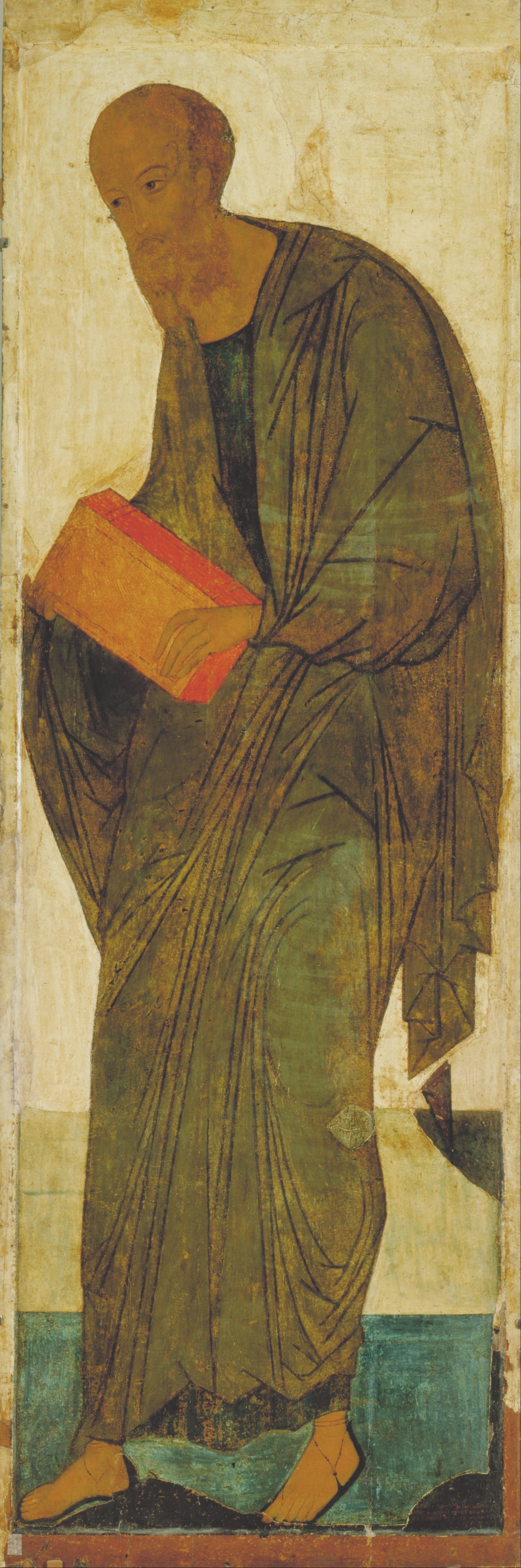
File:Andrei Rublev - St Paul. From Deisus Tier - Google Art Project.jpg

 He begins with what he is, and then moves on to why. He is firstly a servant of God. The Greek uses the stronger word, doulos, which means something more like a slave than a gentleman’s butler: he is under compulsion to do what his master commands, and he has no rights of his own to follow his own agenda in life. Then he is an apostle of Jesus Christ, one literally ‘sent’ to go where Jesus tells him and to do what he’s told. These are strong callings, and as a church leader he takes them seriously, as many other passages bear witness.

But even more interesting is what he thinks he is called and sent to do. We usually think of Paul as an evangelist and church-planter, and a pretty driven one at that. The purple passage in Philippians is about his desire to keep on pressing forwards, and in Romans 15 he tells us that having ‘finished’ the eastern end of the Mediterranean he now longs to strike off west towards Spain. Yet there is much more to Paul than an itinerant evangelist, and he goes on to explain to Titus just what is important to him, in terms far more to do with discipleship than with evangelism. His calling has three ingredients: to further the faith of God’s elect, to make sure they know and understand the truth, which, in turn, will lead them to godliness. I don’t think you can have a much clearer model of discipleship than that.

Faith needs furthering: disciple-makers know that simply leading someone to Christ is only the very first tottering step of the journey of faith, and there is a vital ministry, so often neglected in the church, of leading brand-new Christians by the hand through those first bewildering months and years of seeking to follow Christ.

Truth needs teaching: I’m often struck by the number of times Paul, in seeking to correct some kind of dis-ease in one of his churches, exclaims in exasperation ‘Don’t you know…!?’ If only we knew, the implication is, we would be a whole lot less dysfunctional. Disciple-making involves the ministry of skilled teachers to help people know and understand.

Godliness needs living out: again, there are all kinds of condemnations in Scripture for those who say one thing but live an entirely different way. Once we know the truth, we then need help to make it live in us, and burst out of us, 24/7.

So there’s a good starting-point in this trawl through biblical references to discipleship: a disciple is someone who is growing in their faith, who is learning more and more about what it means to follow Jesus, and who is allowing this new knowledge to shape their lifestyle and choices.


How are we doing, both as disciples and disciple-makers?