OT Lectionary

For those who want a change from the Gospel

Easter 5 – Genesis 8:1-19
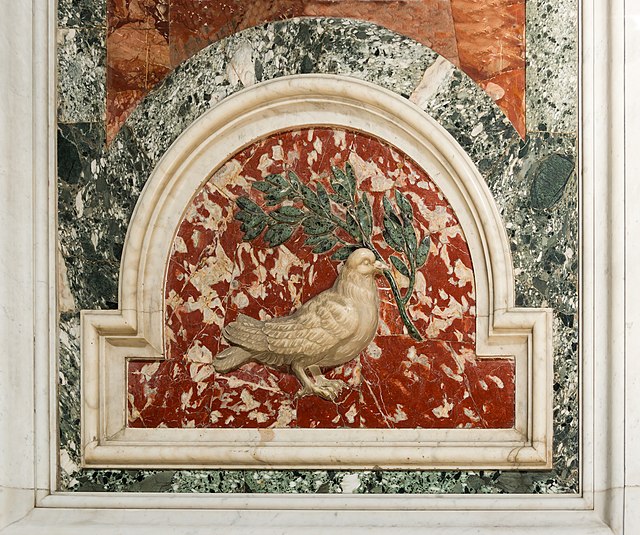
This week we have part 2 of the flood narrative which we began last week. It’s a well-known story, and we enjoy the images of birds flying away, and a dove with an olive twig, which has become a universal symbol of peace and rest. Sadly our lectionary reading doesn’t quite complete the chapter, and there is an amusing irony in some of the animals who had been saved from a watery death, no doubt feeling relieved that they are safe back on dry land, then being chosen for sacrifices. But I want to take a slightly different tack this week, and focus on one idea, from a Hebrew word which occurs in v.1. The word is zacar (pronounced zaarkar) and it is usually translated ‘remember’. God remembered Noah.

This word is used 235 times in the OT, and some notable examples would be God remembering his people in slavery in Egypt (Ex 6), remembering Abraham when Sodom and Gomorrah were destroyed (Gen 19), and remembering Samson one last time (Judg 6). In our culture we usually think of remembering something which we have previously forgotten. We suddenly remember where we put our car keys, or someone’s birthday, or to pick up some milk from the shops on the way home. So the sense we get from our English translations is that God had forgotten Noah, presumably because he was preoccupied with other things, but then one day thought ‘Oh my goodness! Noah! I’ve left him floating around! Oops – better sort that one out!’  

But the Hebrew sense of zacar isn’t like that, you’ll be glad to hear. When God remembers someone, he decides that the time has come to act for their good, to help them. The only thing that God is capable of forgetting is our sin. Otherwise we’re all held constantly in his heart and mind. So why then do we sometimes feel that God has forgotten us? Even Jesus felt himself to be forsaken by his Father as he died on the cross. And why does God seem to decide to zacar us at odd times, and often after some delay? If you add up the dates from our passage, it took around seven and a half months before God allowed Noah and his family out of the ark. Even round the world cruises don’t usually last that long. If he hadn’t forgotten him, why did it take so long to remember him? Maybe you have lived through times when it appeared that you had slipped out of God’s memory. Maybe you have had to wait for him to focus back on you and do something. It’s one of the hardest times to live through, and those periods really do make us question whether or not God really loves us, or even if he is in any way interested in us.

Well, let me tell you the answer to that question: why does God appear to forget us? The answer is: I’ve no idea. Frankly that isn’t how I’d play it if I were God. But he does. He decides at times to bring us to the front of his attention and act for us, and at other times not to. Our problem is that we don’t like waiting, but it appears that sometimes God thinks that waiting is good for us, so his loving purposes for us mean that we don’t get instant answers to prayers of solutions to our problems. Just as Noah was left for months floating around aimlessly until God ‘remembered’ him, so we can be left bereft, sometimes for years, until one day God starts to act. That’s how it is, like it or not.

So that leaves us with a choice. We can rail against it, moan and complain, or perhaps we can stop praying about the situation altogether, deciding that there’s simply no point since God clearly has forgotten us, or has taken against us for some reason. Or we can work with him. We can choose to trust him, that he hasn’t forgotten us, and is quietly working out his purposes for us. In the words of Maggi Dawn’s song, we can ‘sing in the darkness, and wait without fear’, confident that sooner or later he will zacar us and act for our redemption from whatever is troubling us. At the end of the day, it comes down to what we believe about God, and whether we really are confident of his love, goodness and justice. Waiting for him to remember raises important questions, and can hold up a mirror to our faith, a mirror which it would be more comfortable not to look into.

OT Lectionary

For those who want a change from the Gospel

Easter 4 – Genesis 7

In 2018 The Large Hadron Collider (or ‘Colliderscope’, as my son used to call it) had some major problems and was shut down for maintenance. On one radio programme they had an interview with one of the chief scientists, who was trying to explain what it was all about, and why he thought the machine had failed. Quite helpfully, I felt, the interviewer asked him whether, before embarking on expensive renovations, they had simply tried unplugging it from the wall and plugging it in again. We all know that can work, right? Well, the flood narrative in Genesis 6 – 9 seems to be the equivalent of God doing that with the world he had made, but which had gone sadly wrong. The problem, according to Gen 6:11-12, was about human corruption and violence, and God saw no option other than a hard reboot.

Did it happen? There is apparently some archaeological evidence for a vast flood in the ancient Middle East, and there is certainly no shortage of stories, from different cultures, of a great flood and some survivors in a boat. The most widely known is called The Epic of Gilgamesh, and it dates from around 2700 BC in Babylon, although scholars reckon that it might be a rewriting of a much earlier story. Just as this story took and used earlier traditions, so it has been suggested that the biblical story of Noah is a rewriting of the Epic, with, of course, only one God rather than a pantheon, and Noah replacing the Babylonian hero Utnapishtim. It seems as though different cultures thought and theologised differently about the same event. It is useful to compare our story with that of Utnapishtim, and so to learn what was distinctive about a Jewish retelling of the story.

In the Epic there are many gods, and they seem to be unsure about what they should do about the evil in the world. Eventually they decide on the watery reboot, but one god isn’t really happy about this decision, and so appears to Utnapishtim and tells him to make a boat in order to escape. This he does, and after not two but three birds have been released (a dove, a swallow and a raven) the boat lands and sacrifices are made to the gods. At this point we discover that in fact the gods themselves have very mixed feelings about what they have done to the human race, and not all are sure that the decision was the correct one.

So what is distinctive about the Jewish retelling of this story? First of all it comes as no surprise that there is one God and one alone. This monotheism is perhaps the central creedal statement of Judaism, expressed in the Shema: ‘Hear O Israel, the Lord our God, the Lord is one.’ It certainly makes life more decisive if you don’t have to run your decisions past a committee! YHWH is clear in his condemnation of sin and of those who unrepentantly proliferate it, just as he is clear that the righteous will be on the receiving end of his mercy.

A second indication of the mercy of God, which contrasts with the capriciousness of so many pagan deities, is that he tries the reboot knowing that it will not be successful. Indeed the first thing which happens after God makes the new covenant is that Noah goes on a bender and ends up shaming himself in front of his sons. This is hardly an auspicious start for the new humanity, but God holds to his covenant and continues to bless the human race, although once again they turn against him. I have said many times before that God’s love is never unconditional, but it is often unrequited.

The next point of interest is that God has a heart for all of his creation, not just humans. That he desired to save all the species he has made is significant, and there is much in Jewish theological thinking about the significance of the land, which can be either blessed or marred by what humans do on it. One fact that the contemporary green movements seem to have missed is that the best way to protect the planet, according to the OT, is not to sin on it. You don’t hear many people protesting about that!

But note finally that as dramatic and as ethically difficult as this story is, there are actually several times when God attempts to reboot his people. The exodus, the entry into the Promised Land and the return from exile are all portrayed as significant new starts in the relationship between God and his people, and of course the resurrection of Jesus is the one event in history which provides a new opportunity to begin again. So maybe this story is not so strange or difficult after all: maybe it prefigures the way in which God is going to show his faithfulness to his own people again and again.

OT Lectionary

For those who want a change from the Gospel

Easter 3 – Zephaniah 3:14-20

When I arrived at one of my parishes to take up my post as vicar I inherited a curate who had been in post some time. ‘You need to understand’, she told me fairly early on, ‘that in living memory people in this church have only ever heard one sermon: Jesus loves you and everything is fine!’

Last Sunday morning I preached at my home church on the Acts passage, from chapter 2 (See? I can do NT when I have to!). I used Peter’s sermon on the Day of Pentecost as a typical example of kinds of things the earliest Christians were preaching, and I noted first of all that the idea of preaching ‘the love of God’ is simply absent, not just from the Acts sermons but also pretty much from all of the NT. Then I noted that the theme which ran throughout the Acts sermons was the command to repent. I questioned whether we have made the gospel so nice that it has lost its cutting edge, and whether people deep down don’t want to be told ‘Jesus loves you and everything is fine’, but would rather know that there is the possibility of repentance, forgiveness and change. It certainly seemed to work in the 1st century!

But I was challenged by one person who said, in effect, that sometimes all we need is to know that we are loved. As a priest I was charged at my ordination and the start of each new post to ‘proclaim [the gospel] afresh in each generation’. Might it be the case, I was asked, that our generation doesn’t want to hear about repentance, but only about How much God loves them? Personally I wasn’t convinced, but it is a good question, and there are signs that in today’s OT reading there is some evidence that a classic OT idea, that of ‘The Day of the Lord’ was being framed afresh.

The idea of the Day of the Lord was apparently widely held long before Amos first mentioned it in chapter 5. He is clearly addressing people who thought they knew what the Day of the Lord meant, and believed it would be a day of great rejoicing, when God came to them in power to punish their enemies and make them top nation. But Amos subverts this, and proclaims woe on those who believe that when God comes it will be for a knees-up. Rather, he says, it will be a day of darkness and catastrophe, as God comes to judge the injustice and idolatry of the nation. He is certainly proclaiming the idea afresh for his current generation.

Zephaniah too summons the people to repent, with dire warnings of punishment and destruction when God appears, to ‘sweep away everything from the face of the earth’ (1:2). Even Jerusalem, the city of God, will be consumed, along with the whole world, ‘by the fire of my jealous anger’ (3:8). But then suddenly, and without warning, the Day of the Lord is proclaimed afresh afresh, in the oracle of celebration which forms our reading, and which stands in stark contrast to the rest of the book. Now God’s turning up will be an occasion for rescue, singing and festivity. It’s a very upbeat message, ideal as we continue to live through the Easter period. God’s coming to his people will mean forgiveness for sin, purification, defeat for enemies, and encouragement, as God sings to his people just as they usually sing to him. Naturally there are scholars who dislike these kinds of sudden U-turns in Scripture, and suggest that this final section of the book is a later appendix, perhaps celebrating the return from exile in Babylon. They may well be right, but the question is raised for us about what the Spirit might be saying to the Church today, and how that relates to the Bible’s message as a whole. We all know the feeling that now and again ‘God really spoke to me through that passage – it was just what I needed to hear!’ We also know the feeling that having heard the Bible we are left cold and feel that there was nothing there which spoke or connected. This underlines, I think, the responsibly of preachers and teachers to discern what God is wanting to say to people now. The gospel doesn’t change, but the nuances of it may well do, and the particular facets which will speak now may not be the same as those which spoke yesterday. It is our job, as preachers, to feed people with the whole counsel of God, but we won’t do all of it every week, so it is vital that we give people what they need now, even if that is not exactly what they would like every single time.

OT Lectionary

For those who want a change from the Gospel

Easter 2 – Exodus 14:10-31, 15:20-21

‘Sing to the Lord,
    for he is highly exalted.
Both horse and driver
    he has hurled into the sea.’ (Ex 15:21)

We’re probably used to this verse, to the point where we might even have lost the shock value of its complete political incorrectness. The complex story of the escape of the Israelites from Egypt and the destruction of Pharaoh’s army, told in chapter 14, goes beyond being a goodies vs baddies story. The language and the imagery used in the Hebrew text make it clear that this is not just an escape story: it’s actually about the struggle between creation and chaos. Back in Genesis 1 God begins his creation by confronting darkness and chaos, dividing the water (a potent symbol of chaos, as you will have seen if you have been an a dark beach during a night-time storm). The first man and woman are told to be fruitful, and are given meaningful work to do, working in harmony with what call ‘creation’. The writers of this story make it clear that what they want us to see in this story is a new creation, which is necessary because of the oppressive and chaotic reign of Pharaoh. The Israelites are indeed multiplying, but seeing that as a threat Pharaoh tries to limit their fruitfulness by killing their babies. Meaningful and enjoyable work is replaced by back-breaking slave labour. Pharaoh is asked nicely to stop it and let the people go, but in the end the only thing which will force his hand and break his hard-heated will is a series of events in which God uses the things he has originally created for destruction, and ultimately death. Finally the last barrier, the water of the Red Sea, is divided in two, with dry land appearing. But then it flows back, and the entire Egyptian army is wiped out.

There is an old rabbinic tradition which has angels around God’s throne wanting to sing songs of praise before their Lord, but being rebuked as God says “My handiwork [the Egyptians] are drowning in the sea, and you are reciting a song before me?”[1] What about loving your enemies? But the fact is that sometimes the only way for some people to receive freedom from oppression is for some other people to die. Oppressive empires are not disembodied entities, they are people selling their souls to evil, and refusing to act justly or mercifully. If you were to ask the people of the Ukraine how they would feel about the possibility of Vladimir Putin’s demise, I suspect there might be a few tambourines coming out. I doubt whether holocaust survivors shed too many tears after Hitler’s death in 1945. So when God worked his salvation for his people, it had to happen through the demise of other people, just as later the return from exile came because of the death of Babylonian king Nebuchadnezzar and the defeat of his oppressive nation by the Persians. Only as an evil empire is undone can a new age dawn. The Exodus really is a new creation, with nature itself working both destructively and creatively in the formation of a new people of God, the fulfilment of his promises to Abraham hundreds of years earlier.

Much Christian thought and indeed liturgy draws on the events of Ex 14 and 15 and sees in Jesus, and particularly in the Easter story, a new creation.

‘Christ our passover has been sacrificed for us: so let us celebrate the feast’,

begin the Easter Anthems. The baptism liturgy contains links between the water of the Red Sea and that in the font or baptistry, and some more of Paul’s writings remind us that like the Israelites we have been saved through water. But, as we would expect, Jesus’ working of the new creation has some important differences. It is not some cruel dictator who has to die in order that people can be free and recreated. It is Jesus himself, the sinless Son of God, and then, secondarily, it is us ourselves who have to die to sin so that we can be born anew to God. The Easter Anthems continue:

‘See yourselves therefore as dead to sin:  and alive to God in Jesus Christ our Lord.’

Our old sinful nature, the bit of us which rejects God and his rights over us as our Creator, has to be drowned so that we can rise to new life. Shed no tears for the old you: the new creation is here, won by Jesus on the cross. And pray for the eventual destruction of all that is evil and all those who unrepentantly pursue it.


[1] b. Sanhedrin 39b

OT Lectionary

For those who want a change from the Gospel

Easter Day  – Jeremiah 31:1-6

Part 2 of this week’s OT Lectionary blog celebrates Easter Day with a slightly more joyful and positive message for the Church. Like passages from Deutero-Isaiah, Jeremiah 31 is an oracle of restoration, which looks beyond the current situation of exile and suffering to a more glorious future, in other words a kind of resurrection. Like Isaiah 40, it begins with a reaffirmation that the covenant deal is still on, that, in the words which echo back to the covenant with Abraham, God will be their God and they will be his people, a reassuring statement for those who must have felt that they had gone beyond the pale with God, who had disowned them and banished them out of the land he had promised and given to them. No, say both Jeremiah and Isaiah, the relationship is still on. The resurrection of Jesus similarly promises to his people that nothing can separate us from his love, apart, of course, from our own deliberate and persistent rejection of it.

But the rest of our text for today spells out in more detail what that deal actually means, and resurrection rings through it, as Jeremiah lists six ingredients, or gifts we are given because of the victory of God over the evils which captivate us, and the forgiveness of the sins which enslave us.

We can enter rest. This is the equivalent of the ‘comfort’ which Isaiah promised to the exiles, an end to anxiety and the assurance of good things to come, which mean that we need be anxious about nothing. Our sins are forgiven and our hard service over.

We can be loved. God’s love is everlasting and constant, even though at times it is unrequited. For  God’s people, the good news is, in the words of the old adage, if you feel far away from God, it is you who have moved. God’s love is not unconditional, but it is available, and always will be while we are on this earth.

We are drawn. If something has come between us and God, if we have experienced some kind of exile, it is not up to us to find our way back home, any more than the lost sheep in Jesus’ parable had to sort herself out and come back to the shepherd. Like the lost son’s father, God is out looking for us, and runs to welcome us back into the family.

We are rebuilt. Like the exiled Jews we have all know times when things all around us have collapsed. It might be bereavement, illness, some enormous failure from which we feel we can never recover, but the good news is the same. If even death itself can be overturned, there is nothing, nothing, which cannot experience resurrection and rebuilding. Therefore

We can be joyful. We might not quite be up to dancing with tambourines, but the Bible is full of promises of the restoration of those who are weeping and mourning, as a down payment towards the time when sadness and misery will forever be things of the past.

We can be fruitful. One of the main curses of the exile was having to leave the land, which throughout the OT is seen as a gift from God, and a place of fruitfulness, thanks to its position in the fertile crescent. For an people of an agrarian culture the Israelites must have found living in the desert a difficult experience, as indeed it had been for them as slaves in Egypt. The prophet promises fruitfulness for those who may well have felt that were wasting their lives away. Resurrection holds out to those who feel that their lives are a waste of time the promise of purpose, effectiveness and results. We really can make a difference.

We can be attractive. We are so often used, as members of Christ’s Church, to being marginalised, or as we considered three days ago, despised and rejected. The prophets have many passages on the time when rather than hate us and our God, people will flock to us to find wisdom and to feast on the good things which God offers us. Resurrection tells us that not only will we make it to Zion, the heavenly sanctuary, but many other will too, because of the witness of our words and lives.

Happy Easter!

OT Lectionary

For those who want a change from the Gospel

Good Friday – Isaiah 52:13 – 53:12

Two for the price of one this week, as this post will concentrate on the Good Friday OT, and a second on Easter Sunday.

On this day of all days, as we gaze upon Christ on the cross, we can see in this ‘Servant Song’ from Deutero-Isaiah a picture of Jesus, the servant on whom God has laid the iniquity of us all. That is certainly how many of the NT writers read the passage, and when the Ethiopian eunuch was puzzled by it, Philip used the text to explain the good news of Jesus. Of course by now you are all sick of me telling you that the OT isn’t primarily about Jesus, but rather that  people, having met and understood Jesus, could not help but see foreshadowings of him in the Jewish Scriptures, even if he was not their primary or original meaning. There are suggestions that the Servant of Isaiah was not an individual but the despised and rejected nation of Israel, as a whole, a nation which had suffered through exile and slavery but whom God would soon rescue and use to bring good news to the nations of the world. This is certainly how many Jewish commentators have understood the passages.

But I recently read a commentator who had an interesting twist on the Servant Songs, and this one in particular, which I believe can illuminate the place of Israel at the time, and which can also help us to reflect on the marginalisation of the Church in our day. His work began by looking for differences, rather than similarities between Christ and the Servant. Did the Servant, for example, actually die? While there is some language about death, slaughtered lambs and so on, the text doesn’t actually mention the death of the Servant. There is also the material on the Servant’s disfigured appearance. People were appalled to see the state of him, and we usually read this as the state of Jesus’ face after the Roman soldiers had beaten him up. But the Hebrew words are used elsewhere not of violent physical injury, but rather of disfiguring illness. We know the fear which people in biblical times had of anything which looked like leprosy, believing it to be highly contagious. Not only was it unpleasant to look at: it was positively dangerous to get too close. So the reaction would be to despise and reject such a sufferer, and to hide one’s face from him. Not only did he have to live with physical suffering: he also had the social stigma of his disability. Perhaps the eunuch really related to this. And if that was so, the whole idea of him being a sacrificial victim to take away sin was completely ruled out, as sacrifices had to be without blemish. So it could be that too close an identification of Jesus with the Suffering Servant simply won’t work.

So let’s return to the corporate identification of the Servant with Israel as a people, with a calling to bring forgiveness and reconciliation between God and the nations. Clearly not every individual was disabled or disfigured, but might Isaiah have been suggesting that the rejection of Israel, and her forced incarceration in Babylonian exile, was similar to the social stigma and isolation which someone with a disfiguring disease would have experienced within Israel? The less politically correct might still today describe as ‘a leper’ someone who was for whatever reason socially outcast and unattractive. It is certainly true that throughout history Jewish people have been ostracised and hated, as both Shakespeare and Hitler would know. Nevertheless Israel as a nation were God’s people, and had a calling to look outwards in mission to gather all peoples to the worship of the one true God.

I’m not saying this is the only, or even the correct, interpretation of these texts, but I find it illuminating as I reflect on the place of the Church in 21st century Western society. People both hate us and reject us; our reputation is at rock bottom, and, like Israel, we thoroughly deserve much of it, for our irrelevance, our corruption and our compromise with the spirit of the age. It is interesting to read Is 53 as not about Jesus but about us, partly because like a mirror the text shows us to ourselves as we really are, but also because it reassures us that we are still God’s people, that our mission and his love for us remains intact, and that nothing which has happened is outside the mysterious purposes of God. It can encourage us to believe that however despised God’s Church may be, we will eventually see the light of life and be satisfied.

OT Lectionary

For those who want a change from the Gospel

Palm Sunday – Psalm 118:1-2, 19-29

Jewish tradition has it that what we now call Psalms 113 – 118 were recited by the Israelites as they marched out of captivity in Egypt, and thus form a subsection of the Psalms called ‘The Egyptian Hallel’ (or ‘Praise’). In later Judaism they were recited during the Passover liturgy, and the Church today uses Psalm 118 particularly during Holy Week and Easter. Scholars who like to group the Psalms neatly by their genre have scratched their heads over this one, since it contains several different moods and flavours. The first few verses provide a call to corporate worship, but in verse 5 the mood changes as an individual expresses confidence in the Lord because of his deliverance from (unspecified) human attacks. Then in v.15 there is another expression and confidence which calls forth exuberant praise. In v.19 where our filleted lectionary reading picks the Psalm up again, there is a prayer both of thanksgiving for past deliverance and a prayer for future victory. Finally we have a call to gather in the sanctuary to worship God. The Psalm also resembles ‘Entrance Liturgies’, such as Ps 24, which would have been used at the gates of the Temple, although of course the Israelites escaping from Egypt would have no physical Temple for centuries, and not even the Tabernacle for a few months. So all in all, a bit of a mish mash.

But I wonder if a key to understanding this Psalm, and its use over the Easter period, lies in one particular Hebrew word: sha’ar, which means ‘gate’. Here it obviously refers to a physical gate, as the doorway into the sanctuary, into the presence of the God of Righteousness, through which only the righteous could pass. But the Temple would have had doors, not gates. So what’s the difference?

If you were to come to my house (and you’re all very welcome!) you would ring at our front door, which is famously opaque. Anything could be going on inside, and you would have no idea. But before that, you would have come through our front gate, which is about a metre high and made of wooden slats, so it forms no sight barrier at all. An Anglican collect for Easter Eve prays ‘that through the grave and gate of death we may pass to our joyful resurrection’. In other words, we can see through death to what awaits us as followers of him who was the firstborn of the dead. Many in our world see death as a door rather than a gate, and so dread it, having no idea what, if anything, lies beyond it. Others make up their own ideas: I took a funeral in Jersey where the family were convinced that Grandma had turned into a seagull, and throughout the service I felt really guilty in case it was her I had lobbed a stone at only the day before when she tried to nick my chips on the beach. Elsewhere we tell ourselves, somewhat unconvincingly in my experience, that ‘Death is nothing at all’, or that ‘I did not die’. Whether black dread or sentimental poems attempt to form our views on death, we have no need of them. Death isn’t a door, it’s a gate, and it’s a gate into something much more wonderful even than a visit to chez Leach, if that were possible. It’s a gate which we are meant to be able to see through.

This Psalm, therefore, is primarily a call to celebrate resurrection, though not in a way, in spite of our lectionary filleters, which ignores the harsh realities of pain and persecution. We can look over, and through, the gate of death confident that where our Lord has gone, we will follow. The appropriate responses to this fact are all expressed in the words of Psalm 118. We have suffered, and will continue to do so. But the Lord is our rescuer. We have known that in the past, and we will know it again in the future. Therefore we rejoice and give thanks, and call others to celebrate with us. We go together into God’s sanctuary, and we have past-fuelled hope for the future, because God’s love endures for ever.

OT Lectionary

For those who want a change from the Gospel

Lent 5/Passion Sunday – Ezekiel 37:1-14

There are some things which, once you have seen them, in the famous phrase, you can’t unsee. Try as we might (and this blog constantly aims to encourage us to try) to focus on the original meaning of OT passages, once we have seen Jesus, we can’t unsee him. The whole of the OT becomes a very different animal. Indeed, much of the writing of NT authors like Matthew and Paul is a wrestling with how we understand the Scriptures differently now that we have encountered the Word of God in Jesus. So today’s famous passage is often read in that light (and of course in the light of our culture of Enlightenment individualism) to speak of our individual resurrection on the last day. The question ‘Can these dry bones live?’ is answered with faith-filled enthusiasm ‘Of course!’ After all, don’t we proclaim that truth every week in our Creeds?

But to read this passage as a promise of individual resurrection is to miss its impact on the original hearers. They had watched as the Babylonian armies under Nebuchadnezzar had systematically taken away their three greatest theological foundations: The monarchy had been deposed as they came under foreign rule, the Temple had been torn down in front of their eyes, and the land had been overrun and conquered. They must have feared for the fourth foundation, the people of God. Indeed the unknown prophet we call Deutero-Isaiah was to wrestle with the question of whether or not they were still God’s chosen people in Isaiah chapter 40. So with all these institutions being torn down, what was there left to be certain about? And was there any hope at all of resurrection?

Just over 20 years ago a landmark book explored ‘Churchless Faith’, the growing phenomenon of people who had given up on church without having given up on God[1]. I am hearing that this trend is continuing, that there is an increasingly large group of people who no longer attend church, but are seeking to live out their Christian discipleship nevertheless. Indeed I was shocked to hear of a few famous people whom I would have regarded as among my heroes of faith who are now in this position. I can also see, if I’m honest, that in retirement I could so easily go down the same path. It’s really hard to belong to someone else’s church when you have previously led your own! And, of course, Covid has done nothing to help with this, since we managed for a couple of years to avoid meeting together pretty successfully. It seems on a bad day that Church has had its day, is increasingly irrelevant, and is busy tearing itself apart over battles which it lost 50 years ago. So what keeps me going? Why do I dutifully turn up each Sunday? And why do I hear so many people who do still go around moaning that it does them no good at all, and even leaves them more angry and frustrated?

The answer, I suppose, is that I do still somehow hang on to the belief that these dry bones can live. Ezekiel is at pains to tell us that the skeletons are ‘the whole house of Israel’ (v.11) This is not about individual reward at the end of time: it is about the institution of God’s people and all that fed and nurtured their faith. It is a central part of the spirit of our age that life, and therefore Church, is about me as an individual: it is there to satisfy me and make me feel good. Like a good consumer I can shop around if I don’t happen to like what is on offer at my current church, and I can even choose to stop shopping at all and grow my own. I think we have to see the current disenchantment with organised faith in this light. We are no longer happy to do anything out of a sense of duty if it doesn’t feel good doing it, but the Bible urges us to steadfastness and faithfulness, of the kind which Jesus displayed in Gethsemane and on the way to the cross. It certainly wasn’t going to feel good, but it was the right thing to do. I also can see that to cut myself off from God’s people, from the public reading of Scripture and the singing of his praises could well be for me (not of course for everyone, but certainly for me) the start of a slippery slope to giving up on my faith altogether. I am reminded of 1 Timothy 1 and the possibility of coming so far but ending up with a shipwrecked faith. So, without wishing to condemn anyone else, this is where I am at the moment, holding on but praying for sinews, flesh and above all the breath of the Holy Spirit to turn us once again into a mighty army. Maybe our discontent is God’s call to fervent intercession.

Sorry this is not a detailed exegesis of the passage (you can find previous attempts to do that here and here) but I think this is becoming an increasingly big issue, and is certainly live for me at the moment. Maybe it is for you too.


[1] Jamieson, Alan (2002) A Churchless Faith: Faith journeys beyond the churches. London: SPCK.

OT Lectionary

For those who want a change from the Gospel

Lent 4/Mothers’ Day – Ex 2:1-10

As I haven’t yet met a church which does Lent 4 as opposed to Mothers’ Day I have chosen for our consideration this week one of the two OT passages from the lectionary, the birth of Moses in Exodus 2. Like the alternative, 1 Samuel 1 (the birth of Samuel) it is meant to be an example of good motherhood, and as such ignores the more negative aspects of the celebration of this particular festival, like those who cannot become mothers, those who have lost mothers, or whose relationships with their mothers were abusive or toxic. It is a minefield for churches to negotiate, but this passage takes a different and more positive tack.

In context, this passage comes hot on the heels of the arrival of a new Pharaoh, to whom Joseph meant nothing. The memory of his saving of the nation during a time of famine had faded, and now the welcome guests of Israel had become troublesome immigrants, coming over here and talking our jobs etc etc. So they are put to work as slaves, and, as a final solution, all baby boys are to be killed at birth. So what is a good mother to do? Or rather, what is God to do?

Against this harsh narrative in Ex 1 comes a beautiful much softer story of a mother’s ingenuity in saving her son, who will one day save the people. But reading it in the English translation, we miss two important words, which give us a hint to a much deeper interpretation of the text. The author wants us to read the beginning of Exodus against the background of the beginning of Genesis. What this chapter gives us is not so much a salvation story as a brand new start.

The first word, in v.2 is (in the NIV and NRSV) ‘fine’. Moses’ mother sees that he is a fine baby, which doesn’t mean that he is a good baby, that is one who doesn’t cry too much, but rather that he is whole, appropriate and pleasing. The Hebrew word is the one used of God looking at what he has created each day and declaring it ‘good’. No doubt the author meant the readers to glance back to the creation story in Gen 1, as he signals that God is about to recreate his people. But this nuance is heightened as the author uses another word loaded with meaning. The word used for the basket in which  Moses is set afloat is the same word used of Noah’s Ark. The Flood narrative is another story of a new start, as God tries to deal with the evil which his good creation has become by saving one righteous family to reboot the human race. There are times when the only solution is to unplug it from the wall and plug it in again, and God is about to do that through this tiny baby.

So what about Mum? There are two main motifs here, I think. One is obviously about nurture, care, protection, ingenuity and all the other traditional attributes of a good mother. One can only imagine the anxiety with which she lived during those three months of trying to hide a crying baby from the earshot of the prowling soldiers. Even a little gurgle during his sleep must have had her on tenterhooks.

But the second attribute of good motherhood which is held up for us here is the ability to let go and trust God. We see that twice in these verses: once when she sets him off in his basket on the Nile, and again when he grew up and could be safely returned to Pharaoh’s daughter. Both of those events must have been heartbreaking for her, but in each case she knew when the time was right, and trusted that God would work out his purposes through her beloved son.

Having glanced back to see this text as a new creation story, we can’t help but glance forward to see echoes into the future as well as from the past. Mary must have felt that sword entering her soul as she had to let go of her baby and allow him to grow and fulfil his God-given calling, including his torture and death. But in Jesus too we have a new start story, a recreation through which the human race can be saved. Those who are mothers might well think about how they have had to let go and let God when it comes to their babies, and might well pray that their offspring will be used mightily by God.

OT Lectionary

For those who want a change from the Gospel

Lent 3 – Exodus 17:1-7

There are many ways in which one might approach this wonderful story from the Wilderness cycle. The people have escaped from Egypt, crossed the Red Sea, and are now in the desert. They have known God’s miraculous provision of manna for them to eat, but now there is an even more pressing problem: they have nothing to drink. On a forced march, through the desert, in a temperature of nearly 50o, it has been estimated that with no water they would be unlikely to last more than seven hours. So the problem is urgent, to say the least. We often read this story as another one of the many ‘grumbling’ narratives to be found in Exodus and Numbers, but to be honest if I were them I might find myself grumbling, at the very least.

I want us to read the story from a different point of view. Moses the leader is one of my favourite OT characters, and over the years I have drawn much inspiration from him. As a leader myself, sometimes of grumbling people, I can’t help but feel for him. Quite apart from his own thirst, he felt keenly the responsibility for the people, as other grumbling stories clearly demonstrate. So what is he to do? Or, for our purposes, what is he to use to do it?

The first thing to note, though, is that there is a common thread which runs throughout the grumbling narratives. It goes like this: the people complain, Moses doesn’t know what to do, so he takes it all to God, then God works a miracle. We see that cycle several times during this period of Israel’s history. That challenges me. When faced with an intractable problem, is my first, immediate and instinctive reaction to pray? More often I confess that I’m likely to try to solve the problem myself, and then to drown in self-pity and single malt. I can’t help but wonder how many times I could have seen a miracle if only I had asked for one.

O what peace we often forfeit,
  O what needless pain we bear,
All because we do not carry
  Everything to God in prayer.

But I want to focus not on the people of this story, but the physical objects involved: a stick and a rock. Both of these can tell us deep truths about ourselves and God. When Moses talks to God, he fears that he is about to be stoned. The people have no water: in fact the have very little of anything in the desert. But they do have rocks, plenty of them, and Moses fears that they might begin to put them to use against him. But then he uses a rock to give the people drink.

God tells him to take his staff, and the storyteller is very keen that we know that this is the same staff with which Moses worked miracles in the past. He mentions the turning of the Nile into blood (v.5), the first of the plagues, but of course the same staff was used again and again, and used finally to open the Red Sea.

I think there are two key messages here. The first is that in times of trouble we need to refocus on what God has done in the past in order to build faith for the future. What has ‘God’s staff’ done for you in the past? How have you seen him solving problems, getting you out of scrapes, answering prayers, in the past? How does that encourage confidence in God for what you are going through now, and for what lies ahead?

The rock, though, gives us an even deeper message. The very things which Moses feared would bring him down turned out to be his salvation (and that of the people). We used to sing a worship song years ago which contained the line ‘He turns our weaknesses into his opportunities’. What is there in our vulnerability and fear which God might use ‘so that the glory goes to him’? Sometimes the very things we dread, if confronted, become our salvation. Moses, fearing for his life, nevertheless goes out in front of the people (v.5) and makes himself vulnerable to the expected stoning. This act of courage and obedience allows God to work through another rock and bring salvation to the people.