OT Lectionary

For those who want a change from the Gospel

Lent 2 – Genesis 12:1-4a

This snippet of God’s big story is tiny in proportion to the importance it has. On one level it tells the story of, and the reasons for, Abraham’s call, but actually it is a hinge passage on which turns the whole of the story of redemption. It marks four transitions:

1)         From myth to history

I can remember at my very liberal theological college much debate about when exactly history begins in the Bible: who was the first real historical character for whose existence there is evidence? It is generally reckoned that Genesis 1-11 are mythical in nature. That doesn’t necessarily mean they’re not true, but they are the stories Israel told in order to explain life, the universe and everything. How did we get here, and why is it all so beautiful and such a mess at the same time? Expecting it to answer scientific questions about cosmology is like asking when exactly Pandora opened her box, and whether it was made of wood or metal. That just isn’t the point of the story. But when we arrive at Genesis 12, we have a real character who actually lived.

2)         From judgement to salvation

From Genesis 3 onwards we have a catalogue of human rebellion against God, which involves murder, perverted sex, violence, corruption and arrogance. These chapters are perhaps summed up in 6:5 – ‘Every inclination of the thoughts of the human heart was only evil all the time.’ Even God’s attempts to wipe everything out and start again resulted in yet more sin. So God tries a different tack: he will chose for himself a righteous man to found a holy nation whose role is to call all the nations back to God and to obedience to him, so that the whole world can be in receipt of his blessings rather than under his judgement.

3)         From call to recall

In Gen 11 Abraham’s father Terah had left Ur in Mesopotamia with his family to move to Canaan, but they had settled on the way in the city of Haran, which was very similar in nature to Ur. So God had to call Abraham again in 12:1. Before he had been taken by his father, but now he has to go at God’s command, even leaving his father behind. Abraham is the patron saint of those who begin well with God but need to encounter him personally if they are not to settle down in a pretty similar place to the one from which they had set out, and of those for whom family faith needs to transition into personal faith.

4)         From all people to the chosen people

But with this new call came a new task. Up to now God has dealt with all people, all the nations who came into being with the scattering at Babel. But now his new plan is revealed. He desires to bless all nations, but he chooses to do it through one nation, Israel. And, being God, he chooses to found this nation from a couple unable to have children. Humanly speaking, Israel simply could not have come into existence: the fact that it did speaks of divine purpose from day one.

Abraham’s task is twofold: he is to be blessed and to bless. His family are to be the means through which all the nations of the earth are to be brought into relationship with God. The Jews are called to be waiters and waitresses of the good things of God to the whole world. Yet so often they, and the Christian Church which grew from them, want the first without the second, like waiters sitting and eating a meal themselves while others go hungry. In the OT the people are constantly being reminded that ‘it is too small a thing’ for them merely to work with their own nation, but rather they should be there to serve and bless others. Simeon recognised that the infant Jesus was not just to be for the glory of Israel, but also as a light for revelation to the Gentiles. Jesus cleansed the Temple from its narrow nationalism and reminded people that it was a house of prayer for all nations. And the NT Church needed some miracles, a dramatic vision and a General Synod before people realised that Jesus was for Gentiles as well as Jews. Today, whenever we run Church according to our own preferences and forget that we exist for the benefit of non-members we are heirs of this same sin: wanting blessing but not wanting to be a blessing.

In this season of Lent this raises questions about our observances: are they so that we will be blessed, or will they in any way bless others?
OT Lectionary

For those who want a change from the Gospel

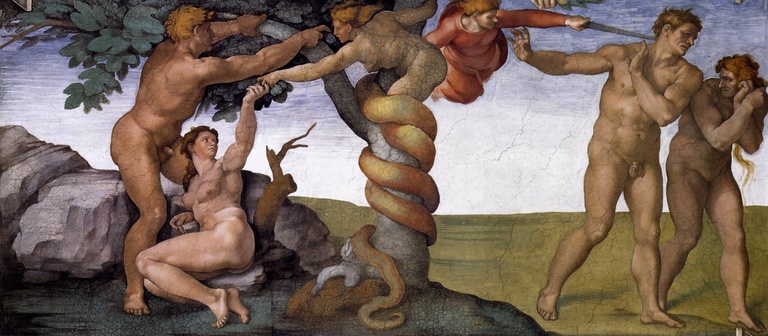
Lent 1 – Genesis 2:15-17, 3:1-7

This Sunday is the first of Lent, a period of penitence and reflection on our sins and lack of holiness. But what exactly do we mean by ‘sin’? If I were a fly on the wall, or could read people’s minds, I would love to know what was going on in people’s minds when we were praying the prayer of confession at the start of our communion services each week. I would be interested, not for the prurient pleasure of being a spectator on others’ peccadillos, but because I am interested in what exactly we count as sins needing confession. I suspect if I had such telepathic gifts I would observe a few lost tempers and harsh words, maybe some petty dishonesty with the biros at work, and even perhaps an excessive interest from some in Naked Attraction on Channel 4. It is fascinating to know what Christians think sin is, and today’s OT reading gives us what may be some new angles.

We know the story. God generously gives the man and woman everything to eat and enjoy, apart from just one tree. If we were led into a great library and told we could read any book we liked except this one, where would we all immediately head? It’s human nature. So all the other wonderful vegetation fades into the background, with all the focus on that one. However we read this story, talking snake and all, it tells us truths about human nature but also about the nature of sin as the Bible sees it.

Sin is doubting God. Helped, of course by the snake, who twists and misquotes God’s words, the couple are led to begin to believe that maybe God hasn’t been as all-blessing and generous as they had previously thought. Where there are limits they are for our good, just like speed limits on the motorway, but sin’s roots lie in questioning whether a good God has put limits in place for our safety, or whether he’s just being a bit of a killjoy. This story is often called ‘The Fall’, but I heard one theologian saying it would be better described as ‘The Rupture’, where the human race burst out of the health-giving limits to go where it should not have gone. Sin is fundamentally thinking that we know better than God.

Sin is entering into discussion. There’s a sense in which the battle is lost at the start of verse 2, when the woman tries to discuss the situation with the snake, and clarify the issues. Most of the time we don’t sin suddenly: we make choices after weighing up the options. You can’t win an argument with the devil, and Jesus knew this. There’s a real contrast with Jesus in today’s gospel and Eve’s attempts to argue the toss. Jesus refuses to countenance any discussion: he dismisses Satan’s temptations with terse phrases and concise Scripture quotations. When we start to explore sin or rationalise it, we’ve lost.

Sin is wanting more. That rupture occurs when we want more than it is right for us to have, or more than God has chosen to give us. The idea of ‘becoming like God’ in v.4 is an attractive one. One commentator on this passage suggests that the Hebrew for ‘knowing good and evil’ is not simply about knowing what’s right or wrong, but rather implies deciding for ourselves what is right or wrong, thus rejecting God’s reign over our lives and doubting that he knows best what’s good for us. Sin isn’t just about greed and covetousness. It’s about wanting, in Frank Sinatra’s immortal words, to do it my way.

Sin is putting desire above obedience. The final move which clinched the deal for the couple was seeing how nice it would be to eat the fruit. They had been told very clearly what they should do and not do, but all that went out of the window as they gazed on the forbidden fruit and imagined how wonderful it would taste. It was that final triumph of human desire over obedience to God which actually got the fruit into their mouths.

So that journey, of doubting God, arguing about it, wanting more and placing what we feel we want above what God has said, is the royal route to sin, which Jesus so steadfastly refuses to travel in the Gospel reading. Maybe Lent is a time to look more deeply, not just at what we have done to offend God, but why we did it and how we got to that point.

OT Lectionary

For those who want a change from the Gospel

Sunday Before Lent – Exodus 24:12-18

It takes all sorts … One day recently I received some really bad news, which completely shattered me. The next day I just wanted to get out of the house and go somewhere different to mope. We are fortunate enough to live close to the Peak District, so the obvious choice would have been to go out and find a mountain somewhere, or a beautiful vista which would lift me out of my depression and get me back in touch with the splendour and majesty of God as revealed in nature. But I didn’t fancy that, so I got out my bus pass and went instead to Doncaster.

Whilst (no offence) you may feel that Doncaster is a highly appropriate place for the depths of despair, it was, I admit, an unusual place to choose, however much it fitted my dismal mood. In the Bible, if you want to get away from it all you go out into the desert, and if you want to meet with God the place of choice is usually a mountain. There is something majestic about a mountain with its summit enrobed in cloud, and it is easy to see why people have glimpsed something of the divine in such scenes. Mountains in Scripture are places of encounter. To be invited up there by God is an incredible privilege. How much more then, is the invitation to stay up there with God.

It is so easy to telescope the biblical stories to fit in with our frantic 21st century Western lifestyles, but our passage challenges that with the details of the periods of time involved. Moses, responding to God’s invitation, goes up into the cloud, but then has to wait six days before God speaks. And when he does speak, the result is that Moses stays up there for 40 days, nearly six weeks.

Meeting God, like recovering from a severe shock to the system, takes time. But we live in a world where we want pain to go away instantly, and where we expect things to happen for us at the snap of our fingers. The period of 40 days we are about to enter could be a time to slow down, to give God quality time, in the hope of a life-changing encounter with him. Of course we’re dreadfully busy, and the world will stop turning if we don’t attend to business, but God has already thought of that. Aaron and Hur, Moses right- and left-hand men, can sort things out while he’s away. To be fair Aaron wasn’t going to make such a great job of that, but that’s another story. Lent can also challenge what I call ‘Saviour of the Universe syndrome’, the belief that if I don’t do it, it either won’t get done, or it won’t get done as well as I would have done it. In either case disaster would be the outcome. But what God wanted was a leader who knew him intimately, who would much rather stay in his presence than get on with the job down below. One day in God’s courts is better than a thousand at PCC meetings.

Lent, then, is a chance to refocus. When I was a vicar we deliberately dropped some of our activities and tried to avoid busyness, and the world didn’t end. There might be other ways in which we can clear the decks to give God quality time, and places to go which for us will provide encounter and healing. Lent reminds us that for the temperamental Marthas Mary has chosen more wisely.

But, as you’d expect, there’s a twist. If going up the mountain with God is a great thing, and resting there with him is a good thing to do, why, in our Gospel story, does Peter get told off for suggesting that very thing? Many a sermon has been preached about not trying to hold on to spiritual experiences and high spots by building huts to stay in. Of course both are true. Time on the mountain is designed to strengthen us for our day to day lives and ministries. We can give God time, and rest in him during Lent, but then, fortified by that experience, we have to get on with the task of proclaiming the good news that Jesus is risen and is Lord of all the earth.

OT Lectionary

For those who want a change from the Gospel

2 before Lent – Genesis 1:1 – 2:3

Different cultures at different times have sought to answer that great eternal question: How did we all get here? In the pages of our OT we have three such stories, each coming from a different time or place, and now in 21st century Britain we have a fourth. They are all ‘myths’, a technical term not for something which isn’t true, but rather for a story we use to tell us truths. We don’t have to believe the story, but what it tells us might still be useful. Neither are we meant to ask practical, scientific questions about it. We all know the story of Pandora’s box, and we all understand the truth that once evil is unleashed in a situation it is next to impossible to box it up again. But to ask when she actually opened the box, or whether the box was made of wood or metal, or whether the lid slid off or was hinged, is to miss the point altogether. That’s why so many non-Christians have found some of the Bible a big turn-off for them: they want to ask scientific questions about creation, while what the text presents is a completely different kind of literature.

The earliest myth we see in the OT is not Jewish, but Babylonian. No doubt Israel  came across this story while they were in exile in Babylon in the 6th century BC. The chief god Marduk was locked in mortal combat with Tiamat, a great sea monster, but managed to cut her in half, creating the heavens and the earth out of the two bits. Of course the Jews didn’t believe a word of it, but in the same way in which we might refer to Pandora’s box, they used this language to talk about their God. So the third account, which is our lectionary passage for this week, is based heavily on this Babylonian myth, except that it is Yahweh who fights against the chaos and evil. The word used in Gen 1:2 for ‘the deep’ is the same word as Tiamat, the name of the Babylonian sea monster, and in other places in the Bible the same creature is called Leviathan or Rahab. In each case we see her being killed, crushed or cut up by Yahweh. It’s the equivalent of saying ‘Only Jesus can put the lid back on Pandora’s box!’

But not content with that, the Genesis 1 account continues to use the Babylonian religion to demonstrate that actually Yahweh is the only God. All the things which were objects of worship, sun, moon, stars and so on, are really there because God put them there. They wouldn’t exist without him. So in fact this particular account is a piece of polemical writing, intended to attack an erroneous point of view. If any of you Israelites have in any way absorbed the worldview of the people amongst whom you are living in exile, you need to hear this: there is only Yahweh, and all the things which those people bow down to and worship are nothing at all. Anything which exists, in heaven or earth, is there because our God put it there. So don’t you ever forget that.

Just for completeness, the other two creation stories come from Genesis 2 and the 19th century. The story in Gen 2 dates from around 500 years earlier than today’s passage, when Israel thought they were the bee’s knees under David’s reign, when everything was going wonderfully well and humans were supreme in an age of prosperity and peace. Note how in Gen 2 the man is the centre of the story, while in Gen 1 God is. Adam is made first, and everything else is made for his pleasure, including, finally, his wife. In Gen 1 brings human beings onto the stage only at the very end of the process, both as the crown and climax of creation, but also almost as an afterthought. The different cultures which wrote these stories saw things very differently. The people at the time of Gen 1 were sadder and wiser, and hod a lot more humility.

And of course the myth we tell ourselves today is the story of evolution by natural selection, first propounded by Charles Darwin in 1859. This account is slightly different, in that we now have ‘science’ which tells us this is actually the true story, but personally I find this account every bit as unconvincing as the Jews found the story of sea monsters and gods. Evolution is taught as fact in our schools, while to my mind it is just another story which our age tells itself, emerging from a culture where we believe that the human race is god and that through our enlightenment and through science we can and will eventually know and therefore control everything, thus making any kind of religious God redundant. The ‘Big Bang’ theory is just that: a working hypothesis. We all know those pictures of evolving animals, but what we don’t have is any evidence not just for horses getting bigger, but for a butterfly turning into a giraffe. Evolution within species seems pretty self-evident, but between them it is a lot less convincing. So maybe Gen 1 is as relevant as ever as a piece of polemic, reminding us of our humble place in creation, and the reign of God over all the created world.

OT Lectionary

For those who want a change from the Gospel

3rd before Lent – Isaiah 58:1-12

In today’s Gospel Jesus explains his relationship with the Law and the Prophets, what we would call our Old Testament. So what better week to concentrate on the OT passage? To understand it properly, and to apply it to our own lives, we need as always to look at the context. The text comes from the third section of the book we call Isaiah, generally recognised to come from an unknown prophet known as Trito-Isaiah, or Third Isaiah. His predecessor Deutero-Isaiah, or Second Isaiah, spoke to the people in exile in Babylon and announced that the covenant relationship with Yahweh was still on, and that he was about to act to free them from exile, and to take them back to their homeland, where the Temple would be rebuilt and they would enjoy a life of complete restoration and shalom – wholeness and harmony. But things didn’t exactly work out like that. Yes, the city walls and the Temple were rebuilt, but the national life wasn’t. Trito-Isaiah paints a picture of a society every bit as oppressive and unjust as that which caused them to go into exile in the first place, and his contemporaries like Ezra, Nehemiah, Haggai, Zechariah, Joel, and Habakkuk show us a society in a real mess. That kind of mess, I believe, is pretty similar to the way of the West in the 21st century, as we cope with those twin legacies of our enlightenment culture, introspection and individualism.

The chapter is laid out like a dialogue between God and the people. First of all Yahweh instructs the prophet to cry out against the people, and then the people respond with an angry question to God: why have we done all the right religious things but you haven’t answered our prayers? The rest of the chapter is God’s response to this accusation, along with glowing promises for the future if they only get things right. But the question is a good one: whey, when religious believers do all the right religious activities and disciplines, is life still in a mess?

First of all, I think we have to have some sympathy for the ‘devout’ Jews. They have lived through the national traumas of the destruction of their homeland and 50 years or so of exile. Yes, God has rescued them, but where exactly do they go from here? Do we need a Temple in order to worship? We’ve managed somehow while we were in Babylon. And what about the monarchy? If we haven’t got a dynastic king, who will be in charge? And how do we get over the national trauma we’ve lived through? We know from two years of covid how things are very different now, in so many ways, so just imagine how they would recover, or how the Ukraine as a nation will quite literally rebuild itself.

So the conditions are just right for a good bout of selfishness. Introspection is all about my own religious practices. I do all the fasting stuff which is required, because it’s apparently required of me. But coupled with individualism, I do it for myself, and I am blind to anyone else. These two sins, quite understandable in the context of post-exilic uncertainty, are what God condemns them for. Their fasting is self-seeking, and leads to conflict and violence. Their selfishness means that while they go through the motions they ignore the cries of the poor and hungry, including their own workers. I have seen churches act in the same kinds of ways when the chips are down and the future seems uncertain. Mission to the outside world goes out of the window, and all the energy goes onto keeping the religious show on the road, keeping the building open for two hours use on a Sunday morning, and making sure nobody messes with the liturgy.

But then God drops the bombshell – what I want is a different kind of fasting. One which cares about others rather than yourself. One which rolls up sleeves and works for the benefit of others and the downfall of injustice. One which loves others instead of pointing violent fingers. That’s the way to get your prayers answered, says God. Live like that and I’ll hear and answer and bless you. It’s all about priorities, and as Jesus might say, loving your neighbours as you love yourselves. And that means living for their benefit, not just your own.

OT Lectionary

For those who want a change from the Gospel

Epiphany 4 – 1 Kings 17:8-16

One of the sermons I remember most clearly from my days growing up in a Baptist Church was on the text (and all the sermons were on a ‘text’) Mark 4:36 – ‘There were also other boats with him.’ Preachers seemed to delight in the obscurity of the verse God had supposedly given them, but this one really took the biscuit. The point was that it wasn’t just the disciples who benefitted from Jesus’ stilling of the storm. When God is alive and active it is not just about the church: there is what we might call ‘collateral blessing’. Other sailors who knew nothing of Jesus or his message were nevertheless helped and saved by Jesus’ ministry to his own people. When a local church is strong, the community is blessed. The story of Elijah which our lectionary gives us today is a kind of negative counterpart to this idea.

Back at the start of the chapter Elijah the Prophet has been called by God to confront the wicked and idolatrous King Ahab and to declare a drought throughout the land. Prophetic words had real power – just declaring something brought it into being. But the downside of a national drought is that the rain fails to fall on both the righteous and the unrighteous. But don’t worry, says God. There’s this little brook from which you can drink, and I’ve commanded some ravens to bring you food. Elijah isn’t immune from the drought, but he is cared for through it.

But then, presumably because of Ahab’s stubborn refusal to repent and restore water to his subjects, even Elijah’s little brook dried up. Again God spoke to him, and told him he had commanded a widow to feed him. So off he went to find her in the bustling North Western seaside town of Zarephath. The ravens, listed in Leviticus among the unclean birds, were replaced by a widow, among the poorest and most vulnerable people in the land. Her husband had died, and she only had a young son, unable to provide for her. We know nothing about her relationship with God, or whether or not she was expecting Elijah, but she too may well have been an innocent victim of the King’s evil intransigence. He obviously cared more about saving face himself than he did about the plight of his subjects. Who could imagine that the leaders of a nation would act like that? But the point is that both the righteous and the unrighteous suffer. Only through a miracle, though, are Elijah and the widow and her son provided for.

There is a fascinating resonance in this story with our own times, when many are going hungry and cold because of government policy, including Christians and non-Christians. If would be great if evil only ever rebounded on the heads of those who committed it, but life isn’t like that, and the innocent suffer along with (or at times instead of) the guilty. Yet we have seen God calling many who feel that they can ill afford it themselves to feed the hungry through foodbanks, and to clothe them and their children through clothes banks. We have seen a great upsurge in the way churches and secular organisations alike have responded to poverty, and it is often those at the poorer end of society who have been the most generous. And through it all, God has been at work. Back in the 1990s I was part of a church which ran what we would now call a foodbank, before anyone had heard of foodbanks, and the staff would testify to the regular multiplication of food by God. They know how many food bags they had prepared, but when they counted up the number of people who had come through the doors it often exceeded the resources they had ready. Their only explanation was that God had miraculously multiplied the food in their storeroom. This isn’t just a fairy story about Elijah: it is about God at work, as he is still at work today.

Note the contrast, though, with the Gospel reading for today, which has obviously driven the choice of this OT passage. Elijah received subsistence rations, just enough to keep him and his new family alive. But in the Messianic age to which this story points there is extreme abundance, more than a week’s worth of wine, not so that people can merely survive, but so that they can party like mad. We look to the time when evil and self-seeking will be ended once and for all, and when all God’s people will be fed at the heavenly banquet.

OT Lectionary

For those who want a change from the Gospel

Epiphany 3 – Isaiah 9:1-4

There is a somewhat tenuous link between today’s Gospel in Matthew 4 and this OT passage, but in keeping with the usual style of this blog we’ll try to think about the passage in its original context rather than merely as a rooting of an OT quotation in the new. We’re in the 730s BC, and the mighty and cruel nation of Assyria is on the move. The first 12 chapters of Isaiah deal with this threat to Israel, and in particular chapters 6 – 9 tell of two nearby kings, Rezin and Pekah, forming an alliance to try to resist the approach of Assyria, and attempting to persuade King Ahaz of Israel to join them. The prophet warns Ahaz against this course of action, and suggests that there is a third alternative to either war of subjugation by Assyria, that of simply trusting in God’s promises of salvation. However, in the latter part of chapter 7 Isaiah appears to change his mind, and perceives Assyria as God’s instrument of judgement on a nation which has abandoned God and sought counsel elsewhere. The result will be thick darkness for the Israelites, with the end of chapter 8 painting a gloomy (literally) picture of the fate of a nation which has turned to the occult rather than to their God. It is in this context that the promises of hope in out passage fall.

The promises may seem a bit obscure to us, but they look back into Israel’s history and would make perfect sense to those to whom they were addressed. The enlargement of the nations was part of God’s original promise to Abraham. Spoils of battle would be divvied out amidst great rejoicing after a victory in war, and a good harvest would similarly be treated as an occasion for great delight and security. The defeat of Midian under Gideon was a story of liberation when God acted supernaturally on behalf of his people against unbelievable odds, ending threat and oppression and bringing freedom. God had a great track record of hearing his people’s desperate cries, so why the need to turn to mediums and spiritists when the chips are down? The ultimate promise, of course, lies in the words which follow and which we have all no doubt heard over the past few weeks. It is the promise of Immanuel, God-with-us, which is as true in the darkest of times as in the nice ones.

There are two questions posed by this text: why does God allow darkness in the first place, and where do I look for help when the chips are down? I have just finished marking a set of essays from my Key Stage 4 RE pupils, and it is fascinating how they see God as there to make everything nice and to take away anything threatening or nasty. The fact that there are wars or that people suffer becomes a tremendous stumbling block for some of them, even as far as disproving the existence of any god, since things would self-evidently be better if he (or she) actually existed. Yet as Christians we know better. We know that God has done something about suffering, he is doing something, and he will do something in the end. We also know that it is how we endure suffering which is far more important than whether we do, and the Bible promises great blessings and spiritual growth for those who cope with suffering well. God doesn’t always remove pain, but he does grow us through it.

These ideas of course are anathema to a comfortable society in which we want everything to go our way now. So we’ll do whatever we can to get rid of the pain and hardship, including trying to drown our sorrows in our addictions, or seeking dodgy ways of finding healing. It is natural, of course, just to want to make the pain go away, and I for one am very grateful for the gift of anaesthetics during my 18 hour operation and in its aftermath. But at a deeper level the Bible often rebukes people who look anywhere they can for help while God is there with open arms waiting for them to turn to him. The key, I think, is co-operation, and the question is ‘Lord, what are you doing with me right now, and how can I join in?

OT Lectionary

For those who want a change from the Gospel

Epiphany 2 – Isaiah 49:1-7

As I write, I’m preparing to lead a Vision Weekend for a church in the Netherlands, a shortened version of a course I used to run in my last job. I had the task of constructing the Sunday morning Eucharist around the theme of vision, with congregational activity rather than a sermon, yet adhering quite closely to the expected Common Worship order for Communion. So I found myself writing liturgical texts based around the theme of ‘vision’ (texts which are, of course, reverent and seemly and neither contrary to, nor indicative of any departure from, the doctrine of the Church of England in any essential matter). In particular the penitential section was interesting: we shall be confessing our lack of vision and our ability only to see what is, rather than what could be. This tension is exactly that which is discussed in our OT reading this week, as the ‘Servant of the Lord’ is addressed by God about both his ministry and his feelings about it.

The Servant (and there is still scholarly disagreement about exactly who he is, whether an individual or the nation of Israel as a whole), in the second of his ‘songs’ is feeling discouraged. He has been given a big vision by God, and he was called long ago and polished up in God’s hands until he was ready to begin his work, work which would display God’s splendour. But those big hopes, it appears, have been dashed, and his wonderful ministry, he feels, hasn’t amounted to very much at all. Retirement was for me, and I suspect for many others, a time to look back and ask some painful questions about how much all our hard work for God has actually achieved. I have worked for 70-odd hours a week for 38 years, but what difference has all that really made to anyone? How is the Church any different just because I have been around? Of course I could point you to a few people who have found faith, and continued to grow in discipleship, through my ministry, and a few students of mine have graduated and become ordained, but is that it? Really? In the same way the Servant here expresses his sense of exhaustion and discouragement at what his life has actually been worth. So how does his Master respond?

In reverse order, God seems to do three things for his Servant. The first is to show empathy. V.7 is God putting into his own words how the Servant is obviously feeling: despised and abhorred. God gets it: ministry is hard, and encouragements few. Jesus was to find that to be true in spades, and Moses could have told him about it too, as could so many of the prophets. There’s no sense of rebuke from God though, no ‘Stop whingeing and get on with it’. He just understands. But he isn’t going to play let’s pretend, and he isn’t going to lower the pass mark to make everything OK after all. In fact he raises the stakes, by giving his Servant a new task. You may feel that the job has been too hard, but I’m telling you it was too small. Merely to attempt to declare my splendour to your own people is far too insignificant a job. I’m giving you a bigger role, not just domestic but international. There is a recurring theme in Isaiah about all the nations coming to see in the end that the Jews had been right, and streaming to learn wisdom from them and from him. Kings and princes will come to acknowledge his ministry (v.7b).

But how is all thin going to happen? Because of the Servant’s calling. How will a worldwide ministry grow from such unpromising beginnings? Because, says God, I have ordained it. When I called you, when I nurtured you and prepared you, I knew what I was doing. Didn’t I form you to be my servant from before your birth? Haven’t I strengthened you along every step of the way? That’s because I have purposed all this to happen, and even though you haven’t seen it all yet, and neither have we, What God says happens, eventually. The tenses are interesting: God has called, called and strengthened, but kings and princes will stand up and bow down, because of the Lord. The Servant’s call is renewed, and the outcomes are certain, if not visible yet.

Old Testament Lectionary

For those who want a change from the Gospel

Epiphany 1 / The Baptism of Christ – Isaiah 42:1-9

Having been brought up in the Baptist denomination and only having come more lately to Anglicanism, you might imagine that baptism was an issue for me. I had been baptised at the age of 18, after years of battling with the feeling that I wasn’t ‘ready’ yet, and certainly not ‘good’ enough to take this step. So when I finally joined the C of E, in order to prepare for ordination, all that I had to do was to get confirmed. The battle here was less theological and more practical. I could not be ordained if I wasn’t confirmed, so I had to suck up any theological scruples I had and get on with it.

Only later did I have the theological tools to analyse what I actually believed about baptism, and to understand that Baptist and Anglican understandings of the rite are very different. I had been brought up to believe that baptism was all about nailing my colours to the mast, and making a public statement of what I believed and how I would live. It was about me giving two things: my commitment to God, and my witness to everyone around me. I later realised that in Anglican theology baptism is not about what I give: it’s about what God gives.

Whether or not we interpret the Servant Songs in Deutero-Isaiah as being about Jesus or about the nation of Israel as a whole (my preference is for the second), there are some clues in this passage, the first of the Servant Songs, about how God relates to his people and what being his people entails. Baptism, like this passage, is fundamentally about two things: God’s delight in us, and our calling from God.

The two are brought together in the first verse, which forms a kind of abstract or summary of the whole text. It begins with God’s delight in his servant. It starts with relationship. Now that I am retired and have a large garage I have been collecting tools: last Christmas I got a chopsaw, and for my birthday in June I got a bench grinder. I love using these tools; you might even say I delight in them, but I certainly don’t have any relationship with them. I own them and use them, and that’s it. Elsewhere in the OT we see God using other nations to do his will. Both Assyria and Babylon are servants of God to punish the Northern and Southern Kingdoms respectively for their apostasy and disobedience. Later God will call Cyrus, King of Persia, his ‘Messiah’ because he is going to conquer Babylon and thus let the exiles return home. But these nations do not inspire delight in God. Israel/Jesus his servant is different. The relationship is not primarily like a tool to a carpenter, but rather a loving devotion.

But that doesn’t mean that we don’t have a job to do. In Anglican thinking about baptism, the ceremony is actually our ordination to ministry. Often we expect there to be a gap of many years between the time when we are baptised into Christ and when a very few of us might receive a vocation to public ministry and leadership. This is not a biblical pattern. St Paul on the Damascus Road is both converted and called at the same moment. He doesn’t have 20 years to think about it!

So the role of the servant, in whom God delights, is to delight God through his ministry. This forms the rest of our passage. The content is justice, the greatest desire of God’s heart, and the method is not to shout about it but to work for it. He will work with gentleness, fanning into flame those whose passion is almost extinguished, and he will not be discouraged himself, but will work tirelessly until justice fills the earth. Note the dual focus of the servant’s ministry: to God’s people themselves, but wider than that to the Gentiles too. The servant has both a teaching and an evangelistic ministry.

A tall order? The final part of the passage tells us two things, about what God will do, and who he is. We are not alone in our calling to work for the justice and righteousness of God’s kingdom. He takes us by the hand and leads us; he fills us with the power of his Spirit, and he covenants to remain faithful to us.

Finally God tells us about just who it is who wants this kind of relationship with us. He is not some little tinpot idol, unable to see what it going on or what is coming. He is the real deal, the eternal God, the only one worthy of praise, and the only one worth serving.

Had I been a Methodist rather than a Baptist I would have used the beginning of each new year to renew my covenant with God, and to recommit myself to his service. Anglicans have now pinched the famous Covenant prayer and put it in Common Worship. If you use this prayer in your service this Sunday, maybe you can let Isaiah’s words fuel your recommitment to God’s service, and your personal relationship with him.

OT Lectionary

For those who want a change from the Gospel

Christmas 2 / Naming and Circumcision of Jesus – Numbers 6:22-27

As a liturgist I love this prayer of blessing, and as a priest one of my favourite parts of taking a service is the end, not because it’s all over and I can go home, but because I get to bless the people. The Austrian philosopher Ludwig Wittgenstein (1889-1951) gave rise to what is called ‘Speech Act’ theory, in other words the idea that words can have real power not just to describe things, but also to affect things. If I say ‘Sugar is a white crystalline chemical’ that’s a statement of fact (although a philosopher might want to reply ‘What about demerara?’ but you get the idea). But if I say ‘Please could you pass the sugar?’ something happens as a result of my words. We might have a conversation about forgiveness, but if I say ‘I forgive you’ something between us changes. ‘I now pronounce you husband and wife together’ is another piece of speech-act. On a purely psychological level we know only too well the power that our words can have over other people, to tear them down and cause them distress, or to build them up and encourage them. But when you add in the spiritual dimension, that words spoken in God’s name have real spiritual power to bless or curse, then you begin to realise how vitally important words are. When I pronounce the Blessing at the end of a service, or the Absolution at the beginning, something happens. These words which form our passage for today are really powerful and significant words.

Moses is told to give these liturgical words to Aaron and his priestly descendants, so that the words become the channel through which God’s blessing comes to them.  Interestingly the Hebrew ‘you’ here is singular: each ‘blessee’ is targeted individually. But it is interesting not just to see these words as a liturgical prayer, although it was, and was used in Jewish and Christian communities to conclude worship as blessings are today. But the words also give us an insight into what blessing actually looks like, what exactly it is that God wants for us. 1 John 4 tells us that ‘God is love’, but this prayer fleshes that out, as it describes what God, out of his love for each of his children, wishes to bestow on us.

The prayer has six petitions, and the Hebrew words used can fill out their meanings. Bless you is a summary word for all the many ways in which God wants to give us that which will make for our well-being. Keep you is really about protection from all the harmful things which might assail us as we journey through our lives. We might say ‘keep you safe’. Make his face shone upon you is what is known as an anthropomorphism, an attribution to God of human characteristics, in this case a human face. The shining or smiling face is a sign of benevolence, but it also reminds us that darkness is dispelled when the light comes. Be gracious to you gives the idea that none of this blessing is deserved, but rather comes because of the relationship which exists between God and the people who are his. This isn’t unconditional love, a completely non-biblical idea, because the words are for the blessing of God’s own people, those who have had God’s name put on them. But it is undeserved love, which God chooses to give just as any good father will love his kids, even when at times that is most certainly not what they deserve! Turn his face towards you is about God’s remembering of us, his attention towards us, with the intention of acting. In Exodus 3, when God calls Moses, he tells him that he has heard the groaning of his captive people and has ‘remembered’ them. The Hebrew word zacar doesn’t mean to remember something you had forgotten, like that diary appointment which had slipped from your memory but which you remembered just in time to get there. It means to bring to mind a job which needs to be done: ‘I remembered to put the bins out this morning’. This is the same: God looks in our direction with the intention of acting for our good. Give you peace uses the well-known word shalom which means more than just freedom from conflict or trouble. It refers to a whole range of things, such as success and prosperity, wellbeing, physical and emotional health, safety, protection, security, harmony within the family and friendships, and so much more. It’s pretty much anything good we might wish for. The passage ends with a repeat of its opening. God will set his name on us, and will do all the above, in other words bless them.

It is interesting that this text, which comes in a larger portion of Numbers where the people are gearing up for setting out after a year camped at Mt Sinai, is therefore a blessing for the journey. We might say ‘Have a good trip’ or ‘Drive safely!’ When we used to drive down to the South of France each year for our holidays we used to have a blessing which said ‘May all the tractors be behind you’. These words are about what God wants for them as they step out and venture their way through their lives, and so are great words as we step out into a rather scary and uncertain New Year. But linked with the circumcision of Jesus they remind us that his is the name above all names, and to bow the knee before him is the best possible way to find that shalom which is God’s desire for us. Happy New Year!