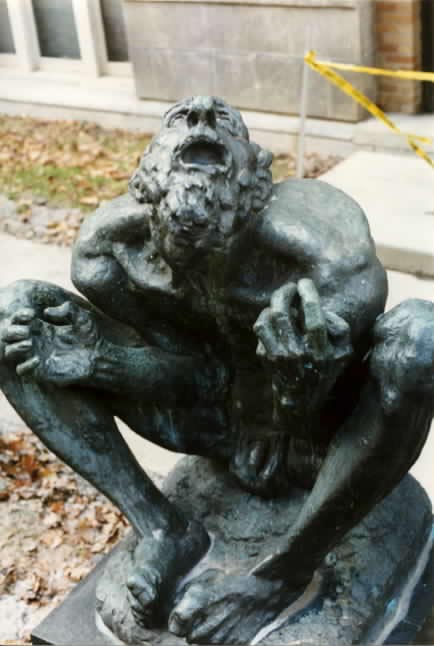
Old Testament Lectionary Feb 18th Ash Wednesday Joel 2:1-2, 12-17

Regular thoughts on the oft-neglected Old Testament Lectionary passages.

An extra for you this week for the occasion of Ash Wednesday. I’ve chose to comment on the Joel passage as I like it better!

One of my big beefs with the way in which we so often use the OT is about reading it as though the only purpose it had was to prophesy stuff about Jesus, or to provide spiritualised insights for 21st century Christians. This passage reminds us that these words were first addressed to real people, with a real relationship with God, but in a very different time and culture. People with a real and pressing crisis to face. The first rule of hermeneutics, or interpreting Scripture, is that

‘a passage can’t mean anything which the original writers didn’t mean the original readers to understand by it’.

So what was going on back in Joel’s day? We know from the context that the nation had been subject to a massive attack by locusts. If you’ve seen this happening on David Attenborough-type programmes you’ll know the devastation which these little creatures can cause, but what we don’t often realise is that it is much more serious than that. All the crops being stripped doesn’t just mean no food: it also means no seed to plant for next year. This isn’t just a tricky situation for a while: it could literally mean the death of the nation. What are people to do?

File:Australian Plague Locusts.jpg

The prophet knows very well what they should do: they should repent. He clearly sees this devastating plague as a divine punishment, or at the very least a removal of divine protection. So in the strongest terms, this book is a call to deep, heart-rending repentance, at a national level.

Nowadays, of course, we don’t really have big disasters like that, at least not in the developed world. If we did get attacked by locusts we’d probably spray them with something or other and it would all be OK. And the idea that a prophet could get the nation to do anything at all is laughable.

So we do our repentance a bit differently. It’s all about me and God, my bad temper, the fact that I let out a rude word when I hit my finger with a hammer, and those days I missed reading my morning Bible passage. Not earth-shattering sins, but it’s good to have a little clean out once in a while, isn’t it, and Lent seems a good time to do it and to try harder to be nice.

I can’t help but contrast the way we think of Lent with the gut-wrenching desperation of Joel, crying out to God for their very survival. I can’t remember the last time I heard a priest weeping with penitence during public worship, or such a commitment to intercession that it even takes precedence over food and sex. I wonder whether the personalised and individualised observance of Lent which is the stock-in-trade of the C of E is a bit like rearranging the deckchairs while the ship of state that is contemporary Britain is sinking before our very eyes.
Through the Bible in Just Over Year – Proverbs

When a few weeks ago we first encountered ‘Wisdom Literature’ I wrote of Proverbs as a book of practical wisdom for building a good life. One commentator on the book quotes the old children’s prayer ‘Make the bad people good, and the good people nice’, illustrating the fact that there are many decision we have to make about the way we live which may not be governed by law, but which nevertheless have the power to be ‘nice’ or not. This is the territory of Proverbs, a collection of short sayings or maxims which, if we take notice of them, will make life better for us and for all concerned.

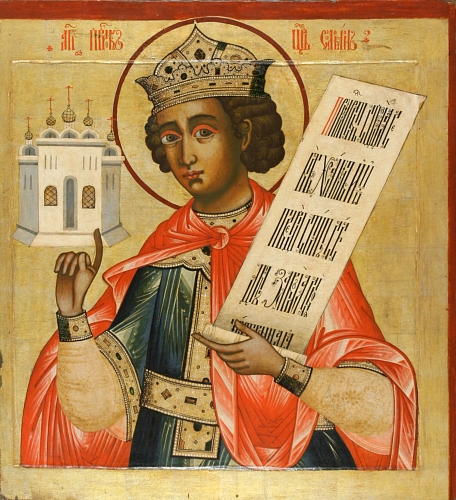
Although the book has been traditionally associated with Solomon, like the Psalms with respect to David it is probably more complex than that. We talk about ‘The Psalms of David’ not in the sense that we believe all of them came from his pen, but in the sense that he is, as it were, the ‘patron saint’ of psalmody. In the same way Solomon is the patron saint of wisdom, but not all this material comes from him: indeed the text tells us that parts were written (or maybe complied) by Agur, Lemuel, and ‘the Wise Men’. The compilation of  these different collections of sayings must have happened at a stage much later than much of the original material, again like the Psalms.

File:King-Solomon-Russian-icon.jpg

Proverbs does not make easy reading, and even harder preaching. It’s a bit like that old joke about someone who read the phone book: not a very good story, but a lot of characters. There are some longer sections which do hang together: instructions on how to use the material in chapter 1, the beautiful hymn in celebration of Wisdom in chapter 8, and the qualities of a good wife in chapter 31 are the most famous. But the bulk of the book is simply a collection of apparently unrelated sayings. Much scholarly ink has been used in trying to find some way of organising the text and making sense of it, but it is probably best not to try too hard.

It has been said that the specifically religious content of Proverbs is a bit thin. There is plenty of sound advice, but you don’t need to be in a special relationship with God in order to heed it and benefit from it. However the recurring assertion that ‘The fear of the Lord is the beginning of wisdom’ tells us that faith isn’t the icing on the cake of a good life, as many today believe, but that it is the foundation-stone. There is also a clear sense of sin which shines through: 20:9 asks ‘Who can say, ‘I have kept my heart pure; I am clean and without sin’? with the obvious implied answer ‘No-one!’ This isn’t just good morality: there is accountability built in. Practical repentance is necessary, and without this even good observances, such as hearing the Law (28:9) is worse than useless.

Whilst I’m all in favour of getting the big picture, and reading biblical books through in one sitting, maybe the best way to handle Proverbs is just one verse at a time, in a long-term project. Who knows – maybe I’ll write a blog called ‘Through Proverbs in just under a millennium’?

Old Testament Lectionary Feb 15th Sunday before Lent 2 Kings 2:1-12

Regular thoughts on the oft-neglected Old Testament Lectionary passages.

A commentary I read on today’s OT passage suggests that it is a story of boundary-crossings.

There is the obvious transition across the Jordan out of the Promised Land, but there is also the passing on of the prophetic anointing across generations, and the tearing open of the boundary between heaven and earth. As such it provides a helpful model of the transition which we are to make this coming week, from Ordinary Time into Lent.

Why is Elijah’s assumption into heaven to take place outside the boundaries of the Promised Land? We don’t know, but there is something about a prophet being without honour in his own land. As a parish priest I have known the freedom and creativity which comes simply from leaving my patch for a quiet day or a time of writing or preparation. Whether in the former El Tico’s in St Ouen’s Bay, at Dobbies’ Garden Centre or at a friend’s bungalow in the Wolds, there is freedom which I don’t feel at home. Maybe after all his conflict and confrontation Elijah had to get out of his ‘parish’ in order to be free to return to his Father. Maybe some kind of ‘getting away from it all’ will form a part of our Lenten refreshment, where we withdraw in order to return to our Father (although hopefully not permanently).

Elijah Elisha

The second motif is that of passing on the baton to his successor. Elisha is a willing pupil, reluctant to leave his master’s side for a second, and his request for a ‘double portion’ of Elijah’s spirit isn’t a request for twice as much, but rather that he officially become his heir. Lent is indeed a time for personal spiritual renewal and refreshment, but it might also remind us of our responsibility for others. What are we doing which will influence, train or disciple those around us, with whom we share a calling to speak and live the values of the Kingdom of God? Maybe for some of us it provides an opportunity to pass on some area of ministry in which we have found our identity to a new, perhaps younger, generation, never an easy thing to do if we have come to believe that we are saviours of the universe and that without us life as we know it simply cannot go on.

Thirdly, there is the heaven/earth boundary which is crossed as the river opens miraculously, as heaven sends down the fiery taxi to pick up Elijah, and most significantly as Elisha sees Elijah’s departure and is thus confirmed as his heir. Slightly after the end of our passage Elisha checks this out dramatically, as he strikes the river, calls out for the God of Elijah, and re-enters the battlefield.  Those who are keen on Celtic spirituality will be familiar with the concept of ‘thin places’, where the boundaries between heaven and earth seem to be particularly flimsy: maybe Lent is a ‘thin time’. As we give ourselves to deepening our discipleship, paying attention to our walk with God, and growing in our faith, maybe we will cross some boundaries ourselves, know a new anointing of the Holy Spirit, and re-enter that battle which is Christian living with new heart and new confidence in the God of miracles.

Reflections on Discipleship – I want to break free!

My job at the moment is developing discipleship in one Anglican diocese, so as you can imagine I do quite a bit of thinking about what discipleship is, what it means, and what it looks like. Here are some random thoughts, gleaned from my reflection on the Bible and current thinking …

In a couple of weeks I’m leading a seminar for engageworship.org at our ‘Slow Down’ day in Luton on ‘Spiritual Disciplines for Beginners’. Being pretty undisciplined myself, I started rereading Richard Foster’s classic Celebration of Discipline, which I probably haven’t opened in over 25 years. As is so often the case I started reading as a different person, sadder and hopefully wiser, because of all that has been going on in those 25 years. And of course something completely new struck me, something which must have still been printed on the pages all those years ago, but which I somehow missed entirely. In a nutshell it is this: spiritual disciplines, and indeed discipleship as a whole, are about freedom. Foster explains how each of the twelve classical spiritual disciplines he deals with, stuff like meditation, fasting, submission and solitude, are actually about breaking free from some of the things which capture us, cripple us and enslave us. For example, we’re all desperately lonely deep inside, he suggests, so deliberately to cultivate periods of solitude can set us free from the fear of being alone, as we choose it and learn to feel safe there.

File:Jessica Ennis - 2012 Olympics (3).jpg

Many people regard discipleship as hard work, which of course it is, but it is the kind of hard work which brings its rewards and joys, like that of running for gold, to use one biblical picture. Personally I’ve never won anything at all in the world of sporting prowess, and that has saved me a lot of hard work and discipline. When Jessica Ennis-Hill sends me pictures on Facebook of herself in training, I feel quite pleased to be a couch potato. But then I’ll never know the thrill and joy of standing on an Olympic podium and being cheered by the world. I guess it’s swings and roundabouts.

So as a follower of Jesus am I content to watch from the sidelines, or curled up on the sofa with a takeaway, or am I committed to the effort of going for gold? The former may seem an easier option, but while I choose it I’m still not free from all the things which spiritual discipline is designed to deal with. St Paul provides us with a great example, using the athletics metaphor, when in 1 Corinthians 9 he writes:

24 Do you not know that in a race all the runners run, but only one gets the prize? Run in such a way as to get the prize. 25 Everyone who competes in the games goes into strict training. They do it to get a crown that will not last; but we do it to get a crown that will last for ever. 26 Therefore I do not run like someone running aimlessly; I do not fight like a boxer beating the air. 27 No, I strike a blow to my body and make it my slave so that after I have preached to others, I myself will not be disqualified for the prize.

There’s the paradox: breaking free isn’t easy, but until we do we’ll only ever be half-hearted leisure-time spectators in the great adventure of following Jesus.

Through the Bible in Just Over a Year – Psalms

Clearly we’re not going to be able to do justice to this huge collection of songs and poems in 600 words, so rather than looking too much at the texts, I want to ask about what the Psalms are, and how we might use them. They contain some of the best-loved and most-neglected words of Scripture: Psalm 23 (‘The Lord is my shepherd’) forms a great contrast with the desire of the author of Psalm 137 who, in an ideal world, would love to see children dashed against rocks. The Anglican tradition used to be that the entire Psalter was prayed once each month, but many churches now neglect the whole book and barely ever use Psalms in worship.

Wiesiołowski David playing the harp.jpg

So what is this book? It has been described as ‘The Hymn Book of the Second Temple’, and that title gives us a great clue as to its nature. With the rebuilding of the Temple in Jerusalem, which we read about when looking at Ezra and Nehemiah, the Priests began a revival of worship, which probably involved collecting together Hymns Ancient and Modern into a five-volume book. It is certainly not the case that the whole book was written by King David, although some probably were. When the heading of a Psalm says in English ‘Of David’ the Hebrew means ‘To David’, or ‘From a Davidic collection’, so even the great musician-king acted as compiler of a collection without necessarily being the author. You can trace a development in thought, as well as some historical context, in some of the Psalms: Psalm 1, for example, blithely declares that good people will prosper and bad people flounder: The later book of Job gave the lie to that rather naive idea. Psalm 137, to which we have already referred, is clearly written out of the context of exile and slavery, and even tells us about the Israelites in Babylon yearning for Jerusalem. Probably not by David then, that one.

Theologians love to do ‘Form Criticism’ on the Psalms, in other words trying to reconstruct in what setting they may originally have been used. Some is a bit speculative, but there are also some good clues: Psalms 120-133, labelled as ‘Songs of Ascent’ look as though they might have been used in procession as pilgrims made their way to Jerusalem for festivals. Some Psalms belong in the genre of Wisdom Literature, the most notable of which is Psalm 119, a marathon celebration of God’s laws. There are also some delights in form: Psalm 119, again, is an acrostic Psalm, with the eight verses of each stanza all beginning with the same letter (which some versions of the Bible helpfully give us in Hebrew). The subject matter is as varied as it is possible to be: some are the words for an individual while others are corporate or national; there is celebration, lament, teaching, anguished and angry crying out to God for justice, or indeed any action at all on his part, and there is imprecation, the calling down of God’s anger on those who oppress the Jews. And so on …

So what does this collection as a whole teach us? A lot about God, for a start. Psalms like 78, a ‘recital of mighty acts’, rehearses God’s action in the nation’s history, and reminds us of the importance of remembering and counting our blessings. Many explain just why God is worthy of our heartfelt praise. But the book also teaches us about ourselves. In a church culture which is far too often ‘nice’ and which sweeps any kind of negativity under the carpet, it is comforting to know that Israel felt that it was OK, in the context of worship, to weep, lament, get angry, rant à la Stephen Fry against God’s cruelty, as well as to engage in outrageous celebration. Any church which allows us to do less is missing the point, and may well be doing irreparable harm to us too. There will be a Psalm for any mood, for every occasion, and they make great, if at times uncomfortable, spurs into prayer.

Old Testament Lectionary Feb 8th 2 before Lent Proverbs 8:1, 22-31

Regular thoughts on the oft-neglected Old Testament Lectionary passages.

Elsewhere I have written a brief introduction to biblical Wisdom Literature: today we celebrate with God in this hymn of praise to Wisdom, who is here personified as a woman who, in the verses which have been filleted out for us, calls to people to come and learn from her. Wisdom in the biblical sense is best thought of using the French term savoir faire, or ‘knowing what to do’, and Wisdom sets out the justice and purity of her words, and calls those who would hear her to acquire that which is more precious than silver, gold or rubies. To know the wise and prudent way to behave in any situation is worth more than anything else: kings rule with her help, and where there is justice it is because wisdom has been heeded.

Symbool wijsheid dHont detail.jpg

But then things get more interesting, as we come to the part of the chapter which our lectionary compilers have graciously allowed us to read. The picture changes and we see wisdom less as a woman but as a figure involved at the creation of the world. The very first thing God did was to create Wisdom, before oceans, mountains, fields or even the heavens. Once brought into being, Wisdom stands beside God and watches him creating everything else, delighting more and more in what is appearing at his words. The climax is the delight of wisdom in the human race. Wisdom is either a ‘master builder’ or a ‘little child’ depending on how you translate the Hebrew of v 30. If you go for ‘master builder’ you see wisdom as the one whose very skill was used in the foundation of all things; if you prefer ‘little child’ you get the sense of sheer fun and delight which comes through in this and the following verse. Therefore, our passage continues, seek wisdom and you will find life and favour from the Lord.

Some have seen here a picture of Christ, present at creation, but this doesn’t quite work, most obviously because he was of course ‘begotten, not created’. It may be rather that we have a personification of God’s delight in his work. It is worth noting that Wisdom is definitely a Tigger and not an Eeyore: hers is not the voice of a prophet condemning the foolishness of the human race, nor calling them to account because of their injustice and cruelty. She has no hint of an apocalyptic voice either: she does not cry out ‘How long, O Lord?’ and call for his sorting out of the problems of the world. She simply celebrates.

I reckon it is pretty easy to divide Christians into two camps: those who believe that the world is essentially good, and therefore needs celebrating, even though it might have a few nasty bits in it for now, and on the other side those who see the world as fundamentally fallen and in need of rescue from itself, even though there might be a few positives round the edges. Churches tend to be either world-affirming or world-hating and –fearing, and this fundamental view colours everything they do. Of course both are true, but we do come at it from one end or the other most of the time. So it is refreshing to read a poem which wholeheartedly celebrates the goodness and creativity of God. Maybe to focus on this, in spite of the world’s problems, is a refreshing tonic as we prepare to enter the austerity of Lent.

Reflections on Discipleship – Horse Whispering

My job at the moment is developing discipleship in one Anglican diocese, so as you can imagine I do quite a bit of thinking about what discipleship is, what it means, and what it looks like. Here are some random thoughts, gleaned from my reflection on the Bible and current thinking …

Do not be like the horse or the mule,     which have no understanding but must be controlled by bit and bridle     or they will not come to you. (Psalm 32:9)

Paul’s use of the terms ‘spiritual’ and ‘worldly’ in 1 Corinthians 3 allow us to believe that there are two kinds of Christians: those who really have got it, who are sold out on living wholeheartedly for Christ, who have as their highest value being disciples, and those who have not yet reached that stage and are trying to keep one foot in the world, treating their faith as an add-on to their lives and not the be-all-and-end-all. It isn’t a salvation issue, Paul explains in v 15: if you’re a Christian you will be saved, even though for some it will be with the smell of Hell in their nostrils. But it is a commitment issue, a discipleship issue. And whilst of course sanctification, or becoming more like Jesus, is a life-long journey, for many of us there does need to be a second conversion experience where we finally realise that love so amazing, so divine, really does demand my soul, my life, my all.

In my preaching in the past I have often referred to this point as ‘brokenness’. I try to keep as far away from real horses as I possibly can, but from my watching of cowboy films I believed that a wild horse had to be broken, a violent process whereby the master would basically ride the horse into submission, until it would do what he wanted it to. I’ve no idea whether real cowboys do this to real horses, but it looks great on the cinema screen. I know that in my experience I had to reach a point where I stopped trying to live my faith as an add-on and commit myself totally to my Lord. Of course this is a matter of will and choice, with actual behaviour lagging some way behind, but it is, I think, about our basic orientation towards God. It felt a great relief to stop fighting, submit, and dedicate my life wholly to God.

File:Plunging bronco, Bar Diamond Bar range.png

But talking to a friend about this recently gave me a different outlook, when he asked instead of bucking broncos what was the role of the ‘Horse Whisperer’? Is God really the kind of rider who will sit on us, come what may, until we’re too broken and exhausted to resist any longer? Or does he come alongside us, whisper words of love and woo us until we want nothing more than to obey him in every way? To change the animal, does the ‘Hound of Heaven’ pursue us in the somewhat scary way Francis Thompson’s poem suggests, or does he wait quietly until we come to him?

I guess the answer is ‘both and’. God of course deals with us all as individuals, and some of us will respond better to one approach than to another. But that is secondary: the real point is that as disciples of Jesus Christ we come to that point of surrender, commitment, brokenness, whatever you want to call it. Recently in my diocese we committed ourselves to a year of discipleship using the words of the Methodist Covenant prayer. Powerful words indeed, and not for the faint-hearted or the compromised.

Lord, if you need to fight me, fight. If you need to whisper, then whisper. But whatever it takes, turn my heart and will completely to you.

Through the Bible in Just Over a Year – Job

This week we come to our first book which comes under the category of ‘Wisdom Literature’, although we have already encountered some material which would fit in this genre. Wisdom in the Old Testament has nothing to do with being clever or intelligent: it might best be translated from the French savoir faire, or ‘knowing what to do’. We might also describe a wise person as someone who is ‘streetwise’, who knows the best way to handle any situation. There are three main Wisdom books in the Old Testament, and it is helpful to understand them in terms of building a house. Proverbs, which we’ll come to in a fortnight, is a book of instructions about the best way to build; Job is about what happens when that house gets struck by lightning or some other disaster; Ecclesiastes is about a house which has got old, tired and is falling down. But in addition there are other bits of wisdom literature scattered about the Bible: Many of the Psalms are ‘wisdom’ psalms, and there are some great wisdom stories, like that of Joseph in Genesis. Joseph is the ‘wise’ man who handles everything well, even though little goes right for him at the start, while his brothers play the part of the ‘fools’ who get everything wrong and are duped by him (although being a wise man he makes everything OK in the end).

 File:JobIM.jpg

So what about poor old Job? The book begins with a string of disasters coming hot on the heels of one another. When he has lost pretty much everything he is met by a bunch of his friends who try to act as philosophers to comfort him by giving explanations as to why he is so deep in the muck. There are clues that the book was put together pretty late in the OT period: for example in 1:4 Job’s sons hold feasts ‘in their homes’: we know that this splitting up of an extended family’s home is a late development. We can also recognise in the words of his friends some current philosophical movements which would have come to the fore as Greek culture began to spread through the Near East. We can trace through the OT a development from, for example, Psalm 1 where the righteous get everything on a plate while the wicked suffer, to a much greater appreciation of the fact that real life is nowhere near as simple as that. It is generally thought that a common folk tale about a man who loses everything and then gets it back was extended with 38 chapters of philosophical and theological debate.

So how are we to read Job? With a damp towel around our heads, for a start. It is a horrific story, and anyone who has known suffering or watched as others have suffered will be able to recognise the agonised soul-searching of the victim. Pastorally it has much to say about our well-meaning but so often misguided attempts to help those going through the mill with platitudes which may be theologically correct but are no help at all. But it has another dimension which is fascinating: The Satan (or ‘The Accuser’) has access to God’s throneroom and is allowed to bring suffering to God’s people. While this exchange sounds, to be honest, a bit petty and nasty on God’s part, the deeper truth is that while Job is going through such agony he is completely unaware that in a parallel universe there are things going on which affect his little life down here. So much of what we don’t understand may well have an extra dimension of which we’re not aware.

But the other truth to shine through these pages is that God is God and ultimately he has the right to do what he likes. So often we hear people telling us that ‘I can’t believe in a God who …’ or ‘I don’t believe in Hell’ or whatever. In the final couple of chapters poor Job gets a right telling off for daring to question God. Who does he think he is? But at the end of the day he does question, and in doing so gives permission for all who suffer unjustly not just to submit quietly to it. Of course Job ends up with no answers, but it’s good that he has asked the questions.

Old Testament Lectionary Feb 1st Candlemas Malachi 3:1-5

Regular thoughts on the oft-neglected Old Testament Lectionary passages.

I’ve gone for the Candlemas theme for this week, on the assumption that it is likely to be celebrated a day early in many churches, and also because it is an occasion I enjoy. The familiar words of Malachi, mediated via the gift of Handel’s Messiah, raise an interesting question for us.

This week I have been involved in a long facebook conversation which came out of a friend’s blog. Somehow we got onto the subject of ‘niceness’. We started off on why men hate going to church, but we soon arrived at the suggestion that church was too ‘nice’ for most blokes. I put the word safely inside inverted commas so you’ll know what I mean, but it was suggested that being nice is fine: kindness, gentleness and so on are good Christian qualities. But to me the problem is when we’re only ever allowed to be ‘nice’; when the harsher realities of life, and church life, are brushed under the carpet because they’re not ‘nice’. Stuff like conflict, reality, death – you know the kinds of thing.

Candlemas is basically a nice festival. You’ve got some all-age worship as an elderly pair of people encounter a little baby, you’ve got the beautiful words of what the Church has called the  

Nunc dimittis, and some lovely prophecies about Jesus’ life and ministry. But the OT reading, and indeed even some of the Gospel story, give us a different picture. This sweet baby comes bringing judgement. Many are going to fall because of him, Mary herself will know the pain of a pierced heart, and her son will naturally enough stir up great hostility. The truth is, he is not being born into a ‘nice’ system. Malachi, writing after the completion of the rebuilding of the Temple, is telling people not to get too up themselves just because a building project is complete. If the God in whose honour this building was raised were actually to come among the people some things would be anything but ‘nice’. The images of launderers’ soap and refiners’ fire are violent images, and the testifying against various categories of naughty people sounds scary for those people. They must surely reflect some of what was currently going on, and the images of  occultism, adultery, lying, injustice and oppression are not a pretty sight. In the same way Jesus’ ministry was going to be one of comforting the disturbed and disturbing the comfortable, as many of those around the Temple were to find out. Following him was no easy option, and he never told anyone it would be.

INTERIOR_VIEW,_LOOKING_WEST,_WITH_CRANE_OPERATOR,_TED_SEALS_POURING_MOLTEN_METAL_INTO_A_1,300_TON_ELECTRIC_HOLDING_FURNACE_OR_MIXER_-_American_Cast_Iron_P

On a larger scale Candlemas is about a change of direction: we face away from Christmas, and all the lovely birth narrative stuff with its shepherds, little lambs and the like, and turn towards Lent and Passiontide; away from birth towards death. This too is a turn away from ‘niceness’ in the direction of something far less comfortable and far more demanding.

To follow Jesus is to be challenged, judged and purified until the offering of our lives are ‘offerings in righteousness’ (v 3) Purification is not ‘nice’, but it is essential, and the end results are much nicer without the inverted commas.

Reflections on Discipleship – The Number Zero

My job at the moment is developing discipleship in one Anglican diocese, so as you can imagine I do quite a bit of thinking about what discipleship is, what it means, and what it looks like. Here are some random thoughts, gleaned from my reflection on the Bible and current thinking …

Well, we’re off! Last Sunday, on Jan 18th, we launched the Year of Discipleship in our diocese. Where I was we reflected on the story of the 12 spies casing the Promised Land, mixed our metaphors by talking about ‘Tiggers’ and ‘Eeyores’, and decided whether we were more keen to get our hands on the grapes (the good things promised to us by God) than we were scared of the giants (the things which might stand in our way). We prayed a liturgy of rededication at the start of the year, and ate grapes, praying that God would keep our eyes fixed on the grapes rather than on the giants.

TiggerEeyore

That evening I started re-reading Vincent Donovan’s classic Christianity Rediscovered[1] which I have been meaning to do for ages. It’s the story of a Roman Catholic Mission to the Masai in East Africa in the mid-60s, and it must be 30 years since I last read it. I was struck like a sledgehammer blow at a passage in which Donovan writes to his Bishop. He reports that after his few months at the Mission, which has been around for seven years, there are thriving schools, an active hospital, with an ambulance service to bring sick people to it, financial aid for those in need, and compulsory religious instruction for children in the schools. Relationships with the Masai people are cordial. Sounds great!

But then his letter goes on:

‘Almost never is religion mentioned … The best way to describe realistically the state of this Christian mission is the number zero … There are no adult Masai practicing Christians … no child, on leaving school, has continued to practice his religion, and there is no indication that any of the present students will do so. The relationship with the Masai, in my opinion, is dismal, time-consuming, wearying, expensive and materialistic. There is no probability that one can speak with the Masai, even with those who are our friends, about God … In other words, the relationship with the Masai … goes into every area except that very one area which is most dear to the heart of the missionary …  I suddenly feel the urgent need to … go to these people and do the work among them for which I came to Africa … and just go and talk to them about God and the Christian message.[2]

This he did. His first conversation with a local chief was greeted with the puzzled response

‘If that is why you came here, why did you wait so long to tell us about this?’

a comment which he was to hear again and again. Needless to say, his new-style mission met with phenomenal results and growth in discipleship.

I had a flashback to a conversation  in the past with a rural priest who told me that ‘Of course, we’re not here to evangelise the village!’, a comment greeted by nods of agreement from his congregation.

I don’t know how you react to this story, but I wonder whether for some of us it might be the time to start of a new kind of church, which is proud and confident to talk about its Lord. If Donovan’s experience rings true, it is worth asking the question ‘What is stopping me, and my church, from simply talking about Jesus?’ Many of us, of course are already doing this, but my suspicion is that some aren’t. Maybe it’s time to begin.

[1] (London: SCM, 1978)

[2] p 15

For our Diocesan Year of Discipleship blog, click here.