
This is a brief extract from chapter 4 of God’s Upgrades … My Adventures published by Authentic Media
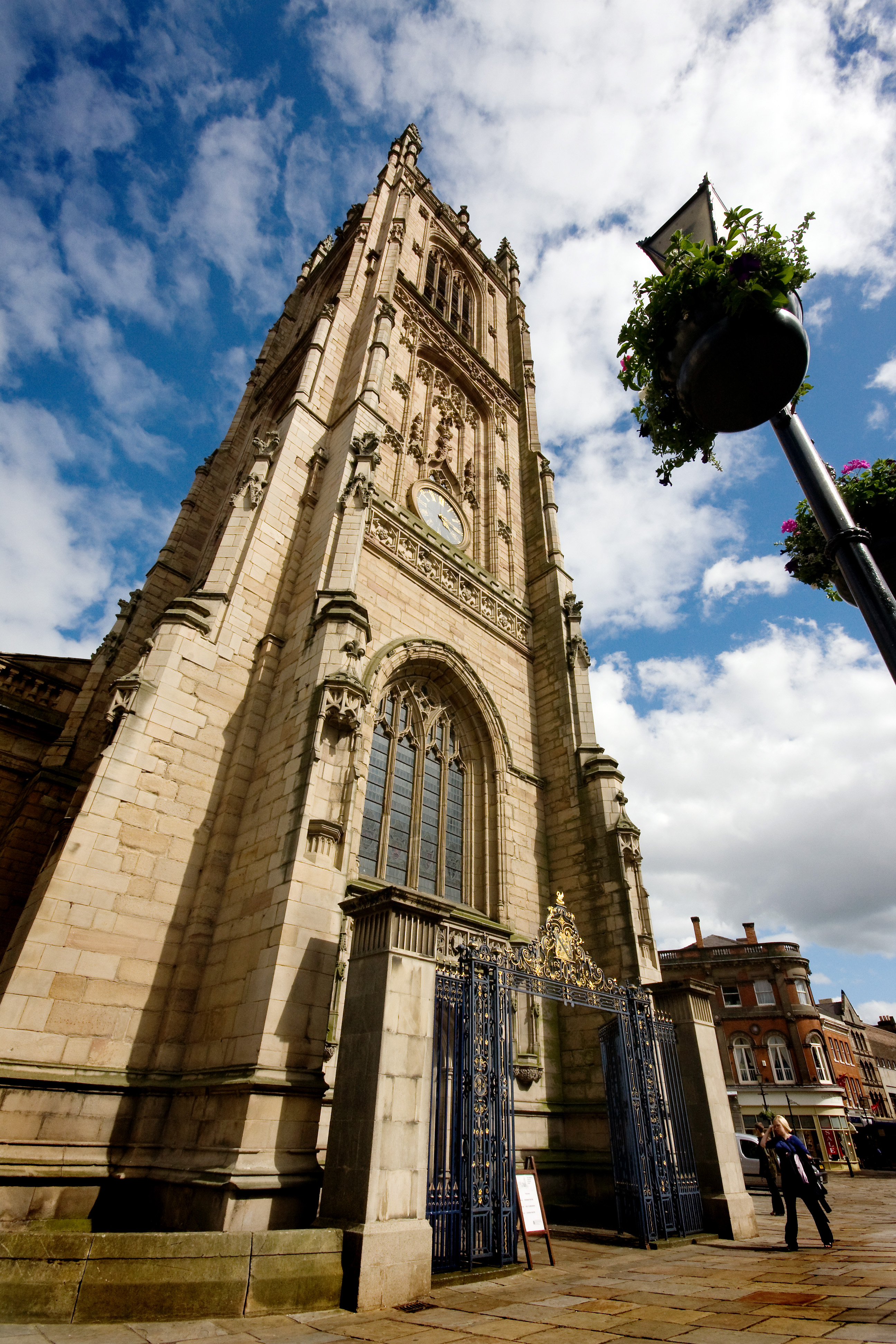
I began to attend not one but two very different Anglican churches. The first, St Laurence’s, to which I was invited by a friend’s girlfriend, was what you might call ‘Anglo-catholic’. Of course such terms meant nothing to me at that stage, but it basically meant that they had Communion every week, as the main service, rather than once a month tagged on afterwards as we did at the Baptist church. The priests, who were called ‘Father’, dressed up, there was lots of smoke, and people sang stuff instead of saying it. It seemed a huge distance from any kind of Christianity I’d ever experienced before, and I hated it with such a passion that I had to go back the following week in order to experience the wonderful sense of outrage over again. Soon I found I was hooked. Something in me also appreciated their great patronal festival celebrations. Laurence had been a deacon in a church in Rome somewhere who for a bit of cheek to the Emperor had been martyred in AD 258 by being roasted on a grid over hot coals. So each August the congregation celebrated their patron saint with a great barbecue, which seemed somehow both appropriate and amusing.

St Laurence’s was Sunday morning, but Tuesday evenings were very different. Some other friends invited me to a different church which was creating a bit of a stir because they had been ‘renewed by the Holy Spirit’. The vicar was a guy called Trevor Dearing, and St Paul’s, I was later to discover, was one of the early pioneers of a new movement called ‘charismatic renewal’. It was a very different experience from my Anglo-catholic church. For a start you had to get there an hour or so before it started if you wanted a seat. There was no liturgy, and certainly no smoke, but there was plenty of fire, as the Holy Spirit was welcomed to save, baptise, heal and deliver people. The music consisted of short Bible-based ‘choruses’; there was usually a period of ‘singing in tongues’, there was a sermon which called people to be saved, baptised in the Spirit, healed or delivered from evil spirits, and then there was a time for people to go forward and receive prayer. It was crowded, lively, at times noisy, and I hated it. In fact I hated it even more than St Laurence’s, because apostate though that might have been, at least it wasn’t scary. And yet I found myself going back for more. Much later I was to discover a theologian called Rudolph Otto, who talked in a famous book about the mysterium tremendum et fascinans, or the ‘fascinating but terrifying mystery’ of God[i]. There is something about him, said Otto, which scares the wits out of us but keeps us coming back for more. That was certainly true of me at this period in my life.
[i] Otto, R The Idea of the Holy (London: Oxford University Press, 1923) You can now read this landmark book online at http://archive.org/stream/theideaoftheholy00ottouoft#page/n3/mode/2up



 about God in my early years? This is going to be difficult for me to write about, because I can easily give you the wrong impression, about my church in particular and the denomination of which it was a part. So I do need to say that these were basically happy years, and the church was full of good, well-meaning, committed Christian disciples, and led by godly and wise men (and it was men!). But I can only report what I, as a child and then a teenager, picked up and understood. Sadly the God whom I believed in and sought to follow was basically not very nice.

 Jim is eventually appointed. It is his first incumbency, having served a curacy in a thriving church in a nearby diocese. He relishes the challenge of turning around the decline which has characterised St Mildred’s for decades, and brings loads of exciting ideas. He begins to get to know the team he has inherited, and relationships are cordial. But as time goes by it becomes apparent that they don’t quite understand what he is trying to do. If only we could get back to the days of reverent BCP worship, they believe, all our problems would be solved. Similarly they show little concern for Jim’s desire to bring the church into a digital age: they don’t see the need for a website or a facebook page. Soon it becomes abundantly clear to Jim that the team he has inherited have become the single biggest obstacle to moving the church forwards, and of course they have the support of the congregation who, whilst wanting to attract young families, have no idea of the cost and change involved in doing so. Jim tries to win people over, but the opposition is very strong, and is centred around those who ought to be his closest allies. And the worst thing is that there simply is no mechanism for moving them on and building his own team.
 revjohnleachblog