OT Lectionary Aug 10th Trinity 8 I Kings 19:9-18

Getting back on your feet


Spiritual depression is a common experience among leaders in God’s church, and in a strange way it’s encouraging to watch Elijah going through it. It reminds us that even the great heroes of faith experience bad times, so what chance have I got of escaping unscathed? The Bible always paints ‘warts-and-all’ pictures of its characters, which is what makes the wartless Christ stand in such stark contrast.


But even more interesting is to watch how God deals with Elijah as he hits his all-time low. Those of us who are pastors have a lot to learn as we see God being pastoral to his broken servant. He begins very practically: the opposition and threats have got to the point where Elijah, who was once unafraid to stride into the king’s presence and denounce him, is now on the run from a nasty woman. Even the best of us can suddenly find it all too much. God begins his therapy rather as in an episode of EastEnders: whatever the crisis, the first response is to put the kettle on. So he provides rest, food and drink – those practical necessities which those of us who have been depressed can so easily overlook or lose interest in. But then he takes him on a journey: for 40 days Elijah has the time and space to mull over what has been going on.


Next God listens: Elijah gets the opportunity to tell his story, not once but twice (and maybe more). Like the Ancient Mariner he has to repeat his tale in order to get it out into words, and God listens patiently. But then he speaks, and in doing so he brings Elijah three different areas of reassurance.


First he tells him that he is still God. He confronts his sense of powerlessness. The heavenly pyrotechnics are designed to restore Elijah’s sense of perspective about where power really lies, while the ‘still, small voice’ reminds him that it isn’t all about displays of power.


Secondly he tells him that he (Elijah) is still important, confronting his sense of worthlessness. Having lived through a time when I was constantly being told that I was useless and that nobody liked me I found it immensely healing to be reminded by friends of my value. But this isn’t mere words: Elijah is recommissioned to get stuck in to his work again, plunging straight back into the political arena with his prophetic anointing.


And thirdly God tells him some truths, confronting his loss of perspective and isolation. He may feel alone, but there are plenty of people still with him, even if at times they are a bit silent and distant when he needs support the most. And as an added bonus God gives him an apprentice, both to share the load and to assure him that the prophetic work will go on past his incumbency.


God, the master pastor, gently leads Elijah back to health, and I’m sure he was stronger and more resilient as a result of his weeks out of action. I also note with interest that not once does God tell him to praise the Lord and join in the worship-songs. Maybe his church has something to learn from him!
 

OT Lectionary Aug 3rd Trinity 7 Is 55:1-5

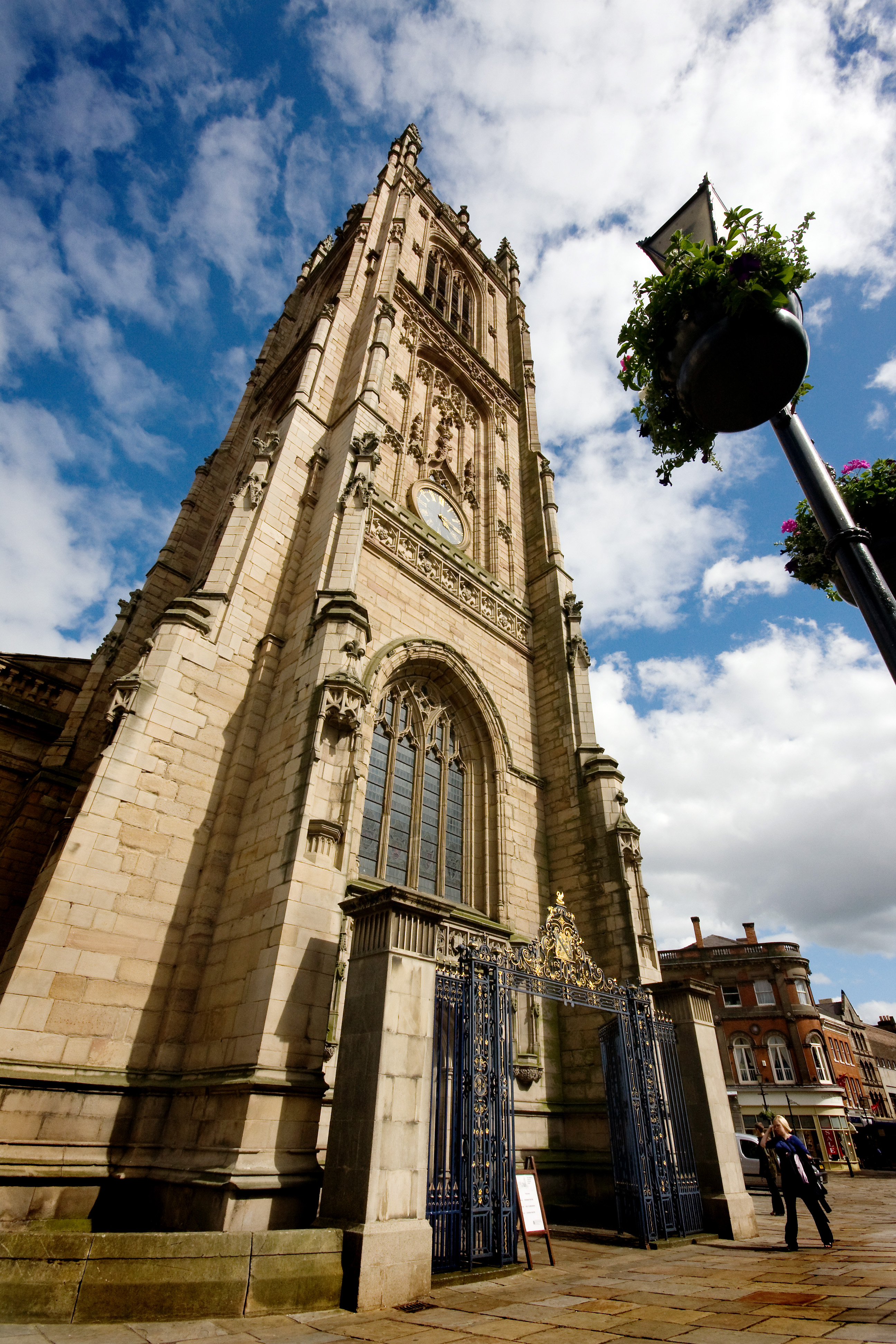
File:Derby Cathedral - June 2008.jpg 

When we lived in Derby I loved going to the Easter Eve extravaganza at the Cathedral, a truly splendid feast of liturgical excellence and celebratory joy. But the highlight for me was to process out at the end of the service, at around midnight, into the thumping heart of Derby’s Nightclub district, for the ‘Proclamation of the Easter Gospel’. It was really powerful to hear the words ringing through the air: ‘The one you are looking for is not here: he is risen!’ I don’t actually know how much impact this actually had on the passing clubbers, but I found it a moving and memorable occasion.


This passage from the prophecy of Isaiah has something of this feel to it. At a first reading it looks as though God is calling the exiles, those who for decades have lived displaced and hard lives, to come back to him and receive, through his grace, the good things which are freely available to them. Indeed it may have this meaning. But there is another theme which brings this interpretation into question. The ‘summoning of the nations’ motif, which is common in Isaiah, comes in in verse 5. The OT is full of reminders that the calling of God’s chosen people is not merely to their own nation: they are to be messengers of God’s grace to the nations. So might the be a passage which hops about between being addressed to Israel and to the pagan nations for whose blessing Israel exists? And might the appeal of verses 1 to 3 to ‘come, buy, eat’ be addressed not only to Israel but also to those currently outside the covenant? Is the prophet saying, in effect, ‘What you’re looking for is not to be found where you’re looking!’? This would also make sense of the following verses.


It is a sad reflection that God’s people, whether in Israel or in the Church, need to be called back to him, and reminded that it’s all free, paid for by grace alone. We should already know that, and be living in that truth. But it’s a real challenge for us to think that others, outside our faith, might be attracted to God when they see our splendour (v5).


No doubt there is a link here. The almost total lack of people coming running to the church might have something to do with our lack of splendour. I can remember a preacher long ago wishing for the time when the Prime Minister would ring up the Archbishop of Canterbury and say ‘Help me, man of God! What can I do about unemployment, or the economy, or whatever. I need God’s wisdom!’ As far as I’m aware this dream does not often become reality in British politics, but Isaiah hold before us the hope that I might, or indeed will. When the church can convincingly say to the world ‘What you’re looking for is not to be found where you’re looking!’ we might see some more people come running. But before we can do that we need God’s splendour, a splendour which can only come when we ourselves learn more and more what it is to seek God’s grace, and, abandoning all the stuff which this world tells us will bring fulfilment, live wholeheartedly for him. While we continue as weak and compromised as we so often are, nobody else will have any interest in us.


OT Lectionary 27th July Trinity 6 1 Kings 3:5-12


‘Ask for whatever you want me to give you’ – now there’s a challenge! What would you ask for?

A few years ago I was preaching on the National Lottery in a series on big issues. Is it OK for Christians to buy tickets? Is it just a bit of harmless fun? Is it a way to give to charity? In spite of having been brought up in a family where gambling was second only to genocide on the league table of sins, I decided that purely for research purposes I ought to buy a ticket before I spoke on the subject.

national lottery photo: National Lottery 20-ThoughtsOnTheLottery.jpg

I spent the week running up to my sermon knowing in my head that statistically I had no chance of winning anything, yet spending time fantasising about what I would do if I did. After all, someone has got to win! I mentally spent my £7 million several times over, and it was almost a relief when the draw happened and I had, as expected, thrown £1 down the drain. I could stop dreaming and get on with real life.

But what if God were to appear and offer us anything we wanted, guaranteed? Like Solomon, we’d be faced with a fundamental choice: wish stuff for ourselves or for others? Ask for something which I feel would make my life better, or something which would bless others? This reflects a choice we make, actually, most days. We make it in small ways: should I just drop my litter on the pavement because it’s convenient, or walk all the way over there to the bin because it would make town nicer for others if there were no rubbish all over the place? And we make it in big ways: do I vote at the General Election for the party I believe will make my life better, of the one which will benefit society at large (assuming of course that I can find one like that). And of course churches as well as individuals can make this decision. I’m reminded of the Welsh-speaking chapel which became swallowed up in the Cardiff conurbation, and saw an influx of non-Welsh speakers, but chose to continue to hold Welsh-language service because that’s the way they liked it. Needless to say they were dead within a generation, and you won’t need me to develop the other implications of this parable any further.

Note also that this decision comes for Solomon as a new phase of his life begins: he’s brand new to the job of being king, and pretty nervous about it. New starts give us opportunities to ask ourselves again ‘What do we really want?’ And are we more interested in blessing, or being blessed?

What we pray for reflects our heart. And of course the choices we make have implications. However, many would testify to the goodness of God who, when we make right choices, often gives us the other stuff as well.


OT Lectionary July 20th Trinity 5 Genesis 28:10-19a

First of all – I’m back! I didn’t drop off the edge of the world – I moved house, then it took me three weeks to get online (Thanks Talktalk! – great service – even worse than last time I moved house) and then the day after I got connected we went off on holiday. Anyway, here I am, new job is great, and blogging is recommenced.

So – Jacob’s dream. I can remember a church which obviously in the past knew only the Authorised Version bearing proudly across the top of the doorway the verse ‘How dreadful is this place!’ They obviously believed themselves to be the gate of heaven, but in Jacob’s thought the gate of heaven was not located in a parish in London: it was the portal or bottleneck through which all intercourse between heaven and earth had to be channelled. The ‘ladder’, or better ‘ramp’ was not the means by which our prayers ascended, but rather how god’s messengers descended, to guide and give instructions to the people on earth. So the Satan, in Job 1, returns to the heavenly court from ‘going about to and fro on the earth’: he would have returned through what we would now call a ‘thin place’.

File:Jacobs ladder da1.JPG

The spirituality of places is an inportant yet rarely explored issue: I guess many people will have places which are spiritually significant to them, and there has always been a significant industry of ‘pilgrimage’ to holy sites around the world. indeed, the primary reason for the telling of this story may well have been aetiological: in other words, it was a bit like a ‘Just So’ story: when your kids asked you why Bethel was such a special place, you could tell them this story to explain. but even within this there are a few significant details worthy of our attention.

Note first the totally unexpected nature of the encounter, which came totally from God’s initiative. Jacob is neither a seeking pilgrim nor a penitent sinner: he is on the run, but God chooses to meet him. Then notice how he meets him – not with a telling-off, but simply with reassurance about his security in the future, and safe passage to get there. Jacob wakes up and realises that he happens to have bedded down for the night right near the ‘gate of heaven’, and in response he carries out a simply liturgical action which has the effect of marking and dedicating this special place, which was to become a significant, though not always wholesome, spiritual site.

We live in a time where, as John 1:51 suggests, access to the heavenly realms is not through a bottleneck but through Jesus himself (the Greek construction suggests that the Son of Man is the ladder, not the one descended upon). No doubt there do exist ‘thin places’ of particular holiness, but thank God that access to him is not limited to them. We live in a time where God still supernaturally meets people, and not always holy people, with his grace. A good test of whether a so-called spiritual experience in genuinely from God is to see whether he communicates grace or condemnation: the pattern here is grace and blessing through and through. Should we pray for such encounters with God? I don’t think it hurts, as long as we focus not on experiences but on the God who sometimes graciously gives them.

OT Lectionary May 18th Easter 5 Genesis 8:1-19

Part 2 of the Noah cycle sees the ark and its cargo coming in safely to land as the water recedes and dry land is once more revealed. This part of the tale again contains some important theological themes, a historical question, and even a bit of irony.


File:P dove peace.png

The word ‘remembered’ in 8:1 translates an important Hebrew word zacar. It is used several times in the OT, most notably in Ex 2:24 where God sees the suffering of the enslaved Israelites and ‘remembers’ his covenant with Abraham. On a first reading it looks there, as here, that God ‘remembers’ because he has ‘forgotten’ – ‘Oh my goodness – those poor Israelites! I was meant to do something about them but I’ve just been so busy lately …’ In fact the word has a different meaning: it means something like to recall to the front of one’s mind because action is required now. This is very different from having passed out of God’s sphere of consciousness: it means that their concerns are next on his agenda. It’s easy to feel when we’re already feeling down and abandoned that even God has given up on us. This story reminds us that nothing could be further from the truth. It’s just that he doesn’t always work to our timetables or schedules. But then we already knew that, didn’t we? And salvation, when it does come, often comes gradually. It was one thing to have landed safely, but to stay locked in the ark until the waters have receded enough for them to return to normality must have been an agonisingly slow and frustrating process. God has ‘remembered’ our need of salvation; Jesus died on the cross to win it, but we are still locked into a life where we’re not yet truly free. Sometimes that feels incredibly frustrating.

Talking of timing, I note with interest the sheer number of time references in this passage, which raise the question of its historicity or otherwise. Liberal theology would write this story off as a primaeval myth, and people might well point to The Epic of Gilgamesh, which tells a similar story from the background of a different religion and culture, and with its hero much less pronouncably called ‘Utnapishtim’. Others would suggest that there was indeed a significant flood in the Middle East at that period of history, as archaeological evidence confirms, but that different cultures told its story in different ways. And all would agree that the real point of this story is to highlight human depravity and God’s righteousness and saving mercy. So why are there so many chronological references? Most fairy stories are set simply ‘Once upon a time …’ with a notably vague setting in history. But here we have a series of timescales between the events of the story which make it feel almost historical. I’ll leave you to decide that one.

Finally, as one who is not known for being an animal-lover, I like the irony in v20 (strictly speaking in next week’s instalment) of the poor creatures who, just as they were breathing a huge sigh of relief at having survived a watery death, find themselves burning to death on an altar. Sometimes life just sucks.

OT Lectionary May 4th Easter 3 Zephaniah 3:14 – 20

Zephaniah 1:1 tells us that this prophecy dates from the reign of King Josiah, which would place it in the early 600s BC, and therefore before the Babylonian exile. This certainly fits with the earlier chapters of the book, which are full of dire warnings to the Israelites of the coming judgement when God the Mighty Warrior will turn on them and give them the come-uppance they so richly deserve for their opulent and profane lifestyles. But then at 3:14 there is an abrupt change of tone: suddenly the people are called to rejoice and celebrate because God has commuted their punishment, defeated their oppressors and purified their nation.

As with the book of Isaiah, which we have looked at previously in this blog, it does seem likely that the final paragraphs are later additions, the happy ending written much later towards the end of or after the judgement and purification of the exile. It would rather seem to undermine the prophet’s message of warning if he went on to tell the people that it was all going to end up fine. Neither, as history clearly tells us, was it the case that the restoration happened before the punishment, or instead of it. It was only through the experience of abandonment and punishment that Israel could learn her lesson and step back into God’s favour.

As a post-Easter reading this seems to speak to us of cheap grace. The salvation of the human race, whilst it had always been God’s plan, didn’t happen without judgement or punishment. It was only through the cross that we could be restored to our inheritance as God’s people. I have often said to different congregations, whilst talking about that greatest of post-modern virtues ‘tolerance’, that God is not tolerant; he is forgiving, and there is all the difference in the world between those two concepts.

File:2008-03-13 Rave crowd.jpg


But once we have been ransomed, healed, restored and forgiven, just look at the scenario which Zephaniah paints for us! Once the Mighty Warrior is for you rather than against you, there is no need for fear, no room for oppression, no call for dishonour or shame. When the one who was fighting against you because you were living against him starts singing songs of joy over you as a beloved daughter, you know something dramatic has happened. In the past it took a generation or more of exile: in Christ it took three days. Hallelujah – what a Saviour!

So often when we come to worship we see ourselves as in some way putting on a performance which we hope God will enjoy. This passage helps us to see things differently. In a most un-Anglican way God is seen singing, shouting, delighting, rejoicing. He may even have put his arms in the air like a good charismatic: who knows? The really good news is that we are invited to join in. He is not in the audience holding up cards with numbers on to assess our attempts at worship: he is partying with all he’s got, and inviting us to the party too.

OT Lectionary 27th April Easter 2 Ex 14:10-31, 15:20-21

‘Sing to the Lord,
for he is highly exalted.
Both horse and driver
he has hurled into the sea.’

Let’s be honest: it does go against the grain a bit to celebrate death. We’re all jolly glad that the poor enslaved Israelites have managed to escape from that nasty Pharaoh, but was it really necessary to end the business with a mass drowning? In the past victories in battle were celebrated with great jubilation. But nowadays we’ve reached perhaps more enlightened times when we understand that warfare actually has no victors: the whole business is destructive too all concerned, and the slaughter of those whom we perceive to be our enemies, along no doubt with some ‘collateral damage’ to innocent bystanders, is hardly something to make a song and dance about. So what are we to make of today’s OT, where we see the death of the Egyptians as a necessary concomitant of the liberation of Israel, and an outbreak of jubilant praise by Miriam and the girls.


File:Figures Pharaoh and His Host Drowned in the Red Sea (parted right).jpg

Indeed this is a problem for other parts of the OT. In 40 years’ time the Israelites are going to arrive finally at the Land promised to them by God, and they are going to be instructed to wipe out all the inhabitants unmercifully. The fact that they fail to do so, and are therefore nicer than God is, is going to get them into all kinds of trouble, according to the OT storytellers. So how do we cope with the destruction of enemies in the Scriptures, and what might it all mean for us today?

I think there are two approaches we might make to this problem, the individual and the spiritual. First of all it seems to be a natural law that whenever there are winners there are also losers. Egypt had so frequently and so deliberately hardened its corporate heart against God, who had given them so many opportunities to obey him, that they had forced themselves into a position where the only way for Israel to win her liberation was through their defeat. Pharaoh could at any point have compromised or even just given in, but he refused to do so, and the nation bore the consequences. (Of course the fate of individual soldiers who were ‘just obeying orders’ is of no interest to the OT writers who were untainted by enlightenment individualism and always thought ‘corporate’.) I think there’s something here about both the power of national leadership to affect the well-being (or otherwise) of the whole nation, and the responsibility of people to make sure they’re on the right side. Actions have consequences, and to align ourselves with evil means that we pay the piper sooner or later. Egypt paid that price, and after giving them so many chances to change their position of fixed opposition to him, God can hardly be blamed for punishing them. Indeed he reaches the point where we’re told he ‘hardens Pharaoh’s heart’, realising this is going nowhere so let’s just get it over with. The same is true of the genocide at the time of the conquest: the Bible’s take on this is that it wasn’t that Israel was holy, but that the Canaanite nations were so offensive to God and richly deserved their come-uppance (Deut 9:5). Where we place ourselves, the way we live, to whom we are aligned, matters. No excuses.

But secondly the choice of this reading during Easter suggests the link with cross and resurrection. Again there can be no victory without someone else’s defeat, and John’s gospel particularly makes the point that Christ’s death on the cross was also the crowning of a victorious king, with the powers of darkness defeated, until that final day when they will be destroyed. Evil isn’t just human: behind it are the spiritual forces of darkness in the spiritual realms, and on them God will have no mercy. So to celebrate our salvation through the cross is at the same time to celebrate the defeat of all that is evil, and of those who have given their lives to perpetuating it. So maybe we should get those tambourines out after all, as long as we remember to pray for those unwittingly caught up in the pursuit of evil: ‘Father forgive them, because they don’t understand what they’re doing’.

OT Lectionary April 20th Easter Sunday Exodus 14:10 – 31, 15:20-21

Just as the Passover has symbolised for Christians the sacrifice of Jesus on the cross, so the crossing of the Red Sea has symbolised resurrection and deliverance. The links with water are important in Christian baptism, and as with Maundy Thursday and the Passover we have today a rich vein of symbolism as we celebrate today the mighty acts of God in raising Jesus from the grave.

The starting point of the story is the sheer hopelessness of the Israelites’ situation. With the sea in front of them and the Egyptian army behind, they quite literally have nowhere to go. There simply is no human solution to their problem: what is needed is nothing short of a miracle. But God is a God of miracles, and so just as it is needed, one is provided. The sea opens, and they are free. In fact they are a lot freer than they expect as those who would kill or recapture them are drowned in the very waters which have parted to allow them the road to freedom.


File:Mars bar bitten.jpg

One of my more memorable sermons, about Mars Bars and Lifebelts, asks the question ‘How do you understand your salvation?’ Many Christians see their relationship with God as a bit like if I were to give them a Mars Bar. Most of them would be really grateful to me (apart from once when I chose a member of the congregation who was allergic to chocolate, but that was just an unfortunate pick on my part). But if instead of my giving them a Mars I had given them a lifebelt just as they were drowning, they would be more than merely grateful: they would quite literally own me their life. Jesus doesn’t just come along to make our quite nice days even better with a little gift called ‘salvation’: he quite literally provides a miraculous rescue for those who without him would remain dead in their sins. What we need to save us is nothing short of a miracle: the rising of Jesus from death, when we had nothing in ourselves to save ourselves, is that miracle.

Exodus 14 also encourages us to hope for a miracle when all looks hopeless. The famous words in verse 13 ring down the ages to all who face impossible situations: ‘Do not be afraid. Stand firm and you will see the deliverance the Lord will bring you’. Our instinct is so often to rush around trying to sort out our own problems: God is the God both of the 11th hour and of those who can hold onto their trust in him with quiet faith.

Another motif is the glorification of God through this mighty miracle. ‘The Egyptians will know that I am God’ says the Lord to Moses, although in the event they won’t know it for very long before the sea gets them. The resurrection of Jesus vindicates him, and his Father, before the world which has hounded and condemned him. It is in the nature of judgement that there will be those who realise the truth too late: Revelation 1:7 talks about the mourning of those who had pierced Jesus but them seen him gloriously vindicated as he comes in glory. The celebrations of this greatest day of the Christian year also have a bittersweet flavour as we are reminded of the urgency of the task of telling others about Christ’s victory.

OT Lectionary April 17th Maundy Thursday Ex 12:1-14

The gospel writers disagree about the exact relationship between the Last Supper and the Passover meal. But there clearly is a link, and the story of the first Passover can help in our appreciation of this most holy day. The essence is that it is a night of God’s dramatic judgement on a nation whose monarch has consistently refused to comply with God’s instructions to him, preferring to keep Israel as his slaves, working in appalling conditions and under cruel domination. To our minds it seems profoundly unfair that just because of Pharaoh’s hardness of heart the entire Egyptian nation should be bereaved, but God’s ways are different from ours, and we are reminded not of the unfairness of a vindictive God but rather of the awesome responsibility of leadership. Politicians make bad decisions and nations suffer: it was ever thus, and continues to be so today.


File:Josefa de Ayala - The Sacrificial Lamb - Walters 371193.jpg

But it is also a night of rescue, as the people God has called as his own find their freedom from slavery and oppression, and begin a new journey to a home of their own. The blood on their doorposts provides a dramatic symbol of the cost of their freedom, and this most momentous of events becomes the turning point for Israel, the night to which all further generations will look back as their reference point.

These twin themes of judgement and rescue come hand in hand in Holy Week too: evil is defeated by the shedding of the blood of an innocent victim, and there is freedom and the beginning of a homeward journey for God’s people. It is symbolised, perhaps a bit strangely, in both cases, by a meal. The blood of the Passover lamb becomes the wine shared by Jesus’ disciples, but it is wine which refers both backwards and forwards to shed blood. The Israelites eat with coats and shoes on, ready for their escape; Jesus finds nourishment before his journey through death and hell to resurrection. And Christians down the ages have tasted the wine which speaks of the shed blood of redemption. The author to the Hebrews tells us that without the shedding of blood there can be no forgiveness for sin (9:22), and so the Christian community is constantly reminded of the cost of their salvation in the context of a celebratory meal.

What a bittersweet night this is! We eat and drink to celebrate but also to remember death and sin. We are rescued and saved, but at the cost of enormous pain and suffering. Our journey begins, but will take us a lifetime to complete. And at the centre of it sits Jesus, both Moses the host at the feast and the silent sacrificial lamb. Only later, in Gethsemane, does his anguish reveal itself: for now he is content to share a meal with his beloved friends.

Passover reminds us graphically of the cost of our salvation: on this of all nights we must not take it lightly, seek cheap grace, or forget those who suffer innocently because of the hard-heartedness of others.

OT Lectionary April 13th Palm Sunday Isaiah 50:4-9a

IFile:4coronati-mariominitti1600.jpg
As we enter Holy Week we are looking at some particularly New Testament stories as we walk through the week with Jesus and reflect on some of the events of these fateful days. But in spite of this the OT readings can help illuminate the narrative, and give greater understanding to those seeking to travel the way of the cross.
Our first passage is from one of Isaiah’s ‘Servant Songs’ which we have encountered before in this series. We’ve discussed just whom the ‘Servant’ is, and said that most likely he represents the Israelite community, not as it actually was in the 6th century, but in an idealised way: this is what Israel would be like if it was perfectly living out its vocation as the nation chosen by God to make him known to all the other nations of the world. So the first thing which strikes us, and we’re going to see this even more clearly before this week is out, is that God’s calling involves suffering. We so often live with the sense that if we were really really in the centre of God’s will life would be great: indeed much of the OT tells us precisely that that’s how it should be. Yet the Servant Songs give the lie to this: to live in obedience to God is to suffer, as so many Christians have found out. Beating, mocking, spitting: these are the daily currency of Christians in many parts of our world, reminding us of the Jesus who said that he had come not to bring peace, but rather the sword, representing conflict. As we journey through Holy Week the conflict becomes steadily more overt, and culminates, of course, on the cross.
Yet like the Servant whose ministry is perfected in him, Jesus faces his calling with determination and confidence. He knows that the Sovereign God helps him, so he grits his teeth and goes onward, knowing that there will be vindication, and that all those who have so violently opposed him will be proved wrong once and for all. ‘Come and have a go if you think you’re hard enough!’ might be a translation, albeit a bit approximate, of v 8b. And have a go they do, but even death can’t keep him down. The Sovereign Lord has the last word.
I think we sometimes go through Holy Week with the kind of attitude which realises how terrible it all was for Jesus, but thanks God or its lucky stars that he did it instead of us. Isaiah would remind us, perhaps, at the start of the week that this kind of suffering is not exceptional. It is the reality for many Christians, and it ought perhaps to be ours. Certainly we are promised no immunity, and to walk Holy Week with our faces set like flint to obey God come what may might just give a sobering jolt to our British consumerist, comfort-driven faith.