Through the Bible in Just Over a Year – Job

This week we come to our first book which comes under the category of ‘Wisdom Literature’, although we have already encountered some material which would fit in this genre. Wisdom in the Old Testament has nothing to do with being clever or intelligent: it might best be translated from the French savoir faire, or ‘knowing what to do’. We might also describe a wise person as someone who is ‘streetwise’, who knows the best way to handle any situation. There are three main Wisdom books in the Old Testament, and it is helpful to understand them in terms of building a house. Proverbs, which we’ll come to in a fortnight, is a book of instructions about the best way to build; Job is about what happens when that house gets struck by lightning or some other disaster; Ecclesiastes is about a house which has got old, tired and is falling down. But in addition there are other bits of wisdom literature scattered about the Bible: Many of the Psalms are ‘wisdom’ psalms, and there are some great wisdom stories, like that of Joseph in Genesis. Joseph is the ‘wise’ man who handles everything well, even though little goes right for him at the start, while his brothers play the part of the ‘fools’ who get everything wrong and are duped by him (although being a wise man he makes everything OK in the end).
 File:JobIM.jpg

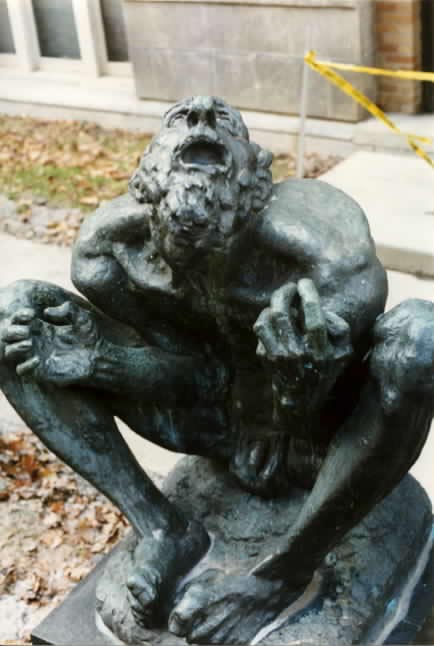
So what about poor old Job? The book begins with a string of disasters coming hot on the heels of one another. When he has lost pretty much everything he is met by a bunch of his friends who try to act as philosophers to comfort him by giving explanations as to why he is so deep in the muck. There are clues that the book was put together pretty late in the OT period: for example in 1:4 Job’s sons hold feasts ‘in their homes’: we know that this splitting up of an extended family’s home is a late development. We can also recognise in the words of his friends some current philosophical movements which would have come to the fore as Greek culture began to spread through the Near East. We can trace through the OT a development from, for example, Psalm 1 where the righteous get everything on a plate while the wicked suffer, to a much greater appreciation of the fact that real life is nowhere near as simple as that. It is generally thought that a common folk tale about a man who loses everything and then gets it back was extended with 38 chapters of philosophical and theological debate.

So how are we to read Job? With a damp towel around our heads, for a start. It is a horrific story, and anyone who has known suffering or watched as others have suffered will be able to recognise the agonised soul-searching of the victim. Pastorally it has much to say about our well-meaning but so often misguided attempts to help those going through the mill with platitudes which may be theologically correct but are no help at all. But it has another dimension which is fascinating: The Satan (or ‘The Accuser’) has access to God’s throneroom and is allowed to bring suffering to God’s people. While this exchange sounds, to be honest, a bit petty and nasty on God’s part, the deeper truth is that while Job is going through such agony he is completely unaware that in a parallel universe there are things going on which affect his little life down here. So much of what we don’t understand may well have an extra dimension of which we’re not aware.

But the other truth to shine through these pages is that God is God and ultimately he has the right to do what he likes. So often we hear people telling us that ‘I can’t believe in a God who …’ or ‘I don’t believe in Hell’ or whatever. In the final couple of chapters poor Job gets a right telling off for daring to question God. Who does he think he is? But at the end of the day he does question, and in doing so gives permission for all who suffer unjustly not just to submit quietly to it. Of course Job ends up with no answers, but it’s good that he has asked the questions.

Through the Bible in Just Over a Year – Esther

The book of Esther has three claims to fame: it contains the longest verse in the Bible (8:9), it is never referred to elsewhere in Scripture, and it never once mentions God. So what is it doing here?

If we mean by that question ‘what is it doing here’, the answer is that it tells the story of Esther, who became a Persian queen around the time of Ezra and Nehemiah, so as we found with the book of Ruth, this seemed like the most sensible slot for it in the Bible. But at another level it is in the Bible at all because it is an aetiology, that is a story told to explain a present reality. Kipling’s Just So Stories are examples of aetiologies – we see that elephants have long trunks, so here’s why. In this case the reality was that Jews saw that they kept an annual festival called Purim, and wanted to know why, and how the tradition got started, so the story of Esther was told in order to provide that background. And it’s a bit more historical than Kipling’s tales: the author is at pains to assure us of its historicity, and to date it for us (1:1, 2:23, 9:32).

The story goes like this: King Xerxes has had a few pints too many during a 180 day bender, and commands his beautiful wife Vashti to show herself off before his nobles, wearing her royal crown: probably only her royal crown. She refuses, is banished from his presence, and needs replacing, so a search is made and a beautiful Jewess wins the privilege of becoming queen. In spite of the strong tradition that intermarriage is not allowed, she has no choice, and is told not to let the king know of her nationality. Later her cousin Mordecai overhears a plot to assassinate the king, which Esther reports to him, saving his life.

Haman is an official in the court who is raised to high position, but Mordecai refuses to pay him the honour he expects. Haman decided that in retaliation he would try to wipe out all the Jews, and not just Mordecai. Risking her life Esther approaches the king to plead for her people. Usually she would not venture into his presence from the harem unless called for, but she takes the risky initiative and invites the king to a banquet. Meanwhile the king can’t sleep and tries to drop off by reading the court records, obviously the Persian equivalent of counting sheep. He discovers that Mordecai previously saved his life, but has not been rewarded. Haman becomes even more jealous.

Punishment of Haman.jpg

Finally Esther gets to present her petition, for the protection of the Jews, to the king, and tells him of the plot to wipe them out. The king is shocked and asks who could think of such a thing. Haman is identified, and ends up being impaled on a spike he had prepared specially for Mordecai. The king pronounces an edict of protection for the Jews, and amidst great celebrations other enemies are finished off and the feast of Purim is established as a remembrance of the Jews’ deliverance from their enemies. Purim were apparently stones with numbers on, rather like dice, which were used to choose dates at ‘random’.

So what do we do with this entertaining story today? It is about trusting (usually with hindsight) that God has put us in the right place at the right time. It is about risky living for righteousness and justice, and it about thankfulness and celebration, or ‘counting our blessings’ for God’s hand on our lives in the past. In a time when in some parts of the world Christians are being systematically executed in the hope of total eradication, it is a call to prayer and intercession for God’s people, and for the confusion of all those who wish them harm.

Through the Bible in Just Over a Year – Nehemiah

We said last time that Ezra and Nehemiah tell complimentary stories about the rebuilding of the physical and spiritual life of the returned exiles. Nehemiah is still a part of the Priestly source: there is still the liturgical concern and the lists of names, as well as a lot of architectural details, but it is also a rattling good story. Nehemiah, who is an important official in the court of the Persian king Artaxerxes, hears from Jerusalem from the first wave of returned exiles, and is dismayed to discover that the walls of the city, so vital for its defence, have not yet been rebuilt. After weeping, fasting and prayer he plucks up his courage and pleads with his boss the king to be allowed to return to oversee the rebuilding. He is given permission, and soon mobilises the workers.

 File:Copa center building site (003).JPG

However it is no time before opposition hits his efforts. Sanballat, who seems to head up the opposition, begins with mockery and discouragement, then intrigue and intimidation, and finally the outright threat of violence. But Nehemiah is steadfast and undaunted, praying for God’s vengeance on his enemies. Finally the walls are completed, a list of names is complied, and Ezra steps onto the stage. In a massive public festival he reads the Law, and the Israelites respond with profound emotion. We have the text of a long prayer of penitence, and the rededication both of the new walls and the people. Finally Nehemiah carries out some social reforms, reinstituting the Sabbath and beating up and scalping some men who had intermarried with foreign wives.


The book is driven by zeal, and at times what we might see as excessive zeal, but the link between the social and the religious life of the community is made clear. Physical bricks and mortar and penitence and prayer go hand in hand, when so often in the church we separate the two. I even knew churches where the PCC was responsible for the practical stuff while a team of ‘elders’ looked after the spiritual life of the church. Nehemiah does not see it like this at all.


The book also gives us a highly true-to-life account of the kinds of opposition which those trying to rebuild spirituality can often face. Without being tempted to read the book merely as a parable for contemporary church renewal we can nevertheless learn much from understanding the tactics of those who oppose renewal, and their motivations in bringing it. Nehemiah responds to the threat of violence by posting armed guards alongside the builders, and even armed some of the builders, which must have made it difficult for them. There is a real appreciation of the battle involved in seeking rebuilding and renewal, and nothing much has changed today, other than our will to fight.


The sections involving the ministry of Ezra are significant, too. The reading of the Law is met with a great variety of responses, from joyful praise, to weeping, to feasting to penitence. As a teacher one of my big beefs with the church is that we seldom teach God’s word as we should, and rarely if ever expect any response from the people. I love the idea that a team of people both read the Law and explained it in a way which helped people to understand it and respond to it. And they come back for more, every day for a week! A bit of a far cry from the preaching ministry in many churches today.


The fact that the book ends not with the highspot of teaching, prayer and response but with the need to beat up those who are still sinning is a tragic commentary on life. We’re going to see before too long the next phase of the story, albeit from a different point of view from that of the Priestly writers, but we have a few books, and a whole new strand of writing, to explore before we get there. But first one extra book, a bit of an oddity, as we turn next week to Esther.

Through the Bible in Just Over a Year – Ezra

Ok, let’s begin with a little quiz to see if you’ve been listening.

Have a glance (you don’t even need to read it all) at Ezra chapters 2, 8 and 10. So which stream of writing does this book belong to? That’s right – it’s those boring Priests again with their lists of funny names and tedious attention to detail. We’re going to find the same in our next book, Nehemiah, in chapters 7, 10 and 12, so that looks like a priestly work too. These two books tell a complimentary story of what happened when the exiles returned from Babylon to Jerusalem, and much scholarly dispute has raged about the exact chronology of the two books and the relationship between them, not least as the character of Ezra plays a major part in the book of Nehemiah. But leaving that aside, the two books are basically about rebuilding, Nehemiah, as we’ll see next week, with the city walls of Jerusalem, and Ezra with the worship and right ordering of society.

Ezra was a priest and a teacher of the law, so when King Cyrus, who had conquered Babylon right at the end of 2 Chronicles, allowed the Jews to return to Jerusalem, he was sent along to help them rediscover the Law’s teachings, which had been so long neglected, even before the exile. This necessitated the rebuilding of the Temple, so that the right sacrifices could once again be offered. This work went ahead, and soon the altar was functioning again, although it was not long before subterfuge and opposition from ‘the enemies of Judah and Benjamin’, almost certainly Samaritans, remnants of the old Northern Kingdom who had become tainted by their syncretistic religion and intermarriage, halted the work. Finally, with royal help from King Darius of Persia, the Temple is completed and rededicated, and the Passover is celebrated. Once the physical building had been completed Ezra is sent to rebuild the spiritual life of the nation, but he soon discovers what he believes is the root cause of a major problem: the people had intermarried with the surrounding nations, a concern, you’ll remember, of the Deuteronomic historians. When you took a foreign wife you almost always took her foreign gods too, so all kinds of practices contrary to Yahweh’s Law had become part and parcel of their lives.

Ezra turns to prayer, and confesses to God the people’s infidelity, and as he does so, using, interestingly, the first person, the people catch his broken heartedness and join in with the confession. Eventually the foreign wives are sent packing, but not before the careful chronicler has written down a list of all the guilty parties.

We can read this book as being about the primacy of worship, about the need for integrity as we worship, and the opposition which will surely come as we seek to live with that integrity. We’re going to see a load more opposition next week, and some pretty dirty tactics, and I am reminded that in a church where political correctness has removed most of the language of spiritual warfare from our liturgy and hymnody, we can easily lose sight of the battle which rages all around us. But then as Keyser Soze said: ‘The greatest trick the Devil ever pulled was convincing the world he didn’t exist.’

I personally love the idea that what the community really needed, perhaps more than it needed carpenters and stonemasons, was Bible teachers. In the next book we’re going to see the power of the teaching ministry in action, but I find it interesting that for all their concern about the right ordering of worship the Priests have written up not the story of a superstar worship-leader but a humble scribe. Maybe today’s church could listen to that a bit more.

Through the Bible in Just Over a Year – 2 Chronicles


It is as we move into volume 2 that we can see most clearly the difference in concerns of the Priestly strand as opposed to the Deuteronomists. We said that their version of the history was concerned less with answering the question ‘What went so wrong that we landed up in exile?’ and much more with keeping accurate records for official purposes, and with the correct ordering of the Temple and its worship. So Solomon, the builder of the Temple, gets an undue amount of space, as do the liturgical details of its dedication. His prayers are recorded presumably verbatim, and the roles of the priests and other worship professionals are given great prominence. Solomon’s pre-eminence is further enhanced with accounts of his wealth and splendour, and the visit of the Queen of Sheba who comes to admire it all.

Then the kingdom splits, and as you might expect it is the South, home of the Jerusalem Temple, which gets far more attention. Chronicles doesn’t appear to be all that interested in what is going on north of the border, and even in the accounts of the Southern kings there is a clear bias shown. The books of Kings concentrate on the bad kings and their outrageous apostasy: Chronicles is far more interested in the good ones, the ones who attempt to bring reform and renewal. So Asa, an early reformer, who gets just 15 verses in 1 Kings 15, warrants three whole chapters in 2 Chronicles 14-16. Attention is given to Joash, Josiah and particularly Hezekiah, but of course the inevitable happens: a difference of emphasis can’t bring about a different ending, and Jerusalem falls to Babylon in the final chapter.

File:Israel-2013-Jerusalem-Temple Mount-SW corner & Al-Fakhariyya Minaret.jpg

The Priests couldn’t change the ending, but they could see beyond it, with their slightly later dating. In the final 4 verses of the book we get some information which dates from decades afterwards, as Cyrus of Persia comes to power, the Cyrus who is going to allow the exiles to return to Jerusalem and begin the rebuilding of the Temple, although that’s next week’s tale. We haven’t quite finished with the Priestly writings yet: they’re going to continue with two further books. But although the ending is inevitably tragic, the Priests are able to see beyond it and find the seeds of new hope.

2 Chronicles is an easier read that volume 1, with a lack of boring lists of names, but to me the value of the Priestly writings, where they tell essentially the same story as the books of Samuel and Kings, lies in the completely different perspective from which they view things. I am challenged, as I think about my life and times, to ask myself about my perspective. Am I more interested in the villains or the heroes? Do I more readily see the disasters or the successes, of myself and others? Is my trajectory a downward rush towards disaster, albeit with a few small but temporary peaks along the way, or is it a story of hope, of reformation, of ultimate victory? Temperamentally am I a Deuteronomist or a Priest? It is easy to see God’s unfolding story from either direction, but as a bit of a misery I find that Chronicles has a hopefulness about it which can at times provides a great tonic for me when I am tempted to see sin more clearly than holiness, and the slide down rather than the climb up.


Through the Bible in Just Over a Year – 1 Chronicles

Our next few books are going to be the same but different. We’ve met the Dueteronomic Historians, who, from the vantage point of the Babylonian exile, were able to reflect on the period of the monarchy and explain what went wrong. I now need to introduce you to a new strand of literature, that coming from what is called the ‘Priestly’ source (P). Generally reckoned to date from the 5th Century, Israel had returned from exile to Jerusalem, and were living under Persian rule. The same period of history is written up, so it will feel a bit as though we are rewinding, but the interests and style of the Priestly writers are completely different from those of the Deuteronomists. Imagine two lectures or sermons, one given by a hellfire preacher passionate about the gospel, and the other by the archive curator of your local museum of history. That’ll give you some idea of the flavour of our next few books. In fact we have met P before, as some of the sections of the first five books (the ‘Pentateuch’) look as though they come from this source. The main concern is the careful documentation of facts and figures, the listing of people involved, and liturgical details of worship. P is not as easy to read, which is why it is often neglected. In fact the first nine chapters of 1 Chronicles are simply a long list of names, starting with Adam and going right through to Saul and his family. (You are allowed to skip this bit, although if you like funny Hebrew names this is a rich trawling-ground. I particularly like Zelophehad.)

The actual story is picked up in chapter 10 with the death of Saul and the crowning of David, and continues to the preparations for the building of the Temple and David’s death. There are some well-told stories, but there are regular interruptions for more lists, of David’s key soldiers, various people involved in the building of the Temple, priests, musicians and Levites, and so on. In places it feels as though you’ve somehow put down the Bible and picked up the phone book instead.

But in spite of this rather archivy approach, the books contain some deeply spiritual and significant passages. David’s psalm of praise in chapter 16, written to celebrate the return of the Ark to Jerusalem, is a highspot of worship. The exploits of his mighty warriors in chapter 11 make great reading, especially for blokes, and David’s touching call to the people to give generously to the work on the Temple, and his own leading by example, is a great stewardship passage from which to preach. This is not merely a historical record: like everything in the Bible is has a theological point of view. The Priests are keen to exalt the place of worship in the community, to trace its origins back to David, to demonstrate how much care and attention ought to be paid to it, and perhaps therefore to raise awareness among those returned from exile but more intereste in home improvements than the worship of God. A fascinating insight into this period can be found in the writings of Haggai, who found a nation at comfortable ease, living in their panelled houses rather than working  on the Temple of God. This book is a call back to the priority of worship, to the careful attention which must be given to it, and to the reverence with which God is to be treated.

Through the Bible in Just Over a Year – 2 Kings


The downward spiral of decline and apostasy continues with more of the same as we move into the final book of the Deuteronomic history, although there are some highspots too. The ministry of the prophet Elijah draws to a close and Elisha is appointed to succeed him. There are several stories about his prophetic work in chapters 2 to 9, my personal favourite of which is the cursing of the ‘children’ in 2:23-24, resulting in them being attacked by two bears. If you go down in the woods today …

This is a book of quite black and white heroes and villains. Ahab and his queen Jezebel stand out as highly evil characters, although it is interesting that ‘secular’ histories of this period laud Ahab and a great king and a mighty warrior. But of course the Deuteronomic historians aren’t interested in that, but only in the centralisation of worship in Jerusalem and the idolatry of the nation and its leaders. Later on Judah’s king Manasseh sinks to an all-time low by promoting mass occultism and the practice of child sacrifice, but in between are a few more minor villains who are assessed, as we have now come to expect, on their perpetuation or not of the rival sanctuaries at Bethel and Dan. Typical is this summing up of the reign of Pekahiah of Israel from 2 Kings 15:

  23 In the fiftieth year of Azariah king of Judah, Pekahiah son of Menahem became king of Israel in Samaria, and he reigned for two years. 24 Pekahiah did evil in the eyes of the Lord. He did not turn away from the sins of Jeroboam son of Nebat, which he had caused Israel to commit.

the sins of Jeroboam, of course, being the setting up of the rival shrines.File:Jerusalem ruins from Davids.jpg

However there are some heroes too, leaders whose hearts seemed set on God and therefore the renewal of the nation’s life. After Ahab’s death Joash sets about restoring the physical Temple, opening its doors once again for worship, and later Hezekiah, with the help of his contemporary prophet Isaiah, attempts reform. After him Josiah again sets out of building renovations, and discovers some lost scrolls, probably parts of the book of Leviticus, which cause him to realise how far wrong the nation has gone.

But the reforms are short-lived, and in chapter 17 the Northern Kingdom of Israel goes off into exile in Assyria, followed in the final chapter by Jerusalem falling and people being deported to Babylon.

All in all it is a sorry tale. Like watching with a terminal cancer patient we read this history knowing that death is inevitable, and that even if there is an occasional better day, the direction is inexorably downhill. Later on, when the sadder and wiser historians seek to write up this sad tale and learn lessons from it, their viewpoint is simple: people abandoned God, so eventually he abandoned them. It’s pure Romans 1 theology, or, if you’ve ever read it, straight out of The Tale of Georgie Grubb.

We’re going, of course, to see that the exile was far from being the last word, but before we move on from this sad period we’re going to read it all over again, but written up from a very different point of view.

Through the Bible in Just Over a Year – 1 Kings

After David’s old age his son Solomon succeeds him as king, although not without some more intrigue as his brother Adonijah makes a claim to the throne. Solomon starts well, building the Temple which David apparently had it in his heart to build, bringing the Ark of the Covenant to its final resting place (at least until Indiana Jones got his hands on it), and asking God for wisdom rather than riches, which meant that he got both. But as is so often the case, the seeds of his own destruction were present right from the start. His reign ended in national disaster, and we can, with the wonderful gift of hindsight, see the beginnings of this malaise early in his reign. There is the matter of his many wives and concubines, which of course flies in the face of the Deuteronomist’s concern for purity and separation. And in 5:13 Solomon conscripts labour to get the Temple built; in 9:15 this is described as ‘forced labour’, and in 11:28 Jeroboam is put in charge of this workforce.

File:Jerusalem- Temple Mount (5727146439).jpg 

Jeroboam later meets a prophet who tells him that he is going to reign over 10 tribes, which does not please Solomon, so he flees into exile in Egypt until after Solomon’s death. Solomon’s son, rather confusingly called Rehoboam, takes over the throne, but pretty soon Jeroboam takes the 10 northern tribes and splits the kingdom. There are two issues: Rehoboam decides to continue his father’s policy of conscripted labour, except that he is going to be a lot more vicious with them than Solomon was. Jeroboam is proclaimed king by the disgruntled northerners, and, in order to make the split complete, and to keep his people from going back to Jerusalem to worship, he sets up two rival sanctuaries, at the extreme north and south of the northern kingdom in Bethel and Dan. As far as the Deuteronomist is concerned this is the ultimate sin, offending so deeply as it does again the law of centralisation of worship which we encountered in the book of Deuteronomy. From now on all the successive monarchs are going to be judged on whether or not they perpetuated worship at these rival shrines. It is significant that not only is the location of these shrines wrong: they are also centred around two golden calves. Sound familiar? So God’s requirements about where he is to be worshipped are broken, as is his prohibition of idolatry.


From now on we have two parallel stories with accounts of the reigns of the kings of Judah, in the south centred around Jerusalem, and of Israel, in the north based in Damascus, a troubled place to this day. But for all its apostasy the northern kingdom was not abandoned by God: his prophets were active, and the stories of Elijah and later Elisha show his desire to stand against evil and to call the people back to himself. There is outright confrontation with the evil king Ahab and his even more evil wife Jezebel, and the prophets of Baal, and again as Ahab tries to confiscate a vineyard belonging to Naboth.


Again the twin themes of the Deuteronomist can be seen as controlling factors in the way this history is written up. We can also see the power of bad seed to grow bad crops and bad fruit, and the tragic story reminds us of the need constantly to purify ourselves and our motives, lest something unhealthy and unholy grows from our well-intentioned but unwise motives. But there is even worse to come – don’t miss next week’s thrilling adventure.

Through the Bible in Just Over a Year – 2 Samuel

1 Samuel ends with the death of King Saul, who has lost the plot spiritually: 2 Samuel begins with David, his successor, lamenting over his death before taking the throne, first in Hebron, anointed to rule over the tribe of Judah, and then eventually in the newly-captured city of Jerusalem to reign over the whole nation. There is of course some infighting between Saul’s supporters and David’s, but pretty quickly things settle and David begins what will go down in history as the golden age for Israel. Two key events have great significance for David’s reign. Firstly the Philistines are defeated. For years the nation, which, like Stoke-on-Trent, was an agglomeration of five cities, have been thorn in Israel’s side: we have already seen the trouble they got Samson into, and David’s defeat of their champion Goliath. But from now on they get hardly a mention, as they cease to be much of a problem ever again to Israel.

 As a result of this, secondly, the Ark of the Covenant, that important symbol of God’s presence with the people, which had been captured and carried off by the Philistines, is brought back to its home, which is to become the site of the Temple in Jerusalem. Indeed, it seems almost disappointing that David himself did not build the Temple, but we are told that it was his idea. So his reign becomes symbolic of everything going right at last, with royalty and worship established in the new ‘City of David’.


But it isn’t very long before the ‘warts and all’ picture of David begins to emerge. Under the surface we have a king with not enough to do turning lustful eyes towards another woman, leading to intrigue and murder. Meanwhile conflict between various individuals demonstrates something of a leadership vacuum, leading eventually to rival claims to the throne, even from within David’s own family. The book ends with David ready to step down, and the next episode of the history begins with David old and frail, although still sharp enough to make sure that his son Solomon succeeds him.


So what we have is 2 Samuel is a portrait of a strong and godly yet flawed leader. The Bible is never a book of pure hagiography, and whitewash is never applied to its characters. Yet what we do see is David’s basic integrity: when confronted with his sin he repents quickly and thoroughly, and right to the end of the book he is still a worshipper at heart, someone who celebrates and depends on his courageous friends and colleagues, someone who has God’s desires for the nation deep in his spirit. That fact that he loses the plot sometimes should only encourage us, because we do that too, but it doesn’t mean we’re bad people, or that our attempts to live the Christian life are all in vain. In fact David, hero though he was and remains, struggled with all the things which trouble us: sex, family conflicts, the use of power, personal enemies – all the stuff of daily life. Like David we will not always get it right first time: like David may we always have the grace to deal with what we do wrong, coming quickly to God in penitence and receiving quickly his forgiving and redemptive grace.

Through the Bible in Just Over a Year – 1 Samuel

After last week’s brief digression into the love story of Ruth, we return to the heart of the Deuteronomic History with the four books of Samuel and Kings. Between them they tell the story of Israel’s journey from tribalism, through greatness, into exile and slavery. We have already discovered that the Deuteronomic History was written to explain how the nation got to the point of near-destruction, and we noted two key themes, both of which had, in the eyes of God, been violated. One was about the need to remain separate from and untainted by the nations around, and the other had to do with worshipping God where and how he demanded to be worshipped. There two motifs are a bit hidden to begin with, but are going to become more explicit as we go through the story over the next four weeks.


1 Samuel begins with the birth of the prophet Samuel, the kingmaker who sets Israel on the path of monarchy, albeit with some reluctance. His birth, like that of several biblical heroes, has a supernatural dimension to it: the message is that God clearly wanted him around, and so specially provided for his birth. The ever-present threat of the Philistines, whose territory lay to the south west of Israel, and the discontent with the tribal amphictiony, leads Israel to ask Samuel for a king ‘such as all the other nations have’. Samuel is reluctant, and tries to spell out for the people what this might look like in real life, but in the end he hears God telling him that although this is a rejection of bother their leaderships he should go ahead and give them a king. Saul is duly selected, and he looks a good choice, but it is only a few chapters before God rejects him.


So what did he do wrong? Not surprisingly, given the point of view of the writers, he offers a sacrifice which it was not his place to do (13:13), which is about keeping God’s rules for worship, and then in 15:8-9 he disobeys God by failing totally to destroy Agag, king of Amalek, and taking plunder from the battle. This violates the ‘separation’ theme, but fortunately Samuel remedies the situation in one of the most beautiful verses in the Bible: ‘Samuel hewed Agag in pieces before the Lord at Gilgal’.

 File:Felix-Joseph Barrias - Annointing of David by Saul.jpg

From this point on we see a new star rising, as Samuel is told by God to look for a replacement king for Saul. David is picked, even though he is so unlikely that he wasn’t even invited to the interview, and then a series of stories portrays the early life of this new hero, his prowess in battle, his acceptance into the royal court, and the growing jealousy of his king. As Saul descends into occultism and madness David keeps his integrity, refusing just to finish him off and showing loyalty to him, because he is still the Lord’s anointed king. When Saul finally dies in battle David’s grief is genuine, but more of that next week.


So how do we read this book today? As a history lesson and background to the high-point of Israel’s life, the reign of David, it is invaluable, but it also stresses the values of the Deuteronomic historians, made explicit in 15:22-23


Does the Lord delight in burnt offerings and sacrifices
    as much as in obeying the Lord?
To obey is better than sacrifice,
    and to heed is better than the fat of rams.
For rebellion is like the sin of divination,
    and arrogance like the evil of idolatry.


From the other side of the cross this truth is still as important as ever for Christian disciples, particularly in a culture where anything goes and ‘tolerance’ is the highest virtue of our society. What God says matters, and he expects us to listen and obey. We may not get rejected, or even hewed in pieces, if we disobey, but we severely hold up God’s purposes and rob ourselves of blessing when we try to live with cheap grace.